
A symphony of peace, balance, and genuine reconciliation
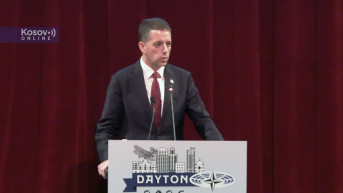
As we mark 30 years since the signing of the Dayton Peace Agreement, we stand at a historic crossroads. Behind us lie the bloodiest conflicts on European soil since the Second World War. Ahead of us is the opportunity for the Western Balkans to finally become a region of lasting peace, economic prosperity, and genuine reconciliation among its peoples.
The Dayton Agreement was not perfect. It was born in pain, at the very last moment before the war could have spread further and taken on irreversible dimensions. Yet precisely because it was the product of difficult compromises, it became a symphony of balance: three constituent peoples, two entities, one state.
It was not an agreement of winners and losers; it was an agreement of survivors. And that is precisely why it has endured for three decades.
As the Minister of Foreign Affairs of the Republic of Serbia, I am proud to say that Serbia has been, from the very first day, and remains, a reliable guardian and guarantor of the Dayton Agreement. Not because it is ideal, but because it is the only framework that has proven capable of preserving peace. Any attempt to unilaterally revise Dayton, to abolish or reduce the autonomy of the entities, or to transfer competencies without the consent of all parties, is not merely a violation of international law—it is a direct blow to the fragile balance that saved hundreds of thousands of lives.
However, defending Dayton is not only about defending the letter of the Agreement. It is about defending the spirit of reconciliation woven into it. That is why Serbia today is not only the voice of the Republic of Srpska and the Serbian people in Bosnia and Herzegovina; Serbia is also the strongest advocate of genuine reconciliation among all the peoples of the region. For there is no greater Serbian national interest than peace along our borders—children being born without fear, young people choosing to stay rather than leave, factories opening instead of closing.
Reconciliation, however, cannot be a one-way street. It cannot be built on selective memory, on a hierarchy of suffering, or on the notion that some victims are more “acceptable” than others. Thirty years after the war, there remains a painful asymmetry in the treatment of victims. Serbian victims have often remained on the margins of history. The deepest wound remains the silence surrounding sexual violence committed against Serbian women. Most of them are still without justice—without verdicts, without recognition, without pensions, often without names in the public sphere, as society continues to view them with suspicion or indifference. These women are not “collateral damage.” They are part of the same human tragedy as all other victims. And as long as their suffering remains invisible, reconciliation will remain incomplete.
That is why Serbia insists: reconciliation without full truth is not reconciliation—it is merely the illusion of peace.
At the same time, Serbia today is the strongest engine of regional cooperation. The Open Balkan initiative, which we launched together with North Macedonia and Albania, and which Montenegro and Bosnia and Herzegovina have also joined, demonstrates that it is possible to build a shared future without erasing identities. More than 15 million people now travel using only an ID card. Hundreds of thousands of young people have found jobs through a common labor market. Trade among Open Balkan countries has increased by over 40 percent in the past three years. This is reconciliation in practice—not in words, but in deeds. Over the past ten years, Serbia has invested more than one billion euros in infrastructure projects in the Republic of Srpska and Serbian communities in Kosovo and Metohija, while at the same time building the Sarajevo–Belgrade highway—because reconciliation is not only when Serbs help Serbs; reconciliation is when Serbs build for others, and others build for Serbs.
Today, thirty years after Dayton, I send a message to all the peoples of the region: we will never accept the abolition of the Republic of Srpska, but we will always extend a hand for joint projects—from highways to joint appearances on the global market. I know that equality among our peoples in Bosnia and Herzegovina matters to everyone, and therefore let us defend that equality together, within Dayton, not against it. I call on the international community to abandon selective justice and selective empathy. Peace in the Balkans will not endure if one people constantly feels humiliated. I do not hesitate to say that I am first and foremost a Serb and that I will always defend Serbian national interests. But I am also proud to say that today I am among the strongest advocates of reconciliation in the Balkans. Because being a good Serb today means being a good neighbor. Being a patriot means building bridges, not walls.
Let this thirtieth anniversary of Dayton mark the beginning of a new era—an era in which we finally close the chapter of war and open the chapter of a shared future. An era in which every tear, every mother, every victim, regardless of name or surname, is equally respected. An era in which children in Sarajevo, Banja Luka, Mostar, and Belgrade will learn the same lesson: that peace is the greatest victory we have all achieved together.
Written for Politika by Marko Djuric, Minister of Foreign Affairs of Serbia.


0 comments