
Vladisavljev: International community has decreasing influence on Kurti's government's decision-making
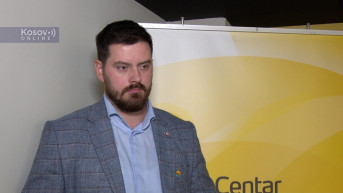
Stefan Vladisavljev, Program Coordinator of the BFPE Foundation for Responsible Society, states that after three years since the victory of Self-Determination in the elections, the Kosovo Government's attitude towards the Serbian community is reflected in the failure to establish the Community of Serbian Municipalities. He also notes that it is becoming increasingly difficult for the international community to influence the decision-making process in Kosovo.
"What remains the epitome of the entire relationship of the Kosovo Government toward the Serbian community in the past period is the failure to establish the Community of Serbian Municipalities. This issue transcends the domain of internal political governance in Kosovo and fundamentally embodies all situations that have made the position of the Serbian minority in Kosovo, especially in the north, significantly more unfavorable than it would have been if the CSM had been established, and we would probably witness a somewhat smaller exodus of Serbs," Vladisavljev says.
As something symptomatic of the Self-Determination government, Vladisavljev observes that the international community has a decreasing influence on the decision-making process in Kosovo.
"Ten or 15 years ago, a phone call from the US ambassador or some European official was sufficient, but today it seems that despite all the possible engaged efforts of the international community, there is simply not enough backing for some decisions expected in the normalization process to 'condition' Albin Kurti and Self-Determination to fulfill them," our interlocutor notes.
Regarding how the leader of Self-Determination performed as a negotiator in dialogue with Belgrade, Vladisavljev says that representatives of Kosovo did not enter the negotiation process at any point in the past three years with the idea of shifting the situation in a positive direction for representatives of the Serbian community in Kosovo.
"The essence here is that without what is a precondition for any subsequent step, namely the establishment of the CSM, we cannot even talk about the dialogue process, and this is something that does not seem to be on the agenda of the Kosovo Government and those participating in the dialogue as its representatives at the moment," Vladisavljev says.
He adds that not much has changed in the dialogue, citing one of the reasons being that representatives of Kosovo, and in some cases, representatives of Serbia, did not come to the talks with the intention of making progress based on goodwill.
"The difference is that representatives of Serbia were very constructive toward representatives of the international community, and until six months ago, we had nothing to criticize representatives of Serbia for in the dialogue process, while the situation regarding Serbia's position changed to some extent after certain events, primarily in Brussels. However, on the other hand, representatives of Kosovo did not enter the negotiation process at any point with the idea of shifting the situation in a positive direction for representatives of the Serbian community in Kosovo. The negotiating positions of Belgrade and Pristina are quite defined, and it seems that even though we have new agreements, the normalization process remains at a standstill, and a change in the status quo is necessary to make the relationship between Belgrade and Pristina at least functional," Vladisavljev concludes.


0 comments