
Von Beckerath: We expect Serbia to fulfil its obligations and demand that Pristina establish the CSM
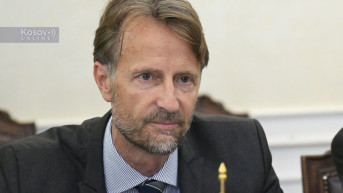
The Head of the Delegation of the European Union to Serbia, Andreas von Beckerath, stated today that progress in the Belgrade–Pristina dialogue and in the rule of law remains key to accelerating Serbia’s accession negotiations. He also underlined that the EU expects Pristina to fulfil its own commitments and finally complete the establishment of the Community of Serb-Majority Municipalities (CSM), RTV reported.
“Progress in the dialogue and the implementation of the Agreement on the Normalisation of Relations between Belgrade and Pristina will be key factors for accelerating the overall accession process,” von Beckerath emphasized in an interview with Tanjug.
He noted that the European Commission’s Report on Kosovo explicitly mentions complaints from the Serb community regarding the actions of the local authorities in Pristina, stressing that such conduct is considered contrary to the spirit of normalisation.
“The Commission’s Report on Kosovo specifically highlights complaints from Kosovo Serbs about actions taken by Pristina’s authorities. For instance, it refers to police operations targeting structures and services supported by Serbia, as well as arrests and operations against citizens working in Serbian security institutions. The issue of establishing the Community of Serb-Majority Municipalities, which Pristina has not yet implemented, is also mentioned in both reports,” the ambassador said.
Von Beckerath reiterated that the EU expects Pristina to deliver on its promises and complete the formation of the CSM, adding:
“Just as we expect Serbia to meet its obligations, we equally demand that Pristina meet its own commitments under the normalisation agreement.”
He explained that the European Commission’s Progress Report on Serbia is not meant as criticism, but rather as a framework providing guidance for accelerating reforms. Despite certain achievements, progress remains insufficiently fast, he said, adding that with genuine political will, “the sky is the limit for Serbia.”
“If there is political will and strong reforms, the sky is the limit for Serbia. Progress can come very quickly, but concrete reforms are necessary, and the challenges listed in the report must be addressed,” the ambassador stated, noting that the Commission once again confirmed that technical conditions for opening Cluster 3 have been met, but the decision now rests with the 27 Member States.
The ambassador clarified that the report’s purpose is not to serve as a list of criticisms, but as a roadmap outlining how Serbia can accelerate reforms and move forward on its EU path.
“I believe it is an objective document. The entire enlargement process is based on evidence and objective facts,” von Beckerath said, adding that there are no shortcuts or speed limits when it comes to the pace of accession and opening of clusters.
He acknowledged that there have been positive developments—notably in economic criteria, amendments to the Law on the Unified Voter Register, and efforts in the media sector—but pointed out that stagnation persists in the judiciary and fundamental rights.
Von Beckerath stressed that the report calls on Serbia to implement credible reforms across all areas and urgently reverse the negative trend concerning freedom of expression, while addressing the erosion of academic freedom.
According to him, the report shows backsliding in media freedom due to pressure and so-called SLAPP lawsuits, although it welcomes progress in the establishment of the Regulatory Authority for Electronic Media (REM). He noted that improvement is possible if Serbia enacts concrete reforms.
“The report also highlights the importance of greater alignment with the EU’s Common Foreign and Security Policy and continued progress in the Belgrade–Pristina dialogue,” he added.
Asked about current geopolitical developments in Europe, von Beckerath confirmed that there is a ‘geopolitical imperative’ for EU enlargement, urging Serbia to seize this opportunity.
However, he emphasized that there are no geopolitical privileges in the enlargement process and that the criteria are the same for all candidate countries.
“It is up to each candidate country to make use of this opportunity to advance,” he said, stressing that enlargement, including the Western Balkans, will strengthen the EU and improve citizens’ lives in the region.
“I want to stress that the reforms mentioned in the report should not be implemented just because Brussels asks for them—they should be implemented because they benefit Serbia’s citizens. These reforms will improve daily life, establish the rule of law, ensure equality before the law, strengthen democratic institutions, and safeguard judicial independence. They will also increase trust in the electoral framework,” the ambassador said.
Commenting on the report’s reference to ‘anti-European rhetoric’ and remarks by EU Commissioner for Enlargement Olivér Várhelyi’s predecessor, Commissioner Marta Kos, that such narratives could have consequences, von Beckerath voiced concern about the persistence of this discourse.
“The EU expects Serbian authorities to communicate loudly and clearly that EU membership remains the country’s strategic goal. It is important to remember that disinformation and falsehoods about the EU not only damage the EU’s image in Serbia but also harm Serbia’s image within the EU. Member States will start asking themselves whether Serbia is truly serious about joining if the EU continues to be criticised by most of the media,” he warned.
Von Beckerath expressed understanding for those in Serbia who feel disappointed by the slow pace of accession.
“I understand the frustration that progress is not faster. However, progress depends on Serbia—on meeting its obligations and implementing reforms,” he said.
He pointed out that Serbian citizens already benefit from numerous EU-funded programmes such as Erasmus+ and Horizon Europe, as well as from financial assistance allocated to Serbia under future frameworks.
“If you look at EU investments and support—from 2014 to 2027, we are talking about seven billion euros, six billion of which are grants that Serbia does not have to repay. So I wouldn’t say that the EU is not supporting Serbia,” he stated.
He also reminded that Serbia has access to an additional 1.6 billion euros and potential integration into the EU’s single market, which could bring tangible benefits such as lower costs for international transfers and reduced roaming charges.
Addressing the EU’s recent decisions on sanctions and the phase-out of Russian energy imports, von Beckerath clarified that these measures do not directly affect Serbia’s gas infrastructure.
“The EU Energy Council decided two weeks ago to phase out Russian gas imports. However, contrary to reports in some Serbian media, the EU is not ‘cutting off’ Serbia’s gas supply. That is completely untrue. The transit of gas through EU Member States to third countries is not affected by the Council’s decision,” he explained.
Finally, von Beckerath reflected on his impressions after three months in Serbia:
“I have had many wonderful experiences and met people who impressed me with their hospitality and warmth. Before I leave, I hope to hear that I am no longer needed in Serbia—because Serbia has joined the European Union and therefore no longer needs an EU ambassador in Belgrade,” the EU Delegation Head concluded.

0 comments