
Zecevic: Kurti wants to make it clear to the Serbs that they have no place in Kosovo
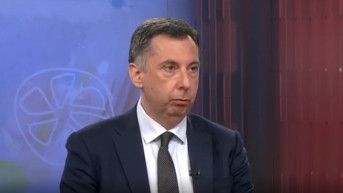
Slobodan Zecevic, a scientific adviser at the Institute for European Studies, assessed that the Serbs in Kosovo absolutely did not contribute to the escalation of the situation and that everything that had happened in Kosovo was a consequence of the actions of the administration of Kosovo Prime Minister Albin Kurti, RTS reports.
"He wants to make it clear to the Serbs that they have no place in Kosovo," Zecevic said.
Zecevic, who was a guest on the RTS morning show, said that even after the last round of talks in Brussels, the same problems that had existed until now were still present.
"We see that the Serbs are still being arrested in Kosovo and Metohija, that Kurti's provisional administration is putting pressure on the Serbs in the sense that the ultimate goal is to create insecurity among these people, to evict them from Kosovo. As for the EU and KFOR, that is, NATO that is on the ground, they are still not taking sufficiently energetic steps to dissuade them from such a policy. They have withdrawn some of them, and certain sanctions have been introduced to the Pristina regime," Zecevic says.
But it is obvious, notes Zecevic, that Kurti simply does not pay attention to all that and continues with the same policy he has been leading until now.
EU spokesman Peter Stano once again called on both sides to calm tensions. However, Petar Petkovic, the director of the Office for Kosovo and Metohija and Belgrade's negotiator, says that Serbia has done everything that is required of it, except for the last, third point, which is conditioned by Pristina's move.
Answering the question of to whom those messages were sent, Zecevic says that the messages were formally sent to Belgrade and Pristina, but he wondered how the Serbs in Kosovo contributed to the escalation of the situation.
"They absolutely do not contribute to the escalation of the situation. Everything that happened in Kosovo is a consequence of Kurti's administration. What is the problem? They are constantly fabricating some new measures. Now they are banning the construction of universities, and social housing, and then they arrest people, then release them, then arrest others, and those who were released are replaced by others. Therefore, the very measures taken by Kurti are very dubious in terms of reducing 25 percent of police officers. What does this mean? Who will count those people," Zecevic says.
According to him, the special units of the Kosovo Police are still there.
"Kurti built bases in the north of Kosovo, which he shouldn't have done. Some kind of Kosovo army is being armed. Turkey is actively starting to participate. Turkey seems to be returning to the Balkans with great strides, and soon we will return to the 19th century when Turkey practically had troops in the Balkans and had a decisive influence on Balkan politics. We will see what the Americans and Europeans decide. Escobar's presentation before the American Congress was interesting, where he practically outlined the plans of the United States of America in the coming period. After each round of dialogue in Brussels, Kurti starts with some new indictments and arrests of the Serbs," Zecevic pointed out.
Answering the question of why Kurti did not change his policy, Zecevic said that it was because he thought that by using that policy he would be able to make it clear to the Serbs that they had no place in Kosovo.
"That's his idea. And he believes that those people will slowly begin to move to the administrative territory of Serbia itself. And that's something he's doing. He thinks that these sanctions are weak and transitory. And that the sanctions will pass, and he will achieve his long-term goal, just as Croatia achieved the long-term goal of having no Serbs on the territory of Croatia. He also dreams that there will be no Serbs on the territory of today's so-called Kosovo. Just as Muslims in Bosnia dream that there will be no more Serbs in Bosnia and Herzegovina," Zecevic pointed out.
He believes that it is a positive step that some sanctions have been introduced to Pristina.
"However, we are now at a crossroads. The political goal of the United States of America and the European Union is an independent Kosovo. Although there are some countries, members of the European Union, which have not recognized Kosovo, who have a principled position, their ultimate goal is an independent Kosovo. And now, they want to let Kurti know that there will be no new war in the Balkans and that there will be no problems. But, on the other hand, they will not go far enough to get the Albanians into trouble and publicly condemn the Albanians, because Kosovo is their creation that they will not abolish," Zecevic explains.
Therefore, says Zecevic, they are on a seesaw.
"They warn him a little, but again they will not go so far as to fully condemn him and distance themselves completely from that creation called Kosovo," he says.
Pristina negotiator Besnik Bislimi said after the last talks that he now expected Pristina to suspend those punitive measures and come out with a de-escalation plan.
"They look at the situation in such a way that they think that they will trick the West and deceive them. And to say, well, here we are, we have reduced the number of police officers by 25% and that's it. And you can lift our sanctions," Zecevic said.
But in essence, as Zecevic says, they are continuing with the same policy they pursued even before the sanctions.
"So, they put pressure on the population, arrest the Serbs, fake mayors who are not even elected by the population, perform their duties, and prohibit construction. So, basically, they are trying to deceive, to say - now is the time to lift the sanctions, we have fulfilled our obligations, but they have not fulfilled any of them," Zecevic adds.
Zecevic believes that Belgrade should tell Brussels that Serbia is not responsible for this situation.
"Accordingly, you cannot condition Serbia's European path by the fact that Pristina violates the Brussels Agreement, that is, by not implementing it, and that contributes to raising the tension. I think we should also say that to the European Commission and the institutions of the European Parliament, to all the institutions of the European Union. We are not responsible for what is happening, therefore, do not further condition the opening of the chapter by the fact that Pristina violates the agreement," Zecevic concluded.
0 comments