
Zeman: Serbia could be a mediator in the peace talks between Russia and Ukraine
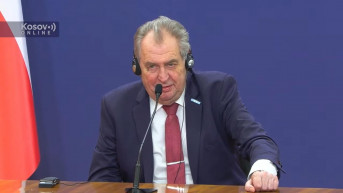
Serbia is again in the game as a country that could be a mediator in the peace negotiations between Russia and Ukraine, and experts of the situation estimate that it is not unrealistic for the representatives of Russia and Ukraine to meet in Belgrade, Kurir writes.
Namely, the outgoing president of the Czech Republic, Milos Zeman, said that Serbia could be among only a few countries that, thanks to their relatively neutral position, can mediate in peace negotiations to agree on an end to the war in Ukraine.
"The war will obviously not end with the total defeat of one of the two warring parties, so there will be a truce, followed by peace. Someone has to mediate there. From the perspective of a relatively neutral position between both sides, it could be China, Turkey, Serbia, Israel, Austria, which I discussed with President Van der Bellen, and Hungary, which I discussed with Katalin Novak," Zeman told the Parlamentni Listy Portal.
The Czech president, whose second and last five-year mandate, according to the constitution, expires on March 8, said in one of his last interviews that he had nothing against the fact that the majority in the West believed that Ukraine could defeat Russia but warned that both Russia and Ukraine, due to the aid from the West, still had reserves to fight a long, exhausting war.
"Each of the warring parties, as well as those who help them, would lose face if they stopped that support. After all, the citizens of those countries would most likely protest - the same as when negotiating with Hitler. At first, the pacifists prevailed, but in the end, they were defeated," Zeman said.
He believes that the idea of peace negotiations is becoming more and more current and that the President of Ukraine, Volodymyr Zelenskyy, should accept a possible compromise, but certainly not defeat.
The former head of diplomacy of FR Yugoslavia, Vladislav Jovanovic, also believes that Serbia is a serious candidate to host peace talks between Russia and Ukraine.
"The option of us being the host has been in circulation for a whole year, although it is not emphasized anywhere. There are several candidates recommended for it and some are very active in it, like Turkey, which is in a position to host. Switzerland, on the other hand, compromised by imposing sanctions on Russia, but they are still in circulation. Austria also expects to be a mediator, as it is militarily neutral. However, we are the cleanest because we have not resented any side, and militarily we are neutral and independent even more. We maintain that attitude and principle, and at the same time we are a small country, so we cannot be unpleasant to any side. However, everything depends on many other things, and first of all whether these negotiations will be public at all or whether everything will be resolved somewhere out of the public eye," Jovanovic points out.
The president of the Center for the Study of Globalization, Dejan Miletic, estimates that there is still no great interest in the world to start peace negotiations.
"We still don't see enough interest from the big powers in negotiations, let alone deciding which side it could be. However, we remember that the Afghan militant forces were negotiating right here when no one knew about it. We have experience and have already shown that, as a neutral country, we can enable difficult situations to be negotiated here with discretion. The fact is that it is not unrealistic for peace talks between the two sides to take place in our country, and President Zeman pointed that out at the right moment," Miletic says.
He also points out that Serbia is in Europe; that it has maintained good relations with Moscow, and that it is increasingly building partnership relations with Washington, which creates, as he assesses, the conditions for a consensus that the decision should fall on Serbia.
"The most important thing is that such a position in which Serbia would mediate would open the possibility for our neutral independent policy to be a reality and to be accepted by all parties, which would legitimize our desire to be neutral and politically non-aligned," Miletic says.
0 comments