
Atanasovski: Linking countries within the CEI more symbolic than institutional
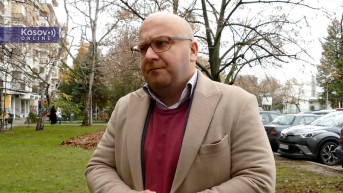
Analyst from Skopje, Blagojce Atanasovski told Kosovo Online that the Central European Initiative represents more a form of symbolic connection than real institutional interconnectedness among its members that could bring about substantial reforms in those countries.
He says that the CEI played a role in bringing closer the states that were part of the “post-communist bloc”.
“With the collapse of the Warsaw Pact, all those states were supposed to connect regionally through this initiative in order to speed up their path toward full membership in the European Union, drawing on the experiences of other member states and giving each other a push forward”, Atanasovski said.
According to him, the CEI has similarities with initiatives that emerged later, such as the Berlin Process, Open Balkan or CEFTA, because they are all aimed at regional integration of countries that are still not fully integrated into the European Union.
“From that point of view, all those initiatives were noble and welcome for the states, primarily because of the removal of certain customs barriers and the fostering of links above all in the economy, industry and business, that is, because of preparation for what is known as the European single market. All of them are a kind of litmus test ahead of possible full membership for each country from Eastern and Southeastern Europe that has become an EU member over these past 30 years. But I think these initiatives cannot be a substitute for full EU membership for any state in the region of Southeastern Europe”, the analyst stresses.
He believes that CEI members are not particularly interested in improving their mutual cooperation because, as he points out, every state that becomes a full member of the European Union is integrated into the large European market of more than 500 million inhabitants.
Once they belong to that more elite club, he argues, the political elites in those countries have no need to expend their institutional, state and political energy on loose or informal alliances such as CEFTA or Open Balkan.
“We see that even the example of Open Balkan was not good enough to function in the future, because the remaining Western Balkan states did not want to be part of it. For Serbia, Albania and Macedonia, that initiative was simply more imposed than a solid institutional alliance”, Atanasovski concludes.



0 comments