
Gerasimovski: Drastic reduction in birth rates in North Macedonia

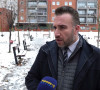
Doncho Gerasimovski, the former director of the State Statistical Office of North Macedonia and a demographic analyst, assesses that the country has experienced a drastic reduction in birth rates and a population drain over the last decade, making it urgently necessary to devise a strategy to halt this process.
"For about ten years, the birth rate in our country has been declining. For instance, ten years ago it was around 27,000, now it's somewhere around 16,000. This means that there is a drastic reduction in birth rates. If you also look at the annual figures, on average, about 700 fewer children are born each year," Gerasimovski told Kosovo Online. He cites two key reasons: first is the fact that couples are increasingly deciding against having more children, and second is the process of emigration.
"This concerns the reproductive population, the young population from whom marriage is expected," the expert highlights, adding that the number of children born abroad is increasing and now amounts to about 6,000.
"In some municipalities and regions, we have a higher number of live births and higher birth rates than in the country itself," Gerasimovski emphasizes.
This demographer explains that the increasing rate of population departure from North Macedonia is conditioned by living conditions, as well as socio-economic status, education, and a series of other reasons that can be described as "seeking a better life."
He warns that of the eight regions and 60 municipalities in North Macedonia, seven have recorded a negative natural increase.
"Out of eight regions, seven have reduced birth rates, that is, they are experiencing a negative natural increase. In 60 municipalities, we have a negative natural increase, meaning the number of live births is smaller compared to the number of deaths," Gerasimovski specifies.
He adds that similar data applies to the Western Balkans.
"In neighboring countries, like Bulgaria, this phenomenon is even more characteristic. In Serbia, we have a situation where the birth rate is higher each year by either 0, 1, or one percent compared to previous years. Similar occurrences are also in Kosovo and Montenegro. In all countries, demographic processes are poor," he emphasizes.
The solution for North Macedonia, he sees, lies in the creation of a serious demographic strategy.
"Forming a coordination body within the competent state institutions to develop a serious, expert, and professional strategy for the coming period is just the first step. The second is the engagement of professionals regardless of their religious, ethnic, or party affiliations. We need people who understand these phenomena and problems well because so far, several such strategies have been developed that have not been fruitful. However, there are proposals and measures that can help, especially in terms of keeping young people in the country, from improving living conditions, better study conditions, securing jobs, and housing... Otherwise, it will not be good. Of 1,769 populated places, 205 are deserted. In 300 populated places, there are about ten inhabitants each. Consider that, especially when it comes to rural, rural environments, one-quarter will remain empty," Gerasimovski warns.

0 comments