
Gjokutaj: Low level of investments among countries in the region, Kosovo is a key partner for Albania
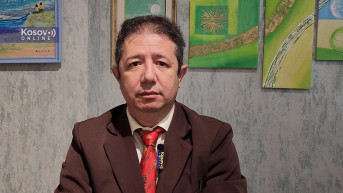
Economic expert and president and fiscal analyst at "Altaks" company, Eduart Gjokutaj, told Kosovo Online that the level of investments between countries in the Western Balkans is very low, noting that for Albania, Kosovo remains a key partner.
Commenting on the degree of attraction of foreign investments in the Balkans, he states that Serbia is in the first place due to the size of its economy, but also because of its more aggressive policy in attracting these investments.
"In Serbia, foreign investments are at a level that reaches 7, 8 percent of its gross domestic product. Albania is in second place, thanks to real estate purchases and investments that come either from formal sources or from 'offshore' areas. North Macedonia holds third place in the region, which also has an aggressive policy in attracting foreign investments mainly in the chemical industry, telecommunications, and the services and trade sector," Gjokutaj explains.
He adds that Montenegro and Kosovo are at similar levels when it comes to attracting foreign investments.
"Montenegro has investments in service sectors, mainly related to tourism and trade. Kosovo has foreign investments in telecommunications, partly in the energy sector, and trade, and the trend is rising, but not at levels demanded by the economy and citizens. Foreign investments are also considered special projects of the European Union for investing in these countries," our interlocutor explains.
Observing the mutual economic relations of the countries in the Western Balkans, he notes that for Albania, the main partner remains Kosovo "despite the fact that Kosovo and other countries have limitations to invest in Albania."
Then follows North Macedonia, as a neighboring state that has interests in the telecommunications, energy, and services sectors, and also Montenegro, which has more interests in the tourism sector, mainly in the real estate area.
"With Serbia and Bosnia and Herzegovina, the levels of foreign investments in Albania are smaller, either due to certain historical and cultural reasons or because of various political obstacles and administrative barriers. Overall, these foreign investments in Albania only make up five percent of the gross domestic product, so they are not at the expected level due to the geographical proximity of the countries," Gjokutaj says.
He explains that Albania has "the same approach."
"The most is invested in Kosovo due to cultural, linguistic, and other connections that make this cooperation logical. Similarly, in North Macedonia, as a neighboring country, there are foreign investments from Albania, which mainly relate to telecommunications, financial services, and trade," the analyst from Tirana says.
He believes that the unsatisfactory level of foreign investments between countries in the region is linked to the problems of these countries' economies, and because investments are mostly made in those countries where it is possible to be competitive.
"We are small countries and there is no security and guarantee that the investment will be long-term due to various political, administrative, or trade problems. Likewise, relations between these countries are influenced by cultural factors. This was particularly evident in the Berlin Process, which was linked to the Open Balkan initiative, which, although it aimed to create a broad common market, did not achieve its goal because it remained hostage to the past and the way of thinking that exists in the region about how business is conducted," our interlocutor says.
He adds that one of the obstacles to the growth of foreign investments in the region is also the small amount of financial capital in the countries.
"They have gone through difficulties in the 90s and are forced to restructure their economies to adapt to the international market," Gjokutaj concludes.


0 comments