
Kozeski: Nearly 27,500 foreigners in Macedonia, mostly employed in the grey economy
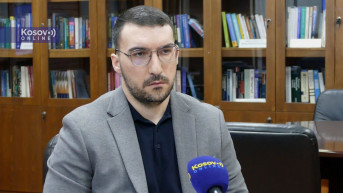
Assistant professor at the Ss. Cyril and Methodius University in Skopje, Kristijan Kozeski, tells Kosovo Online that the number of foreign nationals in Macedonia has increased from 17,500 to nearly 27,500, and that they are largely economic migrants engaged in the grey economy.
According to him, labor markets in the countries of the region share similar characteristics and cannot be viewed in isolation.
“The trend of inflow of additional labor in these countries is already intensifying, that is, we have an upward trend in additional labor. When analyzing the inflow of additional workers in these countries, it must be analyzed as a single economic region as a whole. Albania, Macedonia, and other Western Balkan countries are quite small and have a similar labor market structure, similar economic structure, industrial setup, level of productivity and wage levels, and are too small to be treated as just one national economy,” our interlocutor points out.
As he states, the Macedonian labor market has long been facing a chronic labor shortage, which has created the need to import workers from abroad.
“The Macedonian labor market, facing a chronic labor shortage, has a need for an additional inflow of economic migrants, which is also a trend in highly developed countries. We are not an exception,” he emphasizes.
He points out that the domestic labor market is characterized by two opposing processes.
“We have a decline in unemployment, which has reached a historic low of around 11 to 12 percent according to available data. However, we also have the opposite trend of stagnation in labor market participation, meaning there is a large number of workers in the domestic economy who have still not been activated, and the market has no additional mechanisms to integrate those additional workers,” Kozeski says.
For this reason, he adds, companies are forced to seek labor abroad, even though this is not a cheaper option for them.
“Companies are faced with the solution of seeking foreign workers who, believe me, are not cheaper for them, because the overall costs of engagement and integration, both economic and social, require money,” he stresses.
Data from the State Statistical Office indicate an increase in the number of foreign nationals in the country.
“In the period from 2005 to 2015, we had around 17,500 foreign nationals, and from 2016 to 2024, according to the latest available data, around 27,500 additional foreign nationals, which indicates that the structure of our labor market is already changing,” the expert from Skopje states.
He warns that the changes do not relate only to the ethnic structure, but also to the educational and qualification profile of the workforce.
“We are facing an outflow of working age population with higher education and qualifications that follow technological trends, while on the other hand we have an inflow of additional workers with inadequate education, that is, they do not have the skills to integrate into the labor market and to produce higher added value,” he points out.
Speaking about the basis on which foreign nationals obtain residence permits, he says that they are mostly economic migrants.
“The labor market itself dictates that these workers are primarily economic migrants, that is, they receive their permits based on the need for additional work engagement in our country. We do not see this at the aggregate level of employment, meaning we see a stagnant employment rate in the recent period, which indicates that these workers are engaged in the domain of the informal economy,” Kozeski emphasizes.
As a result, he adds, the scope of the grey economy remains high.
“The number of informally employed workers in Macedonia, according to the latest available data from the third quarter of 2025, exceeds 100,000. This means that no taxes are paid for these individuals, and the state bears additional social and health costs,” the expert warns.
He singles out construction and trade as the sectors in which informal work is most pronounced.
Speaking about future trends, he assesses that demographic projections are not favorable.
“The projections are not positive. We have a downward trend in the demographic structure in our country. First and foremost, I am referring to the trend of population aging, which will further worsen the situation in the labor market. If this is compounded by the outflow of young and working age population, which represents human capital in a national economy, I believe we are facing greater challenges in the labor market, something that is also the case in other Western Balkan countries,” our interlocutor warns.
As a long term solution, he sees reducing the economic gap with the European Union.
“As a solution, I see reducing the gap in economic performance between this economic area and that of the European Union. Above all, I am referring to wages, labor productivity and efficiency, with the aim of reducing the factors that influence part of the working age population to emigrate from our country,” Kozeski concludes.



0 comments