
Preci: Albania anticipates stable economic growth, greatest potential in agriculture and tourism
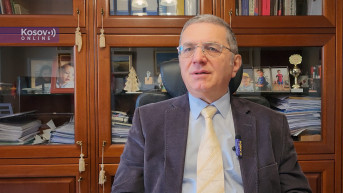
Economic analyst Zef Preci from Tirana expects Albania to continue its trend of economic growth this year, achieving progress compared to the previous year. However, he also says that the country will face various external and internal factors shaping its economic outlook.
Preci notes that Albania’s economy is closely tied to international developments and says that the stabilization of foreign markets could significantly impact the domestic economy.
“As for international developments, there is hope that achieving a peace agreement in Ukraine could help stabilize raw material markets, particularly energy, grains, and other products. Albania’s economy is heavily influenced by international events due to its open market nature,” he stated.
He also expects that the European Union will "normalize economically," which could positively affect the Albanian diaspora.
“This will reflect in their financial contributions to our economy, i.e., remittances brought in by emigrants,” Preci added.
Preci notes that 2025 is an election year, which could have both positive and negative effects.
“The positive side is that the focus of debates is gradually shifting away from political, ideological, and corruption accusations, which are more a matter for the judiciary than politics. I hope the debates will center on issues of good governance, proper use of public assets and budgetary resources, and policies that prioritize citizens. At the same time, I strongly hope that Albanian citizens will become more aware, take greater responsibility for our shared future, and make economically sound individual, family, and societal decisions,” Preci stated.
The analyst expressed concern over inflation, which, according to him, has “eroded” additional income. However, he emphasized that inflation in Albania has stabilized, providing some grounds for optimism.
“Inflation in Albania has been stabilized, meaning we have a low and controlled inflation rate within projected parameters. It remains to be seen whether efforts to attract foreign direct investment will succeed and whether Albanian businesses will take risks to expand the real economy. Unfortunately, economic growth below 6% annually does not generate new jobs,” he explained.
Preci noted that predicting economic growth in Albania is difficult due to the high degree of informality in the economy and the influx of money from informal and criminal origins.
“We usually rely on data provided by Albanian institutions, such as the Albanian Institute of Statistics (INSTAT) and the Central Bank of Albania, which are certified by international financial institutions after a certain period. So, a year or two later, we can have data on the current year’s economic growth,” Preci added.
Regarding internal factors, Preci identified agriculture and tourism as having the greatest potential for growth.
“At the same time, I believe there will be a gradual slowdown in the construction sector following years of significant investment fueled by informal and criminal money. The number of permits issued for building tourist resorts along the coast will inevitably lead to continued 'injection' of funds into this sector,” he stated.
In this sense, he emphasizes, the predictions are that the economic growth will be between four and 4.5 percent.
“These projections are periodically issued by international financial institutions. They convey relevant messages to the business community, the government for budget planning, and the banking system for assessing borrowing risks. The fact that we ave seen a reduction in interest rates is positive and provides an opportunity for lending to play a larger role, as it is currently far from the potential and capacity of our economy to absorb funds,” Preci concluded.

0 comments