
Aleksic: Among the 3,500 claimants suing NATO, there are also Albanians from Pec, Prizren, and Bujanovac
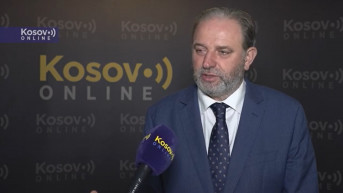
Srdjan Aleksic, a lawyer from Nis who initiated the first legal proceedings against NATO three years ago in the Higher Court in Belgrade regarding the use of depleted uranium ammunition, tells Kosovo Online that among the 3,500 people who have given him authorizations, there are also several Albanians from Prizren, Pec, Bujanovac, and Presevo.
Aleksic says that the majority are former soldiers and police officers who were in Kosovo in 1999. When it comes to Albanians, these are people who lived in Kosovo and in the municipalities of Bujanovac and Presevo and moved to Germany and Switzerland after the war, where they found they had developed cancer.
For all those who are affected, the procedure of proof is the same.
He is convinced that the number of Albanians seeking justice will be much larger once it is established through court judgments in Belgrade that exposure to depleted uranium was crucial in the development of the most serious diseases.
"When they realize that uranium kills not only Serbs but also all other nations living in Kosovo. Uranium does not recognize national belonging, and uranium will have very serious consequences in Kosovo. Their healthcare workers certainly know this, people who deal with this issue," Aleksic says, adding that he expects the first judgments to be delivered by the end of this year.
Aleksic claims that NATO's use of depleted uranium ammunition in Kosovo has produced radiation that is 100 times greater than that in Hiroshima and Nagasaki after the United States dropped two atomic bombs in 1945.
"Most of the depleted uranium ammunition was dropped in the Pec and Prizren areas, in the territory where Italian soldiers were stationed, and therefore, they had the most significant consequences. The Albanian population in this part of Kosovo is also affected, as are a certain number of Serbs who lived there. They have come to central Serbia but have brought depleted uranium with them because they inhaled it through water, air,... Serbia is now the first in Europe in terms of the number of people affected and the second in the world in terms of the population. Today we have more than 30,000 newly affected every year and 15,000 deceased," Aleksic says.
The lawyer from Nis specifies that there are a total of 35 lawsuits in the process before the Higher Court in Belgrade, two of which are supported by analyses conducted in Italy.
"For two of the claimants, we did complete medical analyses in Turin, in a laboratory that worked on findings for Italian soldiers. Not only do these findings overlap, but in Colonel Stojcic's case, 500 times more depleted uranium than the allowed limit was detected. Additionally, 21 heavy metals were found in his system. He passed away last year. Depleted uranium remains for eternity. It affects both Albanians and Serbs," Aleksic says and notes that the consequences are not limited to the development of cancer but also infertility in both men and women, as well as autoimmune diseases in children.
"In Vranje, we have a large number of children with autoimmune diseases. This has now appeared in Kosovo as well. I hope we will all understand how harmful depleted uranium is," Aleksic says, who, along with Italian lawyer Angelo Tartaglia, agreed last week in Banja Luka to represent about 2,000 citizens of Republika Srpska from Hadzici and Han Pijesak who fell ill after the NATO bombing in 1995.
Tartaglia has so far managed to win legal cases in Italy for more than 350 Italian soldiers who became ill after participating in peace missions in Bosnia and Herzegovina, Kosovo, and Somalia on the same grounds.

0 comments