
Sentic: The Law on the Use of Languages is broad in granted rights, but its implementation in practice is problematic
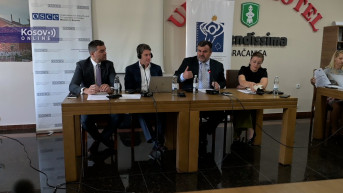
The Law on the Use of Languages in Kosovo is broad in the spectrum of granted rights, but its practical implementation is highly problematic, Deputy Ombudsman Srdjan Sentic assessed at the round table on "Respect for Language Rights in Kosovo" held today in Gracanica. Ombudsman Naim Qelaj pointed out the problem of the small number of complaints regarding the non-compliance with this law and emphasized the importance of increasing awareness among citizens about this issue.
Deputy Ombudsman Srdjan Sentic highlighted that Kosovo has a very advanced legislative framework that, through constitutional and legal provisions, guarantees the equal use of the Albanian and Serbian languages, as well as the languages of other communities at the municipal level. However, he explained that, in practice, citizens face numerous problems in exercising their language rights.
"It is noticeable that the process of respecting language rights, despite some positive changes, is progressing slowly, which in itself suggests that the existing mechanisms for the protection of language rights need to be further supported and strengthened towards their efficiency in fulfilling full responsibility in implementing the legislative framework concerning the Law on the Use of Languages," Sentic said.
For Serbs and other communities using the Serbian language and living in areas predominantly inhabited by Albanians, and for Albanians living in northern Kosovo, where the Serbian population is the majority, the non-compliance with language rights means limited access to legal documents, Sentic emphasized, adding that this affects limited access to work, consumer rights, healthcare, education, and social services.
"Some of the problems that arise include violations of the right to equal use of the Serbian language in administrative procedures with institutional bodies, non-compliance with official languages on the official websites of a large number of institutions at all levels of government, both central and municipal, and significant discrepancies in updating existing web pages of institutions, which is particularly evident for the Serbian language, reflecting inconsistencies not only in information on both official languages but also delays in publishing information. Furthermore, there is still inadequate or incorrect translation of toponyms, mainly related to the Serbian language," he said.
As Sentic further added, the conclusion is that the legal framework is good and that the Law on the Use of Languages is broad in the spectrum of granted rights, but its implementation in practice is very problematic.
"The reasons for the non-compliance with the Law on the Use of Languages have been and still are the subject of reports by many international and domestic organizations, which see the cause of the problem in the lack of political will, resistance in the majority community, an insufficient number of qualified translators, and the absence of punitive policies for non-compliance with language rights," he said.
Ombudsman Naim Qelaj stated that this institution had received about 175 complaints from the Serbian community in 2023, which is, as he said, double the number in 2021. Regarding the Law on the Use of Languages, Qelaj emphasized that very few citizens complained, with that number being around three to four last year.
"There is a small number of complaints we received, and we agree that there needs to be more work on increasing awareness, also through such meetings, consultations, and surveys at the local level. Again, as a second phase, ultimately, the Ombudsman's institution issues a review of findings or results based on the work that has been done. The issue of language rights is something the Ombudsman institution will continue to address until final solutions are reached. Now, how prepared we are to meet the standards depends on political readiness, which is evident. However, I think that these issues, which are legal obligation, do not concern just one institution or someone's will or readiness; they are legal obligations. When there is no implementation of the law, there are only two options: either to enforce it or to amend and supplement it. Precisely because the law must be enforced, we must do everything we can to ensure that this right is respected 100 percent," Qelaj said.
The Head of the OSCE Mission's Department of Law and Justice in Kosovo, Mark Lasser, said that the OSCE Mission takes the issue of the Law on the Use of Languages seriously and has a large number of activities focused on this issue.
"My department for justice and the judiciary monitors the work of the courts and has noticed that often people do not have documents in their languages, for example, in their own language, Serbian or Albanian. There is a problem with translations in the courts, and this has been recognized at the highest levels. Also, many workshops have discussed the poor quality of court translations. Additionally, my sector comments on draft laws and also examines the quality of law translations from Albanian to Serbian or other languages in use, and we often find that the quality of translations is not good. This is something we have often highlighted. We are also working with the Office of the Prime Minister to establish a special unit that would attempt to improve the quality of law translations," Lasser said.
He emphasized that everyone has the right to understand court proceedings in their own language.
"How can you defend yourself, how can you participate in a hearing if you do not understand what it is about or do not have documents in your language?" Lasser said.
The round table was organized by the Ombudsman institution and the OSCE Mission in Kosovo.



0 comments