
Maroevic: I don’t believe Clark’s testimony can change the course of the case against Thaci and the others
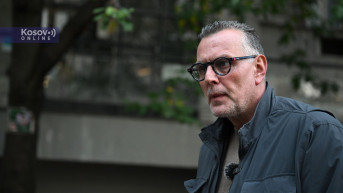
Editor of the RTS website Rade Maroevic believes that Wesley Clark, as the final defense witness before the Specialist Chambers in The Hague, will simply continue with the defense’s argument that the former KLA leaders on trial could not have been directly responsible for the crimes they are accused of.
Maroevic notes that the main stars of the defense were Jock Covey and James Rubin, while Wesley Clark was brought in as a generally significant figure, even though he did not have direct contact with Thaci or KLA leaders during the war.
“So, in principle, we can only expect that he will continue to support the argument that the KLA leadership currently on trial in The Hague could not have been directly responsible for the crimes for which the four of them have been charged. In short, the defense is trying to prove – and Luka Misetic is a very skilled lawyer, as we have seen before – that those responsible for the crimes were either individuals within the KLA ranks or regional commanders, rather than the leaders at the top,” Maroevic said.
Wesley Clark was the head of NATO forces at the time when the largest number of Serbs were kidnapped and killed by KLA members.
“The indictment only partially covers that period. In essence, the bulk of it refers to the time before NATO’s arrival, and partly to the period after NATO’s arrival. However, that is a more complex story, and I think the prosecution did not address it in a way that would implicate NATO or shift part of the responsibility onto NATO, but rather focused directly on the KLA leaders. There are various explanations for this. One of them is that NATO was not a police force and, during those first few months, was not in a position to act as such – that was supposed to be done by the UNMIK police, which never reached the planned strength of 6,000 officers from the very beginning,” he explained.
In Pristina, expectations for Wesley Clark’s testimony are high.
“That’s because he was the most prominent figure during the war. He is considered a hero among Kosovo Albanians, but realistically, the two key witnesses were Jack Covey and James Rubin – the man who created Thaci’s image and the man who defended him when the UN administration was being established in Kosovo. So, from June 1999 onward, Covey was a key player in Kosovo on KLA-related issues. Before that, in shaping Thaci’s image, there were James Rubin and Paul Williams, who served as an adviser to the Albanian delegation at Rambouillet and was also a witness in The Hague,” Maroevic said.
When asked whether Clark’s testimony might be subject to certain restrictions, Maroevic responded:
“I think he will face the same limitations that James Rubin and, let’s say, Jack Covey had, since they testified with the permission of the State Department after briefings there, where it was precisely decided how their testimonies would proceed. You must obtain State Department approval to participate in such a process in any way. It’s likely that the Pentagon did the same with Wesley Clark. If there are any restrictions, I doubt we will ever know what they are,” he said.
Asked whether he expects the trial to wrap up soon after Clark’s testimony, Maroevic added:
“As far as I understand, verdicts are expected in the spring. Whether that is realistic, we will see. I think this is a complex and fairly secretive process, unlike the former Hague Tribunal. We haven’t had many cases – at least not that we know of – where witnesses were harmed or subjected to unbearable pressure. From that standpoint, the prosecution has done quite a good job. It’s had enough time and resources to build the case. On the other hand, the defense has also had plenty of time and resources and has brought in major figures from American foreign policy. So, we’ll see, in this clash of two worlds – two sets of arguments – which one prevails,” he said, and added:
“I don’t think Wesley Clark’s testimony can change the course of the case itself. I think the field evidence is what really matters. The prosecution built its case on concrete events rather than on political narratives about those events. So it’s very uncertain how much weight the theory advanced by James Rubin and Jack Covey can really carry compared to the actual crimes that took place on the ground. This defense is facing specific crimes and trying to counter them with a political narrative. It is very hard to predict how the prosecution will respond to all of this. We simply can’t know, I’m afraid,” Maroevic concluded.


0 comments