
Qerkini: The process in The Hague is non-transparent, the court is not up to the task
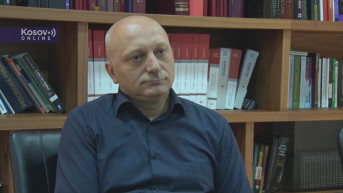
Licensed attorney at the Specialist Chambers, Artan Qerkini, stated that the trial against the former KLA leaders Hashim Thaci, Jakup Krasniqi, Rexhep Selimi, and Kadri Veseli, conducted at the Hague Court, is characterized by non-transparency. He also mentioned that it's difficult to predict when it will be concluded due to the large number of witnesses.
"So far, this trial is shaped by a high degree of non-transparency, as 75 percent of the hearings are closed to the public, where only the defense, the court, and the prosecution know what is happening inside. Because the proceedings are closed to the public, it's impossible to know what's happening and form one's opinion on the proven or unproven nature of the crimes for which Thaci and others are charged," said Qerkini.
According to him, this trial is also characterized by overly strict detention measures.
"Similarly, this trial currently shapes overly strict detention measures that have lasted for more than three years, which, in my opinion, contradict human rights court standards. According to their practice, the conditions for determining detention cannot be used as conditions for extending detention. In the decisions on the extension of detention, we see the same reasons, which is a practice that contradicts the practice of the European Court of Human Rights," Qerkini added.
He emphasized that the Hague Court is not living up to its task because, in addition to establishing the truth, it must also ensure that the trial is concluded within a reasonable time.
"The fulfillment of the standards provided by Article 6 of the European Convention, the right to a trial within a reasonable time, is violated because the process has been ongoing for three years already, and it's uncertain when it will be concluded. The Court must ensure the establishment of truth in the judicial process, but also the conclusion of the trial within a reasonable time. However, the court is not living up to the task regarding the principle of a trial within a reasonable time," Qerkini emphasized.
According to him, the pace of the trial is good, but the problem lies in the large number of witnesses in the case against Thaci and others.
"The pace is fast, but there are many witnesses. The large number of witnesses significantly affects the duration of the criminal proceedings. There are no issues with the pace, but there are issues with the large number of witnesses, many of whom, in my opinion, are unnecessary," said Qerkini.
For this reason, he adds, it's difficult to predict the timeframe for the completion of the trial against the former KLA leaders.
"It's difficult to predict the timeframe for the completion of this trial because when the prosecution finishes presenting evidence, it's the turn of the defense. We don't know which witnesses and evidence the defense will present; it will depend on the evidence presented by the prosecution. The court also has the right to present evidence. Considering these facts, it's very difficult to predict when the process will be concluded," Qerkini concluded.



0 comments