
Topol on the Open Balkans: Every initiative to simplify border crossing is positive
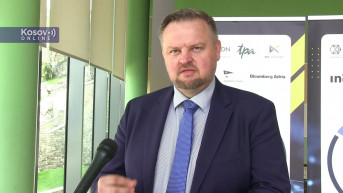
One of the biggest challenges of logistics and cargo transportation is precisely the delays at the borders, because long waiting periods at crossings create a problem for business, pointed out the director of Samer International Aleksander Topol.
"Any initiative by the state, customs, to simplify border crossing or customs clearance, through accelerated procedures, such as Hungary has for imports from China, is definitely positive," Topol told for Kosovo Online, commenting on the advantages of the "Open Balkans" initiative.
Logistics, he emphasizes, is always looking for the most convenient and fastest way, and these are exactly faster and simpler procedures for crossing the border.
He adds that there are still things that need to be worked on in the region, primarily in terms of railway infrastructure, because, he says, railways are the past and the future of logistics.
When asked if things are returning to the way they were before the covid pandemic, he replied that, for one thing, they are returning to the previous situation, but that, for another, they will never return, because a lot of things have happened in the meantime.
"First, it started with the blockade of the Suez Canal, which caused huge congestion in all ports. And, since the goods did not leave the port, and new goods arrived by train, there was a huge congestion of capacity. The second problem is the pandemic, which caused an unprecedented situation in logistics, where in the end nothing worked and it was shown which companies are creative, which are not and how they find new solutions. In addition, she called into question the 'taken for granted' import from China. On the third side, there is the problem with Ukraine , which is a huge market, and a large amount of goods from Ukraine goes through the port of Odesa, which at one point was blocked and the goods were taken away by train," explains Topol, who participated in the "Strategic Economic Dialogue" gathering in Savudrija, organized by the Business Network of Development of Southeast Europe (SEEBDN) from Vienna.
Topol explains that such a situation then caused a huge need for wagons, which means that some heavy industries became much more expensive, because the demand increased, and it also led to an increase in prices.
When asked how the introduction of the euro in Croatia affected business, he stated that the euro brought both problems and benefits.
"We do most of our business with foreign partners, and conversion in business is easier for us. It did simplify the processes in the logistics business, but the problems from before are still there. It makes business easier for us, because we are an international company, with headquarters in Italy, and branches in region – Koper, Ljubljana, Bratislava, Budapest, Novi Sad, Belgrade, Sarajevo and Zagreb - and we have a big expansion," said Topol.


comments