
How much do the protests of the Serbian opposition affect Belgrade's position at the time of Western pressure over Kosovo?

The current protests of the opposition in Serbia do not have a significant impact on Belgrade's position in the dialogue on Kosovo, but this could happen if their radicalization and a possible political crisis in the country occur, the interlocutors of Kosovo Online say, noting that the use of violence at the protests of the opposition in Belgrade would enable Albin Kurti to try to use force against the Serbs in Kosovo.
According to analyst Dejan Vuk Stankovic, the position of Serbian negotiators would be much more relaxed if there was no internal pressure in the country.
"If the protests turned into an open conflict between two parts of the people or a conflict between the rebellious people and the police, then that would be a signal to Kurti that Serbia is politically unstable. Serbia would start dealing with its own political crisis, in which it would invest enormous energy, and Kurti would say, 'Serbs are preoccupied with their internal conflicts and now it's time for me to try to do my version of the Croatian scenario from 1995,'" says Stankovic, who adds that he hopes that there will be no conflicts on the street that would be politically motivated and that everything remains at the level of opening the institutional debate - whether we go to elections or not.
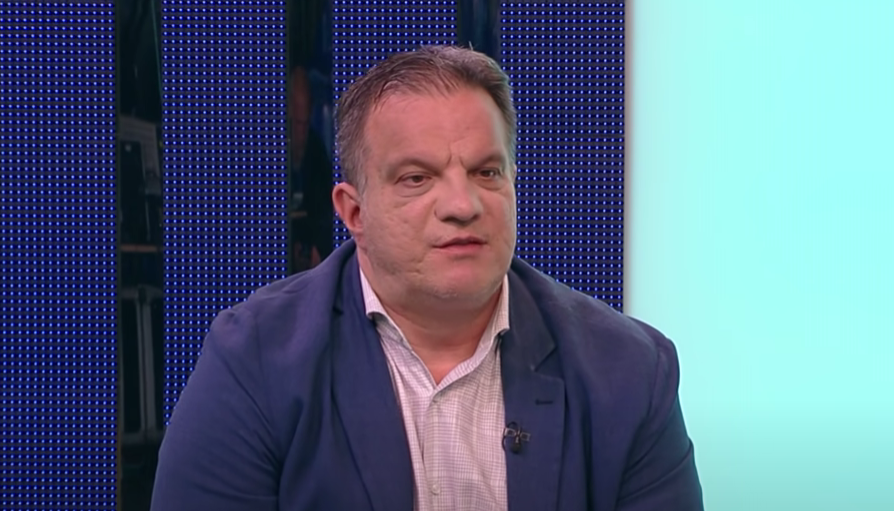
Stankovic indicates that the political priority for Serbia at the moment is to preserve the survival of the Serbs in Kosovo and to continue the negotiation process that would pacify the opposition between the Kosovo Serbs and Kurti's administration, while the protests that are being forced to somehow change priorities in Serbian politics.
"It would be good if the demands from the protest were turned into an institutional debate, and ultimately elections were called if those demands cannot be negotiated, and then let it be as the people decide," he says.
As for the possibility that the West will increase pressure on Belgrade at this moment regarding Kosovo, Stankovic says that Western pressure exists with or without protests.
"Western pressure exists as a constant, and it would certainly be felt more strongly if there is internal pressure in the country. The treatment of Kosovo by the West is not conditioned by who forms the government in Belgrade. Similarly, the Albanians have no problem continuing with the same demands in relation to the Serbs and Serbia, regardless of who is in power in Belgrade. And when Djindjic was in power, they wanted independence, and when Kostunica was in power, they wanted independence, and Tadic and Dacic, and Vucic, Nikolic and Dacic, and now that Vucic and Dacic are in power, they want independence. The composition of the government in Belgrade does not change either the demands of the West or the views of Pristina. If we want to defend Kosovo, we have to be united, if we don't, then that's a different story, but so far no one from the opposition or the government did not say that he will not defend Kosovo. If we defend it, then it is better to show national unity and to solve problems within the framework of institutions," Stankovic says.
According to the opinion of the executive director of the Center for Free Elections and Democracy (CeSID), Bojan Klacar, the protests have no influence on Belgrade's position in the dialogue, provided that they do not become massive, so Serbia enters some kind of political crisis and that the political institutions, primarily the government, do not have sufficient legitimacy to engage in dialogue.
"It is objectively very difficult for that to happen, because if we look at political life, ratings, some expectations from future elections, there is little probability that so many major changes can occur and that Serbia enters an institutional crisis. There are very few chances unless protests would be so massive or if, unfortunately, they would turn into some kind of polarization and if some violence appeared in the streets, which would lead to a political crisis in the country. In such a scenario, the institutions would have to deal with other issues, while some other topics, including Kosovo, suffered in a certain way. But it seems to me that the protests do not have such a potential to lead the country into a political crisis," Klacar says.
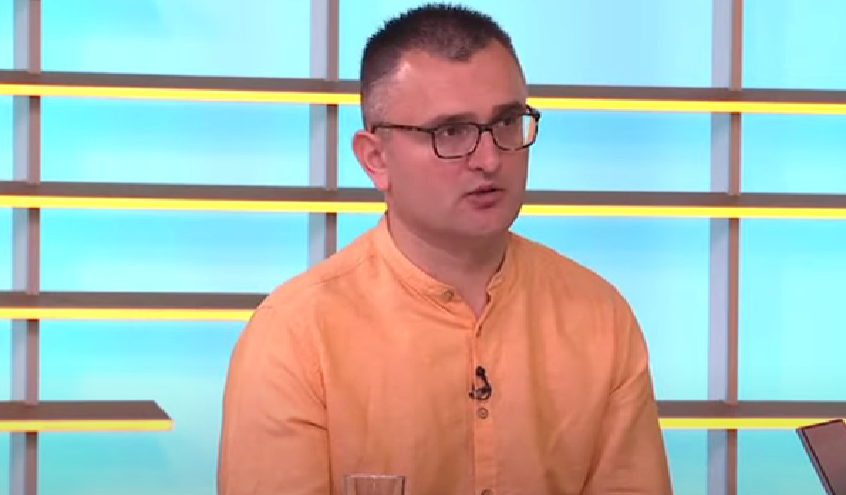
Regarding whether the West has more "touch" in the protests to keep Belgrade under pressure over the Kosovo issue, Klacar says that he thinks there is not, because the protests are predominantly limited to Belgrade, and the demands that have been put forward, he adds, do not have such a reach that they could questions work of institutions and their legitimacy in a more serious way.
"Especially, which is a good part, if not the most important part, of the negotiations, is led by President Vucic, who has legitimacy in every scenario since he was elected in direct elections," Klacar says.
The President of Serbia, Aleksandar Vucic, said yesterday that Serbia was under great pressure regarding Kosovo and that the essence of all these pressures was for Serbia to recognize Kosovo and for Pristina to fulfill nothing.
"It is clear and unambiguous that there is a de facto plan by which they are trying to tell Serbia and the Serbs that some have fulfilled all their obligations by listening to the presentation on the Community of Serb-majority Municipalities, but that the essence of the plan is for us to recognize them and for them to do nothing,” Vucic said.
By the way, the demands put forward at the two protests held so far by some opposition parties, which gathered several thousand people each, are - the removal of all REM members, the cancellation of reality programs and shows that promote violence on channels with national frequencies, the replacement of the management of RTS, the confiscation of national television frequencies Pink and Happy, the dismissal of the Minister of the Interior Bratislav Gasic, the head of the Security and Information Agency Aleksandar Vulin, the acceptance of the resignation of the Minister of Education Branko Ruzic and the holding of a session of the Serbian Parliament at which the responsibility of the Government of Serbia and the security situation in the country will be considered as soon as possible.


comments