
Does the EU understand the importance of national identities in the Western Balkans?
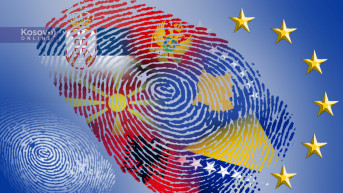
A few days ago, the European Parliament adopted the Progress Report on North Macedonia’s EU accession, from which direct references to the “Macedonian language and identity” were removed. This sparked outrage and harsh reactions in Skopje and reopened the question of how the EU views the national identities of candidate countries from the Western Balkans—and whether they might also face similar challenges. Analysts from the region emphasize that North Macedonia’s case is specific, and that Brussels does take national identities into account. Still, they agree that every topic in EU accession talks is inherently political.
Written by: Djordje Barovic
“Macedonian language and identity are being erased from the European report in a Taliban-like manner. This is what has happened to us as a people in the 21st century,” cried Macedonian Prime Minister Hristijan Mickoski after it became clear that the terms “Macedonian language” and “identity” would be excluded from the report on the country’s EU progress.
Political Interests and Decisions
Historian from Skopje, Prof. Dr. Natasa Kotlar Trajkova, believes that the removal of national qualifiers from the European Parliament’s report on North Macedonia was a poor political decision, showing that the EU views the national identities of candidate countries solely through the prism of political interests.
“This is a political decision—deeply political, extremely rigid, inappropriate, and not good for the EU itself. People in the Balkans know how to live with trials and challenges, even when they are political or military. But this is an issue with the countries already in the Union—it shows we are facing interlocutors with serious conceptual and functional shortcomings. I believe that all Balkan peoples need to reassess and adapt their attitudes to what the EU actually offers,” she told Kosovo Online.
She stressed that the issue is also driven by the “political and selfish interests” of EU member states.
“We can discuss what constitutes science, politics, or geopolitics. The greatest influence lies in geopolitics—namely, the political and self-serving needs of EU countries. Having lived in Western Europe, I more often see expressions of nationalism than what is typically described as Balkan nationalism,” she observed.
Asked how much the EU understands the Western Balkan peoples’ need to preserve their national identities, Kotlar Trajkova said she believes they do—“because they start from themselves.”
“The problem lies more with them—with their perception and understanding. The issue isn’t that we, as Balkan people, lack sufficient cultural or intellectual capacity to grasp complex concepts. The way of thinking in EU countries is much more rigid, and that is the challenge for all Balkan nations—to assert our values and not give them up.”
She does not believe this was an attempt to covertly diminish the importance of national identities in the Western Balkans.
“This is not about reducing national identities. It’s about a completely different political connotation—because identities are not exclusive to political entities,” she said.
Kotlar Trajkova explained that the Macedonian identity must be viewed as a “complex network” of categories that make up national identity.
“There are several layers in that complex network called identity. We must always clarify whether we are referring to nominal, historical, or national identity. When it comes to cultural identity—which I see as the most important—then we must discuss language, literature, folklore, and historical roots. That’s why political representatives must clearly state that they are defending the historical Macedonian identity and cultural subjectivity.”
She is convinced that Europe will only respond if the discourse is framed with clearly defined formulations.
“As long as Europe sees that we are superficial and inattentive in this context, we will face similar reactions on the European political scene.”
A Delicate Matter
Sociologist from Pristina, Artan Muhaxhiri, explains that national identities in the Western Balkans are a “very delicate issue” for the EU, which is why it approaches the topic with extreme sensitivity.
“The EU takes a very careful approach to national identities in the Balkans because of what happened in the 1990s. They are fully aware that this is an extremely sensitive issue. However, of course, there are specific cases,” Muhaxhiri told Kosovo Online.
One of those “specific cases,” he noted, is the omission of national terms from the report on North Macedonia.
“One Bulgarian MEP initiated this, and it is well known that Bulgaria has had issues with the Macedonian national identity for some time. It wants the Bulgarian minority in North Macedonia to be constitutionally recognized.”
He pointed out that North Macedonia and Bulgaria have had long-standing bilateral tensions and that resolving the dispute must come through dialogue.
“This is a specific issue, but I don’t think it will have a major impact. North Macedonia will have to make some adjustments and find a consensus with Bulgaria if it wants to progress toward the EU. But it’s also clear that the EU is very, very cautious about national identities in the Balkans.”
Due to the events of the 1990s in the former Yugoslavia, Muhaxhiri believes the EU has a “vision” for preventing future misuse of national identities in the region.
“The EU has been actively involved since the early 1990s in what happened in the former Yugoslavia. They know what can go wrong if national identities are abused—especially by populist politicians. We know how the EU works: it’s slow, complex, and requires near-total consensus in almost every decision.”
“European Identity”
On the other hand, historian from Belgrade, Stefan Radojkovic, believes the background is different—that the EU wants to impose a “European identity” on candidate countries.
“The EU is trying to create a European identity—a universal, unifying identity that doesn’t even exist within the EU itself. But the narrative persists, this myth that all these peoples are first and foremost ‘Europeans,’ and only then French, German, etc. But we saw during times of crisis—like the COVID-19 pandemic—that national identities remained deeply significant. Every country looked after its own interests, not any kind of European solidarity,” Radojkovic said.
He added that, since the EU failed to establish a shared identity among its own members, it is now trying to impose it on small Western Balkan nations through conditionality—and that Ukraine and Georgia would face the same treatment.
“These countries are expected, in addition to giving up part of their sovereignty, to adjust or dilute their national identities so that they can ‘fit into the European family.’ But that so-called ‘European family’ doesn’t exist. It’s one of the EU’s long-standing myths, used in interactions with potential member states.”
Radojkovic sees North Macedonia’s situation as the result of a series of “rotten compromises” made by its own political elites.
“This is not an attempt to erase the national identity—because as long as people in North Macedonia feel and believe they are Macedonians, that identity cannot be extinguished. What we’re seeing is the result of prior compromises made by the country’s political elites—compromises that were humiliating and involved a series of constitutional changes.”
He explained that “once a precedent is set in a matter of identity, further pressure will inevitably follow.”
“In other words, you’ve opened the door to further demands. We know both Bulgaria and Greece have had issues with the Macedonian language and identity. Greece demanded that the country change its name, remove symbols installed by VMRO-DPMNE, renounce Philip of Macedon and Alexander the Great, and even rename airports and boulevards. These precedents and rotten compromises invited more blockades and conditions from neighboring countries.”
He believes NATO membership was the only beneficial compromise North Macedonia made.
“The country’s territorial integrity and sovereignty were threatened—both internally and externally—and NATO membership, at the very least, guarantees that territorial integrity and a functional compromise with the Albanian population.”
When asked what part of Serbia’s national identity might be problematic for the EU, Radojkovic is certain:
“They would object to the core of our identity—namely, the Kosovo Covenant. They see it through a bureaucratic lens, through documents. Their issue is that, even as an EU member, Serbia would continue to invoke Kosovo, which many EU countries recognize as independent. That puts them, especially Germany, in an uncomfortable position.”
In such a case, Radojkovic says, the EU will seek a “solution” in which Serbian national identity is redefined without Kosovo.
“They would expect us to withdraw all support for ethnic Serbs in neighboring countries, treating them—perhaps not as foreign bodies—but as citizens of other states, belonging to other identities.”
Minimization of Nationhood
Historian Bedri Muhadri from the Historical Institute in Pristina says that the Western Balkans is defined by a shared history of struggle for national freedom—and that the EU is now trying to minimize the role of nationhood as the foundation of statehood, clearly visible in the case of North Macedonia.
“A common trait of national identities in the Western Balkans is their shared history. Albanians, Serbs, Montenegrins, Macedonians, and Bosniaks were all under Ottoman rule and fought persistently for national liberation,” he said.
He claims that by removing terms like “Macedonia” and “Macedonian language,” the EU is attempting to downplay the role of nationhood as a basis for sovereignty.
“Macedonian national consciousness, which emerged in the early 20th century, is the foundation for political and legal self-determination.”
However, he also notes that North Macedonia includes native populations of Albanians and Bulgarians who should be constitutionally recognized as “founders of the state.”
“The framework of the Macedonian state should be built on the ethnic composition of its peoples. The state must recognize the founding peoples.”
Asked whether this could be a way of quietly applying similar standards to other Western Balkan candidates, he says the EU is trying to find a modus vivendi for national identities.
“The EU must acknowledge ethnic identities and ensure that, based on ethnic cohesion, all peoples are treated equally in state constitutions. In North Macedonia’s case, history shows that Albanians and Bulgarians played significant roles in the country’s formation. Whether this is an attempt to erase Balkan identities—I cannot say with certainty. But the EU, which is based on the principle of equality among its members, is clearly seeking a political workaround—a modus vivendi—in line with present circumstances.”


0 comments