
Is the era of old Africa coming to an end, and what do young leaders bring to this continent and the world?
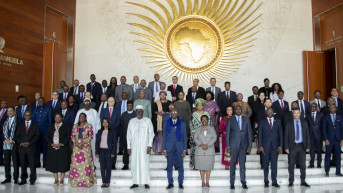
Brought to power with huge support from young voters, Senegal's youngest president, Basirou Diomaje Faye (44), vowed upon taking the oath of office earlier this month to defend the territorial integrity and national independence of his country, stating that his election reflected a "deep desire for change." The formation of a new government in Dakar was covered by European and global media headlines suggesting "winds of change," a "new era," and a "new phase in the long history of decolonization" across the entire African continent.
Although his Cameroonian counterpart, Paul Biya (91), has been in power nearly as long as Faye has been alive, Faye is not the only example of a young African leader. The presidents of Madagascar, Burkina Faso, and Mali have also not yet reached their fifties...
Apart from belonging to new generations, what characterizes them, as sources in Kosovo online indicate, is the belief that "Africa must finally belong to Africans," that is, the fight for national interests.
"The line that connects Senegal, which recently got a new president, and countries in Africa that have had military coups in the recent period - Niger, Gabon, Burkina Faso, and Mali - is that all these states are at the forefront of protecting national interests and sovereignty," says former Serbian ambassador to Kenya, Dragan Zupanjevac to Kosovo online.
According to him, the tendency across Africa, especially in the west, is that many countries which were under French rule have turned against it and have demanded that French troops leave their lands.
The West is closely monitoring changes in Africa, says Zupanjevac, but overall, all global geopolitical powers from the European Union, the USA, China, Russia, and Turkey are very present on this continent and want to exert influence.
"France was the colonizer of Senegal as well as many countries in West Africa, and Faye's desire is to fight for Senegalese interests. He announces that he will abandon the French franc, which is tied to the European Union. He talks about reevaluating some arrangements made by the former government in the energy sector, fighting for Senegal's national interest, which is a general trend in West Africa where we have had seven military coups in the last two or three years. Some of these countries are now led by young officers, as we also have a young president of Senegal, a fairly stable democratic country that has not had coups," says Zupanjevac.
The African Union, our interlocutor emphasizes, adheres to the principle that borders must not be changed. The boundaries in the form of straight lines, he reminds, were set by colonizers, without much consideration for the ethnic structure, so the same tribes are on both sides of the borders.
"If these borders began to change, it would lead to great chaos and instability. Therefore, Africa values international law and territorial integrity. Because of this, there is room for Serbia to talk with new, young leaders, and it is not impossible to change the stance of some countries that recognize Kosovo because we have changed the stance of many African countries in recent years. We managed to do this with Burundi, the Comoros Union, Somalia, Sierra Leone, and Ghana," points out Zupanjevac.
He recalls that the majority of African countries do not recognize Kosovo, which is of exceptional importance to Serbia when fighting for any of its interests in the UN, whether it be to prevent Kosovo's admission to UNESCO, or Interpol, and even for winning the Expo 2027 exhibition, the votes of African countries were very important.
"This is a large pool of countries in the UN that can decide on various issues. We now have a possible resolution on Srebrenica in the General Assembly of the UN, our diplomats will always talk with African countries and their support is important to us," says Zupanjevac.
Foreign policy analyst Borislav Korkodelovic tells Kosovo online that Africa is a "significant lobbying group" in the United Nations.
"Anyone who wants to promote their interests in the UN must count on this group of 54 countries," says our interlocutor.
Korkodelovic says that Africa is a young continent and therefore produces relatively younger statesmen. They, he points out, increasingly insist that Africa must finally "belong to Africans" because, he says, the former colonizers continued to exploit Africa, especially through economic measures.
Asked how much young African leaders, particularly in countries like Senegal which recognizes Kosovo, can be a factor of change and influence to alter such a stance, our interlocutor says that the possibility of derecognizing Kosovo exists, but there must also be incentives from Belgrade and some more concrete offers for cooperation, because these leaders are most interested in the economic development of their countries.
"They largely break off relations with France and say: 'Africa now belongs to Africans.' The most important countries in Africa, starting with Nigeria, which is the African giant and the third largest film industry in the world by production volume, do not recognize Kosovo. When asked why, the answer given practically applies to a number of countries, not only African but also Latin American, Middle Eastern, and Asian: 'We have our separatist movements and do not want to recognize such entities in other parts of the world because it is very contagious.' They also said they remember very well their civil war when Biafra seceded from the rest of Nigeria, and it was a very bloody civil war," says Korkodelovic.
"Most young people in Africa are quite educated, with around 300,000 young Africans going abroad for education each year. This young Africa is achieving what economists call a 'leapfrog' in its development. They don't go through all the development phases that today's developed world went through; instead, they skip some and move directly to what is currently dominant, making Africa a continent that promises economic growth. The industrialization process has been advancing over the last twenty years, largely thanks to China, which has been heavily involved in building across Africa, especially highways. The Chinese have built about 13,000 kilometers in parts of Africa, as well as schools, hospitals, and power infrastructure... When you look at satellite images of Africa from 20-30 years ago and today, it's a complete contrast," says Korkodelovic.
This leap towards development will, he believes, contribute to the increasing significance of Africa in international relations. This has been particularly noticed by Russia during the war in Ukraine.
Given that a resolution on Srebrenica is coming up at the UN, our interlocutor notes that 40 percent of Africa's population is Muslim.
"There needs to be an appeal to them through our Muslim population to mitigate the dangers of such a decision," he says.
Explaining why many see Africa as the continent of the future, Korkodelovic points out that it is currently the second most populous continent in the world and a continent of the young.
"It is the continent of the future in every sense — demographic, economic, and strategic. It holds about 30 percent of all global minerals, 12 percent of proven oil reserves, 8 percent of gas, and what is most important for the future of humanity — 65 percent of arable land. Africa currently has 1.4 billion people, of which only 3 percent are over 65 years old. By the year 2100, Africa will have 40 percent of the total global population, while Europe will only have four percent," says Korkodelovic.
Predrag Rajic from the Center for Social Stability says that Senegal's new president, Faye, will likely lead a somewhat different foreign policy as they have announced that they will not rely solely on France, but will try to find partners across other meridians. However, he adds, it should be kept in mind that France is deeply rooted there politically, economically, and culturally, and that changes in government in West African states sometimes herald a shift away from this main course, but a middle ground is often found and cooperation continues with the country that has been present there for many years.
"The vacuum that could arise if France withdraws more or less, or is pushed out, could well be filled by another Western country, primarily America, which alone has the capacity to make its presence felt there. It's also a fact that Russia had interests primarily in the security and military spheres, while China has an infrastructural presence. To be a dominant partner in a part of the world like West Africa, you need to have unified political-diplomatic strength, economic-infrastructural presence, money, as well as a security presence. This is not easy to combine, as seen in the case of France, which has been there the longest," states Rajic for Kosovo online.
He notes that there have been frequent shifts in some African countries regarding Kosovo in the past decade and that such shifts are likely to continue in the future, but Serbia has managed to get a large number of countries from this continent to withdraw recognition of Kosovo.
"We need to work with them and see where we can align interests. We will fight to prevent countries that have not done so from recognizing Kosovo, and those that have recognized it to derecognize it. It will be a long fight using political and diplomatic means and this issue will be on the agenda of Serbia's relations with African states for a long time," says Rajic.


comments