
Finnish proposal for ending the war in Eastern Europe: The "Kosovo model" for Ukraine as well?
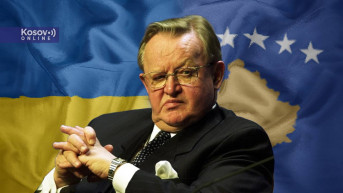
If it worked in Kosovo, why not in Ukraine? With this idea, Finnish President Alexander Stubb introduced a proposal at the Munich Security Conference, arguing that to end the war in northern Europe, something similar to what was done in Kosovo should be implemented – emphasizing the role of his compatriot, former UN Special Envoy Martti Ahtisaari. While the idea might work in theory, it is unlikely to happen in reality, according to experts interviewed by Kosovo Online.
Written by Arsenije Vuckovic
"Europe should have a special envoy like Martti Ahtisaari, as well as a deputy envoy at the level of Kellogg," Stubb said.
How feasible this is might become clearer as early as March 6, when European Council President Antonio Costa has scheduled an extraordinary EU summit.
"We are living in a decisive moment for Ukraine and European security," Costa stated.
Martti Ahtisaari was awarded the Nobel Peace Prize in 2008 "for his great efforts on multiple continents in resolving international conflicts."
"Ahtisaari made a significant contribution when Namibia gained independence in 1989-90, arbitrated in Kosovo in 1999 and 2005-07, and helped end the long-standing conflict in Indonesia’s Aceh province in 2005," the award explanation stated.
He passed away in 2023 at the age of 86.
As the UN Special Envoy, Martti Ahtisaari presented the Comprehensive Proposal for Kosovo’s Status to authorities in Belgrade and Pristina on February 2, 2007. However, the Serbian Parliament rejected this draft with a special resolution, citing it as a violation of Serbia’s sovereignty and territorial integrity as a recognized international state.
Even supporters of the then-opposition Self-Determination Movement in Kosovo opposed this plan. In protests organized in Pristina on February 10 of that year, two people were killed.
A fair compromise
Former EU Special Envoy for Kosovo, Wolfgang Petritsch, called the Finnish president's proposal "interesting" and emphasized that the European Union should appoint "a strong political figure" to work on establishing peace in Ukraine.
“That is an interesting proposal. With Ahtisaari, even though Belgrade did not accept everything from the beginning, there was an attempt to find a fair compromise. No one is ever fully satisfied. I think this would be a good approach. Since the beginning of the war in Ukraine, I have been saying that the EU should appoint a strong political figure to work on establishing peace and addressing human rights violations in Ukraine,” Petritsch told Kosovo Online.
He points out that dialogue with Moscow must be attempted because diplomacy's task is to engage with all parties responsible for the problem, including Russia and Vladimir Putin.
“The EU has not handled this well. Perhaps Stubb will be able to assert himself, and maybe someone will be appointed to dedicate themselves to this task,” Petritsch stated.
He believes that seeking a solution for Ukraine without Ukrainians would not be a good approach.
Petritsch recently organized a conference on Afghanistan in Vienna and, as an example, pointed out that the country faces issues due to a flawed peace agreement that was unilaterally reached only with the Taliban.
“That would be like negotiating only with the KLA in Kosovo. That is not possible. All legitimate political representatives must be included. The same applies to Ukraine, Kyiv must be involved because this is about Ukraine,” Petritsch concluded.
Security guarantees
For Nikola Lunic, Executive Director of the Council for Strategic Policies, the Finnish president’s idea is not applicable to Ukraine.
One of his key arguments is that ensuring "security guarantees" alone would require between 100,000 and 120,000 international peacekeeping troops – an impossible number to mobilize at present.
"The Finnish president is enhancing the legacy of a career Finnish diplomat like Ahtisaari. However, Ahtisaari’s plan was not so successful that we could speak of his crucial contribution to peace in the Western Balkans. We see that it has practically become a frozen conflict, with no further recognitions of Kosovo’s independence, and its international legal status remains entirely questionable," Lunic told Kosovo Online.
He points out that the 2007 Kosovo model "differs drastically from Ukraine."
"At that time, Serbia did not fully control its territory with its armed forces. International coalition forces were present in Kosovo and Metohija. On the other hand, Russia controls about 20% of Ukraine’s territory. Ahtisaari’s model of 'controlled independence' included autonomy for certain regions, constitutional guarantees for minority rights, and a robust international presence. If applied to Ukraine, it is quite clear that this would be unacceptable to Russia," Lunic explained.
Another reason, he notes, is that top officials of the new US administration have already "promised" Russia the possibility of annexing certain territories.
"It has been clearly stated that Ukraine cannot count on its pre-2014 borders," Lunic recalled.
He emphasizes that the key lies in providing security guarantees, which would require a significant international military presence – something that is currently difficult to achieve.
"Security guarantees would necessitate a robust military presence of international forces with heavy armored vehicles and artillery. At this moment, that is uncertain, as the US is entering negotiations with Russia while preemptively rejecting the possibility of involving its forces in such a hypothetical peacekeeping operation," the analyst pointed out.
At the same time, he clarifies, Europe is also unable to take full responsibility for such a mission.
"At present, Europe can provide up to 25,000 troops, while estimates suggest that such an operation would require between 100,000 and 120,000 soldiers," Lunic stressed.
Similarities and differences
The "Kosovo model" of conflict resolution yielded excellent results but is still not applicable to Ukraine, argues lawyer and former chief inspector of the Kosovo Intelligence Agency (KIA), Shkelzen Sopjani.
"It would be very difficult to implement, especially considering that we are dealing with a global superpower like Russia. This is also reflected in the latest power index that was published, I believe, just a few days ago. Therefore, I am not sure that this approach would actually work," Sopjani told Kosovo Online.
As another reason, he points to historical differences between Kosovo and the territories under Russian control in Ukraine.
"There are many historical differences between Kosovo and the territories controlled by Russia. Kosovo had a relatively advanced status even in former Yugoslavia, with its own constitution, police, and governing bodies that had considerable independence. Furthermore, Kosovo was one of the founding members of Yugoslavia, along with seven other republics, and participated in electing the president. That is why I believe this model would not fit. There are no similarities between the two cases," Sopjani explained.
He emphasized that, looking at Kosovo in the 1990s and today, it is clear that the peace plan was successful.
"Those of us living in Kosovo see it as a successful plan, especially when comparing Kosovo in the 1990s to today. These are two entirely different realities. And that is obvious, particularly to older generations who remember the 1980s, 1990s, 2000s, 2010s, and now. Given Kosovo’s past and its institutional position within former Yugoslavia, it is undoubtedly a success. Even the International Court of Justice found no illegality in Kosovo’s Declaration of Independence. I believe that chapter is closed," Sopjani stated.
(Un)feasible solutions
Historian Stefan Radojkovic believes that Russia has done everything to prevent a "Kosovo scenario" in Ukraine, making it impossible to apply any model that would involve appointing a special envoy, as was the case with Kosovo.
"Russia has done everything to ensure that, at least in its case, there is no 'Kosovo scenario.' We must remember that one of the reasons for Putin’s rise to power was NATO’s intervention and the bombing of the Federal Republic of Yugoslavia, as well as the subsequent events after 1999," Radojkovic told Kosovo Online.
According to him, Finnish President Alexander Stubb’s call for an "independent special envoy" is no longer a viable option for Ukraine.
"That plan is no longer feasible. Finland discredited itself by officially joining NATO under Prime Minister Sanna Marin. As a result, the comparative advantage it once had – its traditional neutrality, which was recognized in 2006 and 2007 during Ahtisaari’s leadership in the Berlin Process – no longer exists," the historian emphasized.
He added that Austria could take on Finland’s former neutral mediation role, but the fundamental issue is that Russia does not trust solutions coming from the EU.
"The only country that could be considered even remotely neutral in this conflict is Austria, but even it would struggle to propose anything. The core problem is that Moscow does not trust Europe or EU member states, especially the older ones like France and Germany. Naturally, Finland is also no longer viewed positively by Moscow, precisely because it abandoned its traditional neutrality," Radojkovic explained.
Another key reason why the "Kosovo scenario" is impossible to apply to Ukraine, he noted, lies in the "different actors" involved.
"The parties involved in the conflicts in the Balkans are not the same as those engaged in the Ukraine crisis today. In other words, Russia is a major power, a global player, the third strongest country in the world, and it will not allow itself to be treated like the Federal Republic of Yugoslavia. Especially given its vast nuclear arsenal and the fact that the situation on the ground in Ukraine is currently unfolding favorably for Russia," Radojkovic stated.
He also cited a third, crucial reason: Moscow’s conditions for ending the conflict in Ukraine.
"Moscow has laid out three conditions for initiating any negotiations, and these are conditions that the West – primarily the US – must agree to. When Russians negotiate, they negotiate exclusively with Washington. They have no interest in the EU whatsoever. Their three conditions are: recognition of all territories Russia has conquered and formally annexed – four regions plus Crimea, Ukraine must be a genuinely neutral state, and no peacekeeping missions under the UN, NATO, or any combined format can be present on Ukrainian territory," Radojkovic explained.

0 comments