
Health, freedom, peace – what is the recipe for happiness in the Western Balkans?
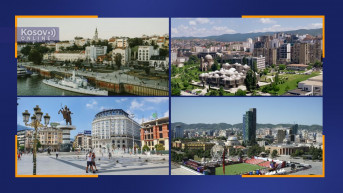
A study by the American organization Gallup ranked Kosovo 16th on the list of the happiest places in the world and first in the Western Balkans. While citizens in the region associate happiness with health, family, and peace, experts emphasize that it is subjective and depends on the broader social and economic context. Both agree that such studies do not always reflect the real situation and may even be politicized.
Written by: Katarina Saicic
In Gallup’s research, as in previous years, Scandinavians top the list, and the top 20 is mostly made up of residents of highly developed Western regions. A surprise is Kosovo, which this year ranks high at 16th out of 147 countries. In the Western Balkans, Serbia ranks 30th, Montenegro 60th, North Macedonia 82nd, and Albania 86th.
One of the key elements of the research is a survey in which respondents assess how fulfilled their lives feel.
Following this study, we sought to find out what constitutes the key recipe for happiness and to what extent such research can reflect reality and what people truly feel regarding satisfaction with their lives.
Residents of Gracanica: Happiness requires freedom and peace
Residents of Gracanica emphasize that happiness is measured by the health of family and people, but also that freedom and peace in the world are necessary for a person to be happy. They view the fact that Kosovo ranks 16th on the happiness list as an unrealistic picture.
“When a person is healthy, that is happiness for me. Everything depends on people—what people are like, that is what their happiness is like,” said an elderly resident of Gracanica.
For Iva Nicic, happiness is waking up healthy in the morning.
“For me, happiness is that I woke up this morning, and my family as well. Health is my priority, as is the health of my loved ones,” she said.
Commenting on Kosovo’s ranking, Zivka Savic says it does not reflect reality.
“I don’t think that is true, whether for us Serbs or Albanians… We all think the same. What kind of happiness is that when so many young people of Albanian nationality are leaving Kosovo in search of a livelihood? I don’t see any happiness there. I don’t know who voted for that, but it is an unrealistic picture,” she added.
Zika Marinkovic from Gracanica believes that happiness is measured by the health of the family and the people, but that freedom is the most important.
“The health of the family and the health of the people. Freedom is the most important; everything else is less important, and here in Kosovo we hardly have freedom. What kind of freedom is it if I cannot go to Pristina and feel comfortable, when I spent my whole life there? Freedom is irreplaceable,” said Marinkovic.
Citizens of Pristina: Happiness lies in health and peace
In conversations with Kosovo Online, citizens of Pristina say they would like the research placing Kosovo 16th in the world to be accurate, but that everything negative happening also affects society’s happiness.
Frok Neziraj pointed out that citizens should appreciate Kosovo’s high ranking, but that poor political and economic conditions affect people’s lives.
“If the world has assessed that we are a happy people, then they are probably right. I am 80 years old and I do no harm to anyone, regardless of nationality. If others assessed it that way, we must appreciate it. Everything bad affects citizens’ happiness. I am quite a happy man, I have four children and eight grandchildren,” Neziraj added.
Afrim believes that peace is key to happiness, which can be achieved through coexistence between Albanians, Serbs, and other communities.
“Let there be peace, let people live better, let there be harmony among people in our republic, among Albanians, Serbs, and everyone else. I would like the research to be accurate, but all these price increases and the global economic crisis, including here in Pristina, show that it is not quite so. Maybe it will get better,” Veseli said.
Calovska Hercog: Results are questionable and confusing
Psychiatrist from Belgrade, Nevena Calovska Hercog, believes it is highly questionable and confusing that Kosovo ranks as high as 16th in Gallup’s global happiness survey. She emphasized that the result may be politicized.
“This result is highly confusing and questionable. Knowing at least to some extent what living conditions are like there, the level of predictability, and how uncertain or stable the economic and political situation is, one may wonder how someone can claim to be happy in such a context. Are they referring to a deeply personal experience of happiness? People in love say they are happy wherever they are. But to what extent is this a politicized message? One must be very critical in interpreting these results,” she said.
As she explains, happiness is subjective and difficult to measure.
“What we know is that there is a genetic predisposition for people to be optimists or pessimists, which shapes their perception. Another part relates to unchangeable circumstances—whether someone lives in Israel, Serbia, or Denmark. Living in a certain context defines predictability and what a person can expect from society or the state in a crisis. That represents part of personal or family satisfaction,” she emphasized.
She added that a third component—personal agency—accounts for 25–30 percent of overall happiness.
“That is what we can do with our lives—how much we engage our strengths, preserve our ability to give meaning to life, and enjoy close relationships, which are a highly protective factor for our health and well-being,” she noted.
Asked about the influence of economic and political conditions, she emphasized that they account for 30 to 40 percent of happiness and fall under external circumstances.
Decline of optimism in Albania
While Kosovo ranks 16th, the situation in Albania is different, as it stands at 86th place. Professor Entela Binjaku believes this is due to dissatisfaction with corruption, as well as declining optimism and trust in the future.
Binjaku noted that Albania has improved its ranking this year but remains the lowest among Western Balkan countries.
“Previously, our country was ranked 89th. Meanwhile, among the six Western Balkan countries, Kosovo performs best. This year, Pristina gained many points and is now ranked 16th, compared to 29th last year,” she said.
She added that the Western Balkans generally ranks lower globally, although North Macedonia, Bosnia and Herzegovina, Montenegro, and Serbia are all ahead of Albania.
“I believe the reasons for Albania’s low ranking are linked to corruption. Citizens increasingly report being affected by it, making them less satisfied with life. Another factor is the decline in social relations. People find it harder to rely on others. The third reason is declining optimism and trust in the future. These are the main factors affecting our ranking,” she explained.
Binjaku believes these responses are a message to political leaders.
“Citizens express dissatisfaction with corruption and uncertainty about the future, regardless of age. These are messages politicians should understand. It is difficult to be optimistic, but what motivates society is the path toward integration into the broader family of Western countries, where we believe we belong,” she concluded.
Macedonians prioritize individual goals
Psychologist from Skopje, Katerina Dimova, assessed that citizens of North Macedonia are more focused on individual goals than on relationships, which contributes to their 82nd place ranking.
According to her, one indicator of happiness is whether people are oriented toward the present or the future.
“We may be too focused on future plans and goals instead of the present moment. Perhaps we lack gratitude for what we have now and do not fully experience joy in the present,” she said.
She emphasized that achieving inner peace requires slowing down and strengthening relationships, something often lacking.
“In practice, we are more oriented toward individuality than toward building close relationships. Other countries rank higher because they nurture family time, social connections, and support. I am not sure we cultivate this enough to feel happiness,” she stated.
Citizens of Skopje: Happiness lies in small things
For citizens of Skopje, happiness lies in health, family, and small everyday moments.
“From morning to evening, I try to enjoy the day through small, beautiful things,” said one resident.
Another citizen emphasized health as the most important.
“It is important for me to be healthy. With these viruses lately, older people suffer the most. I enjoy seeing my family happy—my children and grandchildren—and taking care of them,” he said.
A third added that happiness lies in family and peace.
“Happiness is a positive thought. Despite all the negativity, a person must find a way to move forward. Even though life has many setbacks, we should rise and keep going,” he concluded.



0 comments