
Leaving Self-Determination: Isolated cases or "problems in the ruling paradise"?
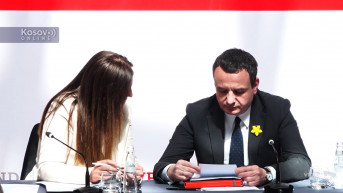
Three members of parliament recently left the Self-Determination Movement, which is far from affecting Prime Minister Albin Kurti’s proclaimed goal of securing 500,000 votes in the upcoming February elections – assuming these are isolated cases. Otherwise, the ruling party could experience firsthand the devastating consequences of the "snowball effect," where a small snowball rolls downhill, growing larger and faster, eventually becoming massive and unstoppable.
MPs Visar Korenica and Eman Rahmani left the Self-Determination Movement at the beginning of October, citing nepotism, the state of the economy, education, healthcare, and initiatives affecting family life as reasons. The latest to leave the party was MP Drita Milaku.
"In recent months, I have observed debates that have caused irreparable damage to Self-Determination, damage that even its greatest enemies could not have designed or imagined... Misunderstandings have harmed the spirit, trust, and goals. I no longer believe that the organization is ready for swift changes," wrote Shpend Ahmeti, the then-mayor of Pristina and one of the most influential members of the Self-Determination leadership, when he resigned from all party functions in 2018.
When Haki Abazi was expelled from the party last year – which he says he learned about from the media – independent MP Fatmir Humoli, also one of those who left, warned that Self-Determination MPs had been dissatisfied with the situation in the party.
Nevertheless, just as one swallow does not make a spring, individual departures do not necessarily mean the party is on the brink of collapse.
Mathematically speaking, over nearly four years in power, the Self-Determination Movement has lost five MPs in the Assembly, reducing their number from 56 to 51.
However, such calculations should not only include MPs but also other members who have left the party, as well as Self-Determination voters who no longer support it. This all needs to be multiplied by the amount of distrust and dissatisfaction that exists within the party.
Marko Milenkovic, program manager of the NGO "New Social Initiative," tells Kosovo Online that more departures from the ruling party could occur, especially because it is turning "into a movement that is undemocratic, autocratic, and primarily follows the ideas and policies of one man who leads this movement."
He emphasizes that Korenica and Rahmani left Self-Determination for political reasons, due to disagreements with certain policies, and like Drita Milaku, who also left the party, they joined other political options, meaning they remain in politics with different beliefs.
"What is interesting is that there are indications that the first two left the party due to religious beliefs and their positions on certain laws. If this trend of confrontation with the majority of the population continues on the part of Self-Determination, we might expect a larger number of people leaving the party. As for Mrs. Milaku, we haven't seen specific reasons, but what we know so far is that she also left the party due to political views," Milenkovic points out.
He reminds that Self-Determination emerged as a "catch-all" movement, where people from different backgrounds and with diverse views gathered, without much consensus on key political issues.
"They were primarily united by the idea of nationalism, but also by the idea of some civic resistance. Let’s remember what the campaigns were like and what Self-Determination was at the very beginning, an organization that organized protests and so on. I think that in those two segments, Self-Determination is still following that policy. We now see resistance even toward the international community; they have not taken on the role of being in power but still behave in many respects as if they are in the opposition. On the other hand, we have an extremely nationalist-oriented policy, which reflects the views of these people," our interlocutor says.
Regarding other issues, he notes that there are differences within Self-Determination, which, in his opinion, could lead to more departures.
"Especially because Self-Determination is turning into a movement that is undemocratic, autocratic, and primarily follows the ideas and policies of one man who leads this movement," Milenkovic says.
Nedxmedin Spahiu, a university professor, says for Kosovo Online that there is too many different political currents in the Self-Determination.
"Self-Determination is a melting pot, with too many currents and too many different political ideologies involved – ranging from extreme conservatives to liberals, from religious individuals to atheists. Of course, it is easy to rally people when you want to take power, but once you have power, you have to show who you are aligned with because you can't be both liberal and conservative at the same time. You will end up betraying someone," Spahiu said, commenting on the recent departures of MPs from the ruling party.
He adds that many people have left Self-Determination, not just MPs but also party members.
"There is still plenty of time until February, but it remains that Self-Determination will be the leading party. With how many votes, we cannot say yet, but if they don’t secure an absolute majority, if they don’t get more than half of the votes, it is highly possible that the current opposition will form the government," Spahiu explained.
On the other hand, political scientist Ognjen Gogic says for Kosovo Online that the recent departure of a few Self-Determination MPs from the party does not suggest a significant decline in trust or dissatisfaction within the party.
He reminds that Self-Determination has gone through some splits before, such as when Pristina’s mayor, Shpend Ahmeti, left the party, but notes that despite this, the party continued to grow.
"Even now, with Kurti maintaining his approval rating at a historic high, and that rating remaining stable, it doesn't seem like these individual departures could seriously jeopardize Self-Determination's electoral results," Gogic believes.
If there were a major split in the party, which in his view is not on the horizon, such as an entire faction breaking away, that could potentially change the situation.
"There has been speculation about whether the Americans might consider encouraging part of the membership to break away and weaken Self-Determination, but that doesn't seem like a likely scenario. It appears to be more about individual departures, possibly involving people dissatisfied with their status in the party, leading them to leave out of personal dissatisfaction. But this does not point to a major decline in trust or widespread dissatisfaction within the party," Gogic says.
He believes it is highly likely that Self-Determination will win the elections and do so with enough strength to form the government again.
"For now, unless something drastic changes, it doesn’t seem like anything can stand in the way of that. However, if a mathematical scenario emerges where other opposition groups, together with other communities such as the Serbs and others, could form a majority, that coalition would not be long-lasting. We have seen that before in Kosovo, when there are crises in relations among partners, Kurti and Self-Determination would probably return to power very quickly. It seems that the time of Self-Determination and Albin Kurti's government in Kosovo is not over yet, and we will likely have to wait a bit longer for that," Gogic concludes.


0 comments