
Who is lobbying for Kosovo - publicly and secretly?
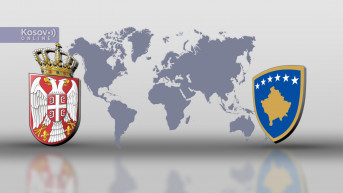
Some countries do it openly, while others work "under the table." Serbian President Aleksandar Vucic recently warned that Turkey and several other countries are actively working to secure recognition of Kosovo's independence, which only strengthens Belgrade's resolve to defend its territorial sovereignty. Experts speaking to Kosovo Online explain that each state has its own reasons for supporting Kosovo, but that the high number of de-recognitions points to Serbia's successful counter-lobbying strategy.
Written by: Djordje Barovic
Speaking at the GLOBSEC Forum in Prague, Vucic stated that the international community has done nothing over the past 12 years to compel Pristina to implement the Brussels Agreement, but that this has only reinforced Serbia's commitment to preserving its territorial integrity amid strong lobbying efforts by powerful actors pushing for Kosovo's recognition.
He singled out Turkey and several other states.
"We will soon have surprises from two different parts of the world on this matter, which will serve as a response to the efforts of our partners lobbying for recognition—I believe good news is coming in the days ahead," Vucic said.
The most recent country to recognize Kosovo is Sudan. Kosovo President Vjosa Osmani announced it on April 12 via the social platform X, following a meeting with Sudanese Foreign Minister Ali Youssef Ahmed al-Sharif in Austria.
Analysts claim that Turkey played a direct role in securing this recognition.
"Sudan's recognition and the meeting with the Sudanese president can clearly be attributed to the efforts of Turkish President Recep Tayyip Erdogan. His influence is evident, and Kosovo's role in this was secondary to its specific relationship with Erdogan," said political analyst Afrim Kasolli.
Just three days after the meeting with Osmani, Sudan's head of the Sovereignty Council and commander of the armed forces, General Abdel Fattah al-Burhan, dismissed the foreign minister.
Who (Does Not) Recognize Kosovo
According to Pristina, Sudan is the 119th country to recognize Kosovo. Belgrade, however, counts it as the 85th. In late March, Kenya also recognized Kosovo.
Until then, Kosovo had gone four full years without a single new recognition—the last one being Israel in 2020.
Of the 193 United Nations member states, 108 do not recognize Kosovo’s independence. Among the non-recognizers are two UN observer states: Palestine and the Holy See.
Twenty-eight countries have withdrawn their recognition in the past nine years, and three have suspended it. During that time, only Barbados and Israel newly recognized Kosovo. Since Suriname first withdrew recognition in 2017, others followed: Libya, Gabon, Ghana, the Central African Republic, the Maldives, the Comoros, Palau, Madagascar, and Vanuatu, among others.
Currently, for Pristina, the most strategically important countries are the five EU members that have not recognized Kosovo: Greece, Spain, Slovakia, Romania, and Cyprus—with the first four also being NATO members.
Geostrategic Ambitions
Slobodan Zecevic, Director of the Institute for European Studies in Belgrade, told Kosovo Online that any country that has recognized Kosovo can engage in public or covert lobbying. Turkey, he said, has an added interest: it wants to assert itself as a leading power in the Islamic world.
He emphasized that the key question is whether the leading EU countries will allow Ankara's expansion into European territory.
"Any state that has recognized Kosovo can lobby for it, publicly or secretly. The logic is that if a country has recognized Kosovo, it wants to see that geopolitical outcome affirmed in international relations. Therefore, every such country could act as a potential lobbyist," Zecevic stated.
He sees Turkey's role primarily through the lens of its geopolitical ambitions.
“Turkey has always aspired to become a great power within the Islamic world. Recep Tayyip Erdoğan seeks to position himself as a kind of patron of the Islamic world across all regions,” Zecevic explained.
He added that Erdoğan’s ambitions are reflected in his contacts with Muslim communities in Bosnia and Herzegovina and similar outreach efforts in Kosovo.
“It is evident that he has been entrusted with specific tasks, including the arming of Kosovo’s future armed forces. This is a policy that suits him at the moment. Perhaps it has Western backing, but it aligns with his image-building as a global Islamic power supporting Muslim communities worldwide—including in the Balkans,” Zecevic emphasized.
The key question, he noted, is how acceptable Turkey’s expansion in Europe will be to the West.
“As things develop, it is unclear how much it serves the interests of EU member states—especially the major ones—for Turkey to strengthen its geostrategic and political presence in Europe. We are witnessing the rise of far-right forces in Germany and France, and they are already in power in Italy. I believe that in the coming period, these EU countries may increasingly view Turkey’s growing influence on European soil with disapproval. That, in time, could become an argument in our favor,” Zecevic stated.
He argued that the process of de-recognition does not disrupt lobbying efforts by countries that support Kosovo’s independence—and may even intensify them—but it sends a clear signal that the issue remains unresolved.
“De-recognition signals a balance of power, with the scale tipping in our favor. Today, more countries do not recognize Kosovo than those that do. This reinforces the argument that Kosovo’s status is not a fait accompli, not a settled matter, but a problem that violated Serbia’s territorial integrity and must be resolved in a manner acceptable to both sides,” Zecevic said.
He added that possible future de-recognitions would not deter Turkey or other countries from continuing their lobbying efforts for Kosovo.
“It has become a contest to maintain equilibrium. Countries that have recognized Kosovo can no longer claim that all their neighbors have done the same and that the matter is settled. If there are countries that have de-recognized or never recognized Kosovo, then it is clear the issue is not resolved—and must be addressed with Serbia’s interests in mind,” Zecevic concluded.
Disrupting the "Momentum"
Retired diplomat Zoran Milivojevic stressed that the numerous de-recognitions over the past decade have disrupted Pristina’s “momentum,” which is why, even after 17 years, it has not been able to solidify its statehood.
Milivojevic was unequivocal: the strongest lobbying for Kosovo comes from Germany, the United Kingdom, and Turkey.
“Germany is Kosovo’s foremost lobbyist, and it does so in the most direct way. Germany’s strategic view is that the Balkans fall within its sphere of influence, and it believes the region’s borders have already been defined—with Kosovo as a recognized state. That implies new borders for Serbia, without Kosovo and Metohija,” Milivojevic told Kosovo Online.
He added that the United Kingdom is also among the active lobbyists.
“It has long-standing interests in the region, driven primarily by its anti-Russian stance. It considers Serbia to be within Russia’s sphere of influence and sees Russian presence as a threat to its own strategic goals,” Milivojevic explained.
Speaking on Turkey’s role, he said its position should be viewed through Erdoğan’s ambition to promote Turkey as a regional or even global power.
He noted that the foundation of Turkish policy and interests in the Balkans and Southeast Europe lies in the Albanian factor.
“In Ahmet Davutoğlu’s ‘Strategic Depth’ doctrine from the early 2000s, this was clearly articulated, and Turkey has never abandoned it. They view the Albanian factor as the backbone, infrastructure, and strategic gateway for asserting their presence in the region—both in Southeast Europe and the broader neighborhood, including the Mediterranean. Excluding the diaspora, Turkey’s only other foothold here is the Bosniak factor, which is considerably weaker than the Albanian one,” Milivojevic assessed.
He argued that the de-recognition process has severely undermined Pristina’s momentum and the efforts of its allies.
“It disrupts that momentum precisely because there have been so many de-recognitions—28, if I’m not mistaken—and President Vucic has indicated more are expected. But the core issue is not just the politics of de-recognition, but the fact that Kosovo has failed to affirm its statehood over the past 17 years. It is a failed project, and this is visible even on the domestic level,” Milivojevic said.
The result, he emphasized, is that Kosovo has not succeeded in defining itself “as a serious state or democratic space.”
“That is the key fact. De-recognition reinforces this and decisively returns the issue of Kosovo and Metohija to the political domain. It is clear that statehood cannot be imposed artificially or by force, nor can it serve as a stabilizing or security-enhancing factor,” Milivojevic stated.
He noted that this reality is becoming increasingly evident.
“It remains a fact that two-thirds of humanity does not recognize Kosovo. And it remains a fact that the current U.S. administration views the matter in a different light. Without those elements, it is impossible to realize Kosovo’s statehood in the way it was envisioned at the beginning of this century,” Milivojevic concluded.
EU Interests and Regional Pressure
Professor of European Law from Pristina, Avni Mazreku, noted that there is political pressure on countries that have yet to recognize Kosovo, and that Ankara plays a significant role in that process.
He stressed, however, that recognition of Kosovo by the European Union is in the interest of both the EU and all countries in the region.
He argued that without Kosovo, there can be no EU enlargement in the Western Balkans.
“There is clearly political pressure and advocacy for Kosovo to be recognized by all, which is evident in NATO’s official declarations and the positions of political representatives of member states. All of this shows that Kosovo’s recognition is expected from other NATO and EU members. Those that have already recognized Kosovo play an active role in encouraging others to do the same, and Turkey plays a significant part in that process,” Mazreku explained.
He highlighted that the main obstacle to the EU integration of the Western Balkans is the fact that five EU member states still do not recognize Kosovo.
“It is in the European Union’s own interest that all of its member states recognize Kosovo’s independence, because the EU cannot expand into the Western Balkans without resolving Kosovo’s status. Recognition of Kosovo’s independence is therefore essential,” Mazreku emphasized.
When discussing who lobbies for Kosovo publicly and who does so secretly, Mazreku said that all countries that have recognized it are actively involved.
“Those five EU member states that have not recognized Kosovo remain the key obstacle in the recognition process. On the other hand, many NATO member states—including the U.S. and Canada—have already recognized Kosovo and are lobbying strongly for its recognition and full international integration. This is reflected in their actions within EU institutions, NATO, the OSCE, and other international organizations concerned with security and cooperation,” Mazreku explained.
Diplomatic Frontlines and Serbia’s Strategy
Despite the strong allies Pristina has, Serbia too has partners it communicates with on a daily basis, says Biljana Pantic Pilja, head of Serbia's delegation to the Council of Europe.
"We have many friends, including countries that have recognized Kosovo but still understand our position and support us in the negotiations and dialogue," Pantic Pilja said.
She pointed out that some countries support Kosovo based on their own interests, but Serbia is actively working to counter that.
"And we truly are working on that. We have strong diplomatic contacts, which we have demonstrated again recently. Look at how long Kosovo’s admission process to the Council of Europe has been stalled. That is a result of diplomatic effort," she emphasized.
Pantic Pilja added that Serbia is also working to expand its network of allies.
"We are looking to widen the circle of friendly states that will understand that what we are asking for is simply respect for international law," she clarified.
She also commented on the paradox of the EU being status-neutral, while most of its member states recognize Kosovo, and explained how Serbia addresses this at the Council of Europe.
"It truly is a paradox. When we refer to the binding UN resolution, they respond: 'Well, we are the Council of Europe; we are a separate organization.' But it is our responsibility to present arguments—to remind them that only states can be members of the Council of Europe, that Kosovo’s status is clearly defined by that UN resolution, and to point out the lack of respect for human and minority rights in Kosovo. They are not honoring the Brussels Agreement, the Community of Serb Municipalities is still pending... Having these arguments makes it easier for us to speak to other parliamentarians and diplomats," Pantic Pilja concluded.
She also noted that in recent years, several countries have withdrawn their recognition of Kosovo after realizing they had not been fully informed of the issue's complexities.
"It turned out that many of those countries didn't fully understand what they were recognizing in the first place. It is our role to engage in dialogue, to fight diplomatically, and to explain the underlying context—that recognizing someone's territory as a sovereign state opens a Pandora's box. The same logic could then be applied to Ukraine, Cyprus, and other countries... which poses a risk to the entire world. These are the arguments we rely on. I expect there will be further de-recognitions, and we are working toward that. Our job is to continue using all the arguments at our disposal," Pantic Pilja stated.



0 comments