
FEUILLETON: 25 Years of NATO Bombing of Serbia (23): "Slobodan, cry with someone else"
Written for Kosovo Online by Dragan Bisenic
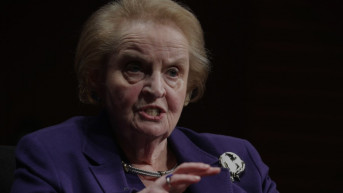
The U.S. Secretary of State, Madeleine Albright, considered herself the architect of a strategy to achieve peace with Serbia through Russia. Shortly after the bombing began, she said, "well-meaning members of Congress crossed the Atlantic to meet with their Russian counterparts and returned with poorly conceived initiatives." Ukraine appointed a special envoy for Kosovo and announced its peace plan. The UN Secretary-General, Annan, announced plans to appoint not one, but two special envoys for Kosovo. The Czechs and Greeks also put forward ideas, and the Greek Foreign Minister, George Papandreou, attempted some kind of informal mission.
Seeing Russia as the key to a desirable outcome, Albright advocated for a "double magnet" approach, which first brought Russia closer to NATO's position, and then Belgrade closer to Russia. Ideally, we could negotiate an arrangement based on the model used in Bosnia, with the authorization of the Security Council, led by NATO, and involving Russia in the peacekeeping operation. "This was a solid concept, but difficult to implement as the Russians were very angry," Albright explained.
In this game, Viktor Chernomyrdin became a key lever in Yeltsin's policy. As he later told others, the orders Chernomyrdin received from Yeltsin were: "I don't care what you have to do, just end it. It's ruining everything."
On the day NATO heavily and mercilessly bombed Belgrade, April 22, Chernomyrdin met with Milosevic for the first time. Since Milosevic's house in Uzicka had been destroyed the night before, the meeting took place in the White Palace. That day, Blair and Yeltsin also discussed. Yeltsin expressed his conviction that NATO was making a huge mistake by continuing the bombings, thus solidifying Milosevic's position instead of resolving the humanitarian issue, and facing a humanitarian catastrophe instead. "Instead of the negotiating process, which London did a lot to start, we have a return to military confrontation. We are disturbed by plans for a NATO ground intervention in Kosovo. I will be open: this is a path to the abyss," the Russian president warned. Yeltsin then called on Blair to "stop this madness," warning it could trigger "a European, and possibly a global war." "Come to your senses immediately, because tomorrow will be too late," Yeltsin threatened.
The British Prime Minister responded as did Clinton and all the leading Western officials, that maximum efforts had been made at Rambouillet to find a political solution, and what Milosevic was doing in Kosovo could not be allowed from a moral standpoint.
In such an atmosphere, the first meeting between Milosevic and Chernomyrdin took place. For this meeting, Chernomyrdin says it was the most difficult. It involved the President of Serbia Milan Milutinovic, Prime Minister Mirko Marjanovic, Foreign Minister Zivadin Jovanovic, and the commander of the Third Army, General Nebojsa Pavkovic.
Chernomyrdin noted from the first moment a "bitterness of the Yugoslav leader," as he explained the roots of the Kosovo problem and the position of Serbs there. "Why is the whole West here? Where were all these defenders of rights when Serbian houses were burning, their orchards were being cut down, and people were dying?" Milosevic asked.
This direction of conversation did not suit the Russian counterpart, who said he wanted to "translate the dialogue into a concrete flow," and countered Milosevic to not dwell on history but to solve today's pressing problems. Chernomyrdin explained that Kosovo had long been out of federal control, and the army did not control it either. During the day it was manageable, but at night the KLA took over. Additionally, the border with Albania was porous and it was questionable whether it was under Yugoslav control. Therefore, it was necessary to look at the problem more broadly and solve it appropriately. Yugoslavia was in conflict with the entire NATO alliance. Even the USSR, though it was a superpower, avoided such a conflict. That's why the Warsaw Pact was created. Allies, whatever they may be, gave moral strength. Yugoslavia had no chance of winning. It risked defeat in war, the loss of the state and the army. Therefore, the main task now was to stop the fighting, the bombing, and then to protect its own positions, vital interests, and negotiate terms in the political process.
Milosevic paid no attention to what was said, retorting that people in Yugoslavia thought it better to die than to kneel. Yugoslavia would not defeat the West, but would show its great strength, inflict heavy losses, and force it to "tuck its tail." Yugoslavia, he noted, was not alone; it had the solidarity of millions of people!
In this expression by Milosevic, Chernomyrdin saw not just a possible "historical blindness" of the interlocutor, but primarily a political calculation. He concluded that Milosevic was leaning towards a NATO ground operation, where NATO forces could indeed face serious casualties, but that would put pressure on the Russian leadership to provide concrete military assistance to Yugoslavia and get involved on its side. As we have seen earlier, there was a stance in Russia regarding challenges of getting involved in the Balkan conflict both from a historical and political perspective. Chernomyrdin considered "Slavic solidarity" as a mistaken Russian policy, just as the help Russia gave Serbia in 1914. Yeltsin and his administration did not want to repeat the same mistakes, so they had the same interest as NATO and the West – to stop the war before the risk of a ground intervention that would put political leaderships in the West and Russia in a completely new position and under public pressure.
"Frankly, I did not think then, nor do I think now, that it was just a tirade. I would rather say that there was a certain calculation in it. It relied heavily on a ground operation that could indeed lead to significant NATO casualties. Losses would, primarily, awaken public opinion in Western countries, who would want an end to military operations. Such a scenario was not ruled out. Milosevic knew well that movements of civilians against the war in Italy and other countries could grow to such an extent that they would reveal the true face of the aggressor," Chernomyrdin assessed.
Chernomyrdin understood that the Yugoslav army could not defeat NATO in a direct conflict. Victory could become the acceptance of ending military operations under conditions unfavorable to the opponent. He was trying to create such a situation.
It's interesting that the American president Clinton had similar views, who at all costs wanted to avoid a ground war. "Some people argued that our position would be more defensible if we had sent ground troops. There were two problems with that argument. First, by the time the soldiers were in position, in adequate numbers, and with adequate support, the Serbs would have inflicted tremendous damage. Second, civilian casualties in a ground operation would likely have been greater than those from stray bombs. I did not believe that the argument that I should follow a course that would cost more American lives, without at all increasing the chances of victory, was very convincing. Our strategy was often assumed, but never abandoned," Clinton described.
Milosevic, according to Chernomyrdin's accounts, relied on Russia's help in these calculations. But, Chernomyrdin had different views. "It was necessary to leave that theme by emphasizing that my arrival alone was proof of solidarity and support from Russia. But even in this case, one must rely on the military-political and economic reality, the general capabilities of Russia and Yugoslavia," Chernomyrdin explained. He further said that he was not just a mediator in this case, but also represented Russia's interests.
Milosevic returned to the theme of Slavic unity, starting the topic of Yugoslavia joining the Union of Russia and Belarus. Chernomyrdin countered with an uncomfortable question – why start this question now, in war, when there were no obstacles to it in peace?
Intending to end that part of the "unproductive conversation," he said he would return to it when the war actions and bombardment ended.
Milosevic then raised the issue of military supplies, emphasizing the need for concrete support and concrete steps. "The leadership of Russia, whose directives I followed, thought quite differently. At this stage, there could be no military supplies. They would be a 'bear service' to Yugoslavia, which would further infuriate NATO. And if someone in Russia advocated for these supplies, it was a result of misunderstanding. Who would manage that equipment if we supplied it? Proper management requires preparation, not from one day. So, that's something specialists from Russia would have to do. That means Russia is involved in the war," Chernomyrdin pondered. He then explained to Milosevic point by point why this was unacceptable for Russia.
It would be interesting to analyze what would have actually happened if Russia had then supplied arms to Yugoslavia, considering the current events in Ukraine and the massive, hardly hidden NATO support and aid to Ukraine. The question arises whether Russia would have openly, even with weapons systems, sided with Yugoslavia, how would the further geopolitical situation in Europe have developed, and in which direction would the overall development in the world have gone in the past 25 years. In this case, from the perspective of Russia's own interests, it would be interesting to assess whether Russia would today have needed to conduct the current costly war which in every sense exceeds the costs of aid that could have been sent to Yugoslavia. We believe that this interesting analytical question will one day come on the agenda, as it imposes itself.
Chernomyrdin then described how Milosevic switched from topic to topic and that for him "desperate times had come," raising questions about his personal future, for which he was ready to make "desperate and thus illogical moves and in that sense involve third countries in the conflict." Chernomyrdin then mentioned the "bitter lesson" from 1914.
Directly asked whether he would find a solution and stop the war, Milosevic answered: "Yes." Then Chernomyrdin told him that he would not provoke emotions in him because he had a concrete task from the president and the government of Russia, which defend Russia's interests. "So, let's consider what we need to do, and don't expect tears from me. You can cry with someone else, but not with me, because I have not acted and do not act in the role of a lawyer," Chernomyrdin said, continuing the tone in which they began that long and difficult conversation.
The war needed to end at the negotiating table, not on the battlefield. But, it was necessary to take a step towards negotiations. And, it would not come if the Yugoslav president was not ready for compromise. The situation had gone so far that it could not end 100% in Yugoslavia's interest. It was necessary to prepare for negotiations and where concessions were possible, and where they were not.
The first thing he succeeded in convincing Milosevic of was the necessity of the presence of peace forces in Kosovo.
-Is that a NATO condition? Milosevic asked.
-I am not a NATO lawyer, but a special representative of the president of Russia. This is one of the variants of solving the arisen problems.
Milosevic, in principle, agreed with this stance. In essence, there was no alternative to peace forces. But, they argued a lot about this. He then requested that their composition not include soldiers from NATO countries. Milosevic proposed a peace mission from a contingent of neutral countries.
They "with a pen in hand, step by step, came to 7 principles concerning the ceasefire and the start of negotiations. The basic ones at their center were the return of refugees, delivery of humanitarian aid, resumption of work on creating a political framework for restoring autonomy, reduction of military and police forces of Yugoslavia on the territory of Kosovo, international presence of peace forces under the UN flag and Russia's participation in them.
At the end of the long conversation, Chernomyrdin noted that he emphasized to Milosevic his personal responsibility for the further course of events and the fate of his people. "If the conflict extends, then you personally bear responsibility for that. Everyone supports you now, but there will come a moment when they will release all the dogs on you. Your people will judge you precisely by that, what brought the country to such a humiliating position. And your heroism – no one will remember," Chernomyrdin told him.
Then the Russian envoy described what surprised him about the appearance of the Yugoslav capital? Essentially, the war was ongoing. But the city in the evening and everything that was seen around created a completely different impression. Instead of windows covered with paper, there were open cafes, advertisements shone, pedestrians were on the streets, a river of cars... As if nothing was happening. In Belgrade, despite everything, blinds went up and nature flourished. The citizens of the capital, in a word, demonstrated contempt for the war.
Chernomyrdin nervously asked Mirko Marjanovic, who was guiding him around the city: "What are you doing? You are being bombed, and the city is as if nothing is happening."
He answered even more surprised: "What, they declared war on us? Why should we behave according to tricks."
Prime Minister Marjanovic confirmed the general impression that the Yugoslav people were filled with resolve and determination in the face of aggression.
Despite such attitudes in Russia, which were fully known to the American side, in Washington, Russia and Yeltsin were viewed with full distrust. Thus, Strobe Talbott assessed that "Yeltsin watched everything from a distance, expecting that the allies would quarrel among themselves and, in the end – either stop the bombing or soften the conditions that would lead to that. Yeltsin wanted the war to stop and he wanted Russia's role in that to be, as much as possible, greater."
That night, between Thursday and Friday, April 23, right in the middle of the late edition of the night news on TV, the screens in Serbia went blank. At that moment, a part of the interview of the Yugoslav president Milosevic for American TV CBS was being broadcast. Early in the morning (02:06 a.m. at night) NATO bombed the building of TV Serbia. Four floors of the Television building on Aberdareva Street were completely destroyed.
Local television "Studio B" was immediately on the scene and its cameras recorded and showed corpses and injured people. One body was shown with a crushed head, and next to it another body whose head was smeared with blood. Unofficial sources state that 18 people were injured, and 15 killed.
Serbian television has about 4000 employees. After the start of the bombing, the television broadcast non-stop. Studios for the exchange of international TV network were also destroyed. A few days ago, foreign correspondents were ordered to leave those offices for "security reasons".
Both churches nearby were damaged. Fifty meters from the television building are one of the larger Belgrade churches - St. Mark's and the Russian Orthodox Church.
Immediately after the bombing, many Belgraders and members of the Yugoslav leadership came to the scene of the attack. Fortunately, it seems that the entire news team that was broadcasting at the time of the attack survived. "I was reading the news in the studio. I prepared for the next news when I heard an explosion. The room was left without electricity. I jumped under the table. I think that saved my life because everything around was falling. Three meters from me, another part of the building fell. It was impossible to get outside, because we were in the heart of the television. Around were colleagues who were crying for help, so I led a team of emergency help to them," described the moment of the explosion the news anchor at 02:00. He also said that this does not mean the end of TV broadcasting. "If necessary, we will fight even in uniform to defend our country from such democracy and freedom of the media," he added.
Deputy Prime Minister of the Federal Government, Vuk Draskovic, himself a former journalist, said that NATO's "excuse" of the television as a "legitimate target" means that CNN, BBC, SKY, or other televisions are also legitimate targets because they support NATO aggression.
-This is a savage act by NATO criminals, said federal minister Goran Matic, in charge of communications. "This shows what are the rules of the new world order in the interpretation and version of murderers. They cannot defeat us and our truth. They can destroy the building, but they cannot destroy the truth. The truth is that justice is on our side, that we have attacked no one and that we are just defending our state from aggression," added Matic.
The mayor of Belgrade Vojislav Mihailovic said that it was the result of "NATO's propaganda war with bombs," and the Minister of Information of Serbia, Aleksandar Vucic, said that "only lunatics can do what they do."
Last night, several TV transmitters across Serbia were also hit.
NATO destroyed the headquarters of the ruling Socialist Party two days ago, in a 24-floor building, better known as "CeKa" where there were also several radio and TV stations, among them TV "Kosava" and TV "Pink," mostly with entertainment programs. Television "Kosava" is run by Marija Milosevic, daughter of Slobodan Milosevic. Yesterday, the official residence of the Yugoslav president was hit. Yugoslav authorities stated that it was a terrorist act and an attempt to assassinate the president of Yugoslavia. The previous week, TV centers of two other television stations - TV Novi Sad and TV Pristina had already been destroyed
Already then, in Washington, Western heads of state, ministers of foreign affairs, and ministers of defense gathered to mark 50 years of NATO's existence and to admit the first three new member states from Eastern Europe.
Strobe Talbot noted that at the NATO Summit "allied leaders with Clinton and British Prime Minister Tony Blair at the helm, closed ranks and made three official demands that Milosevic must accept for the bombing to stop: Serbian forces – out, NATO – in, refugees – back."
"Not only were our permanent allies firm in this, but several representatives of key countries in the Partnership for Peace significantly cheered for these conditions. One of the loudest was the President of Finland, Martti Ahtisaari.
When it became clear that the Atlantic alliance had not broken, as he hoped it would happen, Yeltsin wasted no time and proposed a joint American-Russian initiative to end the war. When on Sunday, April 25, the last day of the summit in Washington, Yeltsin called Clinton, the conversation began with his attempt to evoke Clinton's sympathy for something he was against in Russia itself. There are forces in the army and the Duma, Yeltsin said, agitating to send a fleet to the Mediterranean in support of Serbia, provide weapons for Belgrade, including anti-aircraft systems, which would endanger NATO pilots," Talbot relayed.
Already by the start of the Summit, it was clear that there was a deep rift in the command structure of the U.S. military, NATO forces, and the commander of the operation, Wesley Clark.
Clark's career could offer one of the explanations. It was so successful that in 1981, some 16 years before he got the NATO command, "Washington Post" magazine, which wanted to profile a textbook example of a modern officer, was directed to Colonel Wes Clark who was then only 36 years old. The title was prophetic: "Battalion Commander: if there is a Third World War, Wes Clark may be your man at the front." He was, as stated in the article, among the best officers the Army could offer.1 Later it stated "he is moving towards (the military) ideal, the perfect, modern officer." But even in this article, there were some reservations about him, which were expressed by those who had a more traditional view of the military system and which he was rejecting by his unequivocal sense of determination. One colleague spoke about him: "This battalion (at Fort Carson) needs him, I admit... We all know that before he came this was a hole. He solved all the problems, put things in place. The man is definitely three-star material. He has overshadowed the battalion. I don't know anyone who feels comfortable with him. Nobody wants to tell him bad news, so he has a very overrated opinion of morale and is very defensive about anything that might be wrong. Which could be dangerous..."
The lack of an invitation for Clark, who was then leading the NATO military operation, was, to say the least, more than a scandal. Clark's repeated requests for a ground operation were not well received in the U.S. command top. Only after the intervention of the NATO Secretary General, Javier Solana, Clark was invited to the summit.

comments