
FEUILLETON 25 Years of NATO bombing of Serbia (3): The US announcement of the use of military force against Serbia
Writing for Kosovo Online: Dragan Bisenic
Preparations for the bombing of the FR Yugoslavia, namely Serbia, were military, political, and propaganda-oriented. Following the NATO Council meeting on January 30, 1999, it was officially announced that NATO was prepared to launch strikes against the FR Yugoslavia. The NATO aggression was preceded by insincere offers from the international community, as well as the deployment of additional NATO troops in Albania and Macedonia. Negotiations in Rambouillet took place from February 6 to March 19. The delegation of the FR Yugoslavia did not sign the final offered text. Another visit by Richard Holbrooke to Belgrade took place on March 22 for negotiations with Slobodan Milosevic. The media reported that even this last peace attempt had failed.
The groundwork for military action and bombing due to the situation in Kosovo was laid by the well-known "Christmas warning" of US President George Bush on December 24, 1992, when Bush had already lost the elections and it was clear that he would not have the opportunity to enforce that warning. In that letter, he promised that the US would militarily intervene if Serbia intervened militarily in Kosovo. Soon after, the US turned to Iraq and its expulsion from Kuwait. Ibrahim Rugova formed the Democratic League of Kosovo and established himself as the leader of Kosovo Albanians, so there was no longer a need for the mentorship of Dioguardi and others, although Americans have become the leading force in Kosovo since then. Demands for Kosovo's independence began to emerge in the US Congress, along with justifications as to why it was in accordance with international law. Focus on Kuwait was used to further complicate Serbia's moral position. Comparisons between Milosevic and Hitler, Stalin, and Saddam Hussein began to emerge for the first time, and public statements were issued calling Milosevic the "Saddam of Serbia".
The letter was supposed to be "confidential," but its existence was revealed by New York Times journalist David Binder [1]. Binder also published excerpts from the famous intelligence assessment 15 90, which predicted the collapse of Yugoslavia. Rugova and Eagleburger met seven days before the letter, on December 17, 1992, in Brussels. Allegedly, Eagleburger wanted to change the Albanian stance on boycotting the elections and to support Panic's list in the federal elections.[2]
The letter was discovered during the negotiations of the three Bosnian sides in Geneva, so the journalist asked the White House spokesperson about the message, who told him, "We do not comment on either presidential or diplomatic correspondence."
The newspaper stated that "Mr. Bush's warning greatly disturbed the President of Yugoslavia, Dobrica Cosic," who met that day with the United Nations Special Envoy and co-chair of the international conference on the former Yugoslavia, Cyrus R. Vance.
The New York Times the next day, providing more details about this warning, analyzed its background from a Washington perspective.[3] Referring to President Bush's warning that the United States was ready to militarily intervene in the civil war in the Balkans if Serbia attacked ethnic Albanians living in the formerly autonomous province of Kosovo, and that this warning was part of Bush's intensified efforts during the last days of his presidency to restrain the bitter fighting between the republics of the former Yugoslav federation, the newspaper specified that Bush's warning letter was delivered last week in Belgrade to Serbian President Slobodan Milosevic and the Chief of the General Staff of the Yugoslav Army, General Zivota Panic. According to the newspaper, the letter contained the following content: "In the event of conflict in Kosovo caused by Serbia's action, the United States will be prepared to use military force against the Serbs in Kosovo and Serbia proper."
Bush's letter did not specify what was meant by "military force." However, US officials, who declined to be identified, emphasized that Bush, who leaves office on January 20, has no intention of deploying US ground forces in the Balkans during his last days in office.
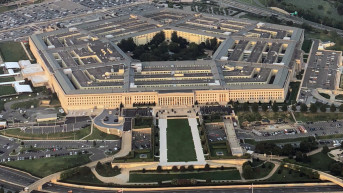
Instead, officials said, any US intervention would primarily rely on air power, including strikes on Serbian air bases, supply lines, and other military facilities. In recent days, persistent reports have existed that Bush ordered the Pentagon to draw up contingency plans for such air-focused action, but officials said no decisions had been made on how extensive any action might be.
In addition to the Kosovo warning, Bush's letter states that the United States will assist in enforcing the ban on flights for Serbian aircraft over Bosnia and will respond if Serbian militias attack UN peacekeeping forces in Bosnia.
In its analysis, the Los Angeles Times mentioned for the first time the possibility of allies participating in military action. [4]"US officials warned that Bush's letter to the Serbs was only meant to signal US readiness to use US forces to support military operations sanctioned by the UN; it did not imply that Washington was preparing to take action independently without allied support.
Nevertheless, the new presidential warning marks a further hardening of the administration's stance on the Bosnian conflict. It is expected that pressure will increase on all parties to find some sort of solution to the current situation.
“The White House is particularly concerned about the potential spread of fighting to Kosovo because the province, although technically Serbian, is mostly inhabited by ethnic Albanians. Officials fear that conflict there could trigger a chain reaction in neighboring countries," the newspaper pointed out.[5]
Ambassador to Belgrade, Bill Montgomery, at the time this warning was issued, was the chief of staff to the Secretary of State and had previously served as Ambassador to Belgrade, succeeding Lawrence Eagleburger.
Montgomery says that the concern for Kosovo began with changes in "the status and privileges" of Kosovo from the time of Slobodan Milosevic. "We were more concerned about Kosovo, in fact, than about the wars in Croatia and Bosnia. Why? Because potential violence in Kosovo could easily spill over into other countries, and we absolutely did not want that to happen," he says. "The Christmas warning," he says, "was a very short and clear statement."
-Our representative requested a meeting with Milosevic, and we told him - do not say anything to Milosevic, not even privately, just say: 'I have a message to deliver from the US Government. Here it is.' Hand it over and leave. Do not engage in any conversation with him. The message said: 'If there is any military violence in Kosovo, the US will use all necessary means, including military, to resolve the situation. We said that in 1992, he says.
He emphasizes that from then until 1999, there were countless discussions and meetings where they tried to "get Milosevic to take a more reasonable stance on Kosovo."
This letter, to some extent, was the result of the action of the Albanian lobby in Washington, which persistently alarmed the administration that any conflict in Kosovo would ignite the entire Balkan region because Albanians are spread across four states. These warnings were supposed to lead to an ultimatum to the Serbian side and to target Serbia, which was already identified as the center of regional threats and instability.
Ivo Daalder and Michael Hurlburt, in an interview for PBS, state that "Kosovo never stood at the center of American and European Balkan policy, and as long as there wasn't widespread violence, it would never be at the center of that policy."[6] When armed conflicts erupted, the West decided to consider independence only for the Yugoslav republics, not for the autonomous provinces within those republics, they said, which led to dissatisfaction among Albanians who also sought independence.
The United States and their European allies recognized that the Kosovo region represented a potentially dangerous powder keg in the midst of a very unstable region. With Albanians living in at least four different countries (Albania, Greece, Macedonia, and Yugoslavia), anything that fueled Albanian nationalism could be highly destabilizing for Kosovo's neighbors, not just for Macedonia, whose population consists of a potentially volatile mix of Slavs and Albanians, the latter forming a significant minority in the country.[7] Consequently, spreading violence in Kosovo had to be avoided at all costs. This explains why the Bush administration, which otherwise pursued a passive policy toward the breakup of Yugoslavia, decided in late 1992 to respond to speculation that Serbia might be contemplating a violent crackdown on the increasingly independent Albanian population in Kosovo by issuing a stern warning that such action would lead to US military intervention.
[1] David Binder, Bush warns Serbs not to widen war, New York Times,Dec. 28, 1992
[2] David L. Phillips, Liberating Kosovo: Coercive Diplomacy and U. S. Intervention, MIT Press, Cambridge, Massachusetts 2012., str. 29
[3] John M. Goshko, Bush threatens “Military force” if Serbs attack Ethnic Albanians, New York Times, December 29, 1992
[4] Bush Warns Serbia Against Escalation : Balkans: Administration hints at U.S. intervention if ethnic fighting spreads to the province of Kosovo, Los Angeles Times, Dec. 29.1992.
[5] the same
[6] https://www.pbs.org/wgbh/pages/frontline/shows/kosovo/readings/roots.ht…
[7] the same
To be continued tomorrow: Clinton also approved Bush's warning.
0 comments