
FEUILLETON 25 years of NATO bombing of Serbia (7): Dole: Kosovo should be made a republic
Writing for Kosovo Online: Dragan Bisenic
The Subcommittee on European Affairs of the US Senate Foreign Affairs Committee held a discussion on Kosovo on June 24th. Ambassador Morton Abramowitz appeared as a witness, along with Robert Dole and Senator Alfonse D'Amato. Senators Gordon Smith, Joseph Biden, Christopher Dodd, and Paul Coverdell spoke in the ensuing debate. They discussed how senators view NATO's position and role regarding Kosovo.
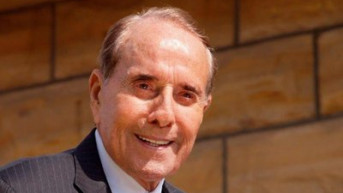
This time, the emphasis was different. It is essential that sanctions be imposed together, not instead of the military threat from the US and NATO, proposed former Republican presidential candidate Robert Dole. Dole was a pioneer in advocating for NATO and US military intervention in Yugoslavia and sought for US forces to stay longer and to a greater extent in Bosnia. Dole was the first US politician to side with Albanian demands as early as 1989 and was the staunchest supporter of all Kosovo Albanian demands. This was also the case in this debate, where Dole went much further than the positions other senators were willing to take, such as Joe Biden, and representatives of the administration, such as Ambassador Robert Gelbard.
Dole began by stating that he knew that Holbrooke had met with some of the rebels from the KLA that day and said they did not have enough food. "And that's the case throughout Kosovo. They don't have food; they're surrounded," Dole said.
He continued by assessing that Milosevic came to power "on the tide of extreme nationalism, and it began in Kosovo."
Then he recalled that in 1989, he visited Kosovo together with Senator Alfonse D'Amato, saying he remembers "how many problems we had to get to Pristina," where they were told that 20,000 people were waiting for them, "just to greet us, to welcome Americans." He then added that before they arrived, "that crowd was beaten and dispersed by the Serbian police." First, they were told they couldn't go alone, without the Serbian Foreign Minister, but they "were determined, so they let us into Pristina. Even then, it was clear to me that we were facing enormous, enormous problems," Dole emphasized.
Senator Dole then dramatized his presentation and presented a series of half-truths and untruths in representing the position of Albanians in Kosovo. He started with the untrue assessment that "Kosovo was deprived of any political power," citing the example that "they cannot even manage their own schools," and then added another half-truth that "they have to learn Serbian," without mentioning in any way that the teaching was conducted in Albanian throughout.
He stated that "Albanians have a huge majority of 9:1, I think the ratio is about 2 million to 180,000," and then again misled the Subcommittee members, saying that Albanians "do not even have their own hospitals, and women give birth in rooms this size without proper medical equipment." All the while, hospitals in Kosovo functioned and treated Albanians as well as Serbs without any distinction. "I think we understand what happened. When you take away everything someone has - pride, power, autonomy - and expect them to be happy - that cannot last long," Dole explained.
Dole then stated that he would like to make a distinction between Milosevic and the people of Serbia and blamed the President of Serbia for causing crises for personal power. "We have all heard how Serbian mothers go to Kosovo to save their sons. In my opinion - I don't know if I would say the same as Senator D'Amato, because Milosevic is still the president - but I believe that he does not represent the views of the majority of Serbs. When we were in Belgrade, those we talked to were concerned like us. They have no jobs, they have almost no opportunities, all because of Milosevic. And whenever he's in trouble, he starts shooting at someone - in Bosnia, in Kosovo, or somewhere else - it seems to consolidate him," Dole said.
"It's no surprise that Milosevic has once again focused attention on Kosovo. He uses the same bloody tactics and creates the same human suffering, and unfortunately, the same indecision that marked American and Western policy towards Bosnia until the summer of 1995 is also the same. I think it should be said that we did not have the right leadership, and I know the president is sincere when he says he wants to stop this, he wants to stop the violence," the US senator said.
Dole blamed the United States for even withdrawing from the so-called "Christmas warnings," which were shaped by both President Bush and President Clinton, and called on the Kosovo Albanians to "negotiate with Milosevic without an international mediator while the attacks were ongoing. And as we all know, that did not bear fruit."
Dole, therefore, called for the use of force. He assessed that there was a "missed opportunity in Dayton to resolve Kosovo." Here, it is about an offer that Americans made to the President of Serbia during the Dayton negotiations, through the then Charge d'Affaires of the Embassy of the Federal Republic of Yugoslavia in Washington, Nebojsa Vujovic, which Vujovic described in his book "The Last Flight from Dayton." "He handed me a paper which envisages that Kosovo would be less than an independent state but more than a province - which means the broadest known autonomy in Europe. Parallels were drawn with Tyrol and Switzerland. So, definitely within the composition of the FRY, with the greatest possible autonomy," Vujovic wrote. He also added something that would be a constant US demand for the implementation of any agreement between the Serbs and Kosovo Albanians, including the one in Rambouillet, and that is the presence of US forces "to ensure the implementation of that agreement."
Vujovic took these papers to Slobodan Milosevic. "He looked at them, read them carefully, 'turned red in the face, stood up, crumpled them,' and threw them at me," Vujovic recorded.
The only witness to this scene was the head of Milosevic's cabinet, Goran Milinovic. Vujovic tried to gather the papers and left, and in the hallway, he met Jovica Stanisic, the then Chief of the State Security Service, who had already told him that this would happen.
Dole emphasized that "the time for prevention has already passed, and the opportunity to resolve the status of Kosovo in Dayton has been missed, so there is no realistic option other than to threaten Milosevic with force and to be prepared to use that force."
"I believe this is the only message that should be sent to Belgrade," Dole demanded.
He then called for Serbia to be presented with a "real ultimatum" with the threat of destruction to Belgrade. He ultimately debated with earlier assessments by Senator Biden that the US would not support Kosovo's independence. Dole had a completely opposite message: negotiations and threats of force should lead to an independent Kosovo.
Dole began by expressing his serious concern that "previous actions are not sufficient to prevent another Bosnia."
"Even while NATO planes are just kilometers away, Serbian forces continue to lay mines, attack Albanian villages, and bring in additional forces and equipment to Kosovo," Dole said.
He called for the establishment of a no-fly zone over Kosovo. Any violation of this zone would be met with a swift and decisive military response.
"I propose that we first deliver a real ultimatum to Milosevic, that if he does not cease attacks on Kosovo, withdraw his forces, and agree to participate in talks under international mediation, NATO will conduct air strikes on military facilities in Serbia," Dole demanded.
It was then necessary to expand the sanctions imposed on Serbia and create a comprehensive economic embargo, including a ban on fuel exports to Serbia. However, it is essential that these sanctions be imposed together, not instead of the military threat from the US and NATO.
Dole then began to refute Biden's claims that the use of force would support Kosovo's independence. "It is clear that the goal of these actions is to support a solution through negotiations that would bring true and lasting peace to Kosovo. There has been much debate about whether, by using force, we would support Kosovo's independence. Mr. Chairman, I don't think so," Senator Dole stated, and then explained:
"Firstly, by using force, NATO would work to prevent a broader war involving Albania, Macedonia, Greece, and Bulgaria, among others. Secondly, NATO would restrain Milosevic and stop the violence he has caused. Thirdly, NATO would create a more level playing field for negotiations. Milosevic would never have come to Dayton if NATO hadn't carried out air strikes against Bosnian and Serbian targets, at least I think so. And finally, in my opinion, negotiations should focus on creating Kosovo as a republic, with the same status as Serbia and Montenegro and with international guarantees," Dole said.
Senator Dole emphasized that he believed the leaders of the Kosovo Albanians would support such a solution.
"In fact, I cannot say this definitively, but I believe that there is a willingness on the part of the Kosovo leadership to sit down at the negotiating table with international mediation. For almost 10 years under increased repression, President Rugova and Prime Minister Bukoshi supported a moderate approach and rejected violence to achieve their political goals. However, now under attack in a state of real war, the ethnic Albanians they represent have lost patience, and some of them, not surprisingly, support the Kosovo Liberation Army. If NATO reacts decisively, it will not only bring Milosevic to the table but also strengthen the credibility of Rugova and Bukoshi among the people who elected them," Dole said.
Such political assessments by the US senator have proven to be a complete failure. The actions of Rugova and Bukoshi were not only not strengthened, but the KLA became the most important political force in Kosovo, determining the further course of events in Kosovo. Senator Dole never remembered to later correct these claims, even though the reality in Kosovo completely nullified them.
Dole continued his statement in the same tone and with the same quality of argumentation. "Also, I believe it is crucial for the United States to provide logistical and material support for humanitarian aid and to do everything they can to alleviate the suffering of the Kosovars. Tens of thousands have been driven from their homes or fled in fear. They have no food or medicine," Dole emphasized.
He then recounted his encounter with women from Kosovo that morning in Washington. "The stories they tell are almost surreal, you can't believe them, but you believe them because you know it's true, that suffering happening all over Kosovo," Dole said, who himself perceived those stories as "surreal," and then took that very perception as the main reason why they should be believed!?
Senator Dole continued his illogical exposition. "The real problem is Milosevic's genocidal, expansionist regime, and if we don't address this problem, we will repeat the mistakes of inaction from Bosnia. I repeat, whether we like it or not, we must take the lead to probably stop this crisis and end this reign of terror," Dole said, implying that by "leadership," he meant US imposition of military intervention against the FRY.
"There are many people in this room who are of Kosovar origin and who now live in the United States - they know how significant this is. I am confident that the Senate will take appropriate action," Dole said.
0 comments