
FEUILLETON Rambouillet - ultimatum for the bombing (12): NATO usurping United Nations' rights
Writing for Kosovo Online: Dragan Bisenic
The negotiations started on February 6, 1999, with an address by French President Chirac. Working sessions began the following day. The duration of the conference in Rambouillet, initially limited to one week, was extended twice and ended on February 23, 1999.
On March 15, negotiations resumed once again at the Kleber Center in Paris. They were suspended on March 19. French Foreign Minister Vedrine, as the host, and British Foreign Secretary Cook, on behalf of the Contact Group, pretended to co-chair these negotiations. The negotiators were American Hill, Austrian Petritsch, and Russian Mayorski. The Kosovo Albanian delegation consisted of 16 people, one-third of whom were members of the KLA, and another third were very close associates. The leader of the negotiating team was KLA member Thaci (formally the leader of a group composed of representatives in a tripartite group).
The Serbian negotiating group consisted of 13 members whose composition changed during the conference. The negotiations were led by Serbian Deputy Prime Minister Markovic. However, this delegation also included experts from the Yugoslav Ministry of Foreign Affairs, but it was under Serbian leadership to emphasize that, according to Yugoslav understanding, this was only about Serbia's internal problems. The Rambouillet negotiations were conceived as closed-door negotiations. French organizers did everything to prevent contact with the outside world, especially with the media. But the parties circumvented this with their mobile phones. Therefore, in Paris, these futile attempts to prevent contact were finally abandoned.
The Contact Group established principles that were communicated to the parties before the start of negotiations and could not be negotiated. This means that by participating in the negotiations, it was considered that the participants had accepted those principles. Under the heading "implementation", this, among other things, meant, "Participation of the OSCE and other international circles, to the extent necessary". This formulation meant a deliberate deception of the Russians and FR Yugoslavia. By explicitly mentioning the OSCE and almost casually mentioning other circles, both sides had to have the impression that the implementation of the agreement would be further monitored with OSCE's responsibility. The fact is that significant parts of the implementation, including the provision for NATO troops, were formulated even before the start of the negotiations. The Albanian side was also informed about the main outlines.
Therefore, it abandoned the important demand for them to put forward again in the foreground when taking a stance on the invitation.
The murder of 45 Albanians caused an apparent change in Western policy towards Kosovo, leading to the Contact Group meeting in London to discuss it. The Contact Group invited the parties for negotiations the next day, on January 29. This statement was exceptional in several aspects. Regarding content, it "insists" that the settlement must be based on the principles established by the Contact Group. These principles were contained in drafts by Hill, which, according to the Contact Group, only required clarification in a limited number of points. Of course, at that stage, both sides rejected Hill's draft and elements of the basic approach that supported it. In terms of process, within a week, six governments invited the parties to Rambouillet to negotiate a settlement with the direct participation of the Contact Group, in principle within one week. If progress was insufficient, negotiations could be extended for less than a week. The Contact Group concluded by reiterating that the negotiations would have to be completed within a total of twenty-one days from the date of its convening, "The Contact Group will consider both sides responsible if they do not seize the opportunity now offered to them".
Ambassador Hill wondered where the time limit for negotiations had come from. "I asked Phil Reeker, reminding him that we never set a time frame in Dayton. 'They need to know how much food to order,' Reeker replied.
The Security Council immediately stated in a presidential statement that it "welcomes and supports" the decisions of the Contact Group. Using language reminiscent of the Chapter VII resolution (but not contained within it), it demands that all parties accept their responsibilities and fully adhere to these decisions and demands.
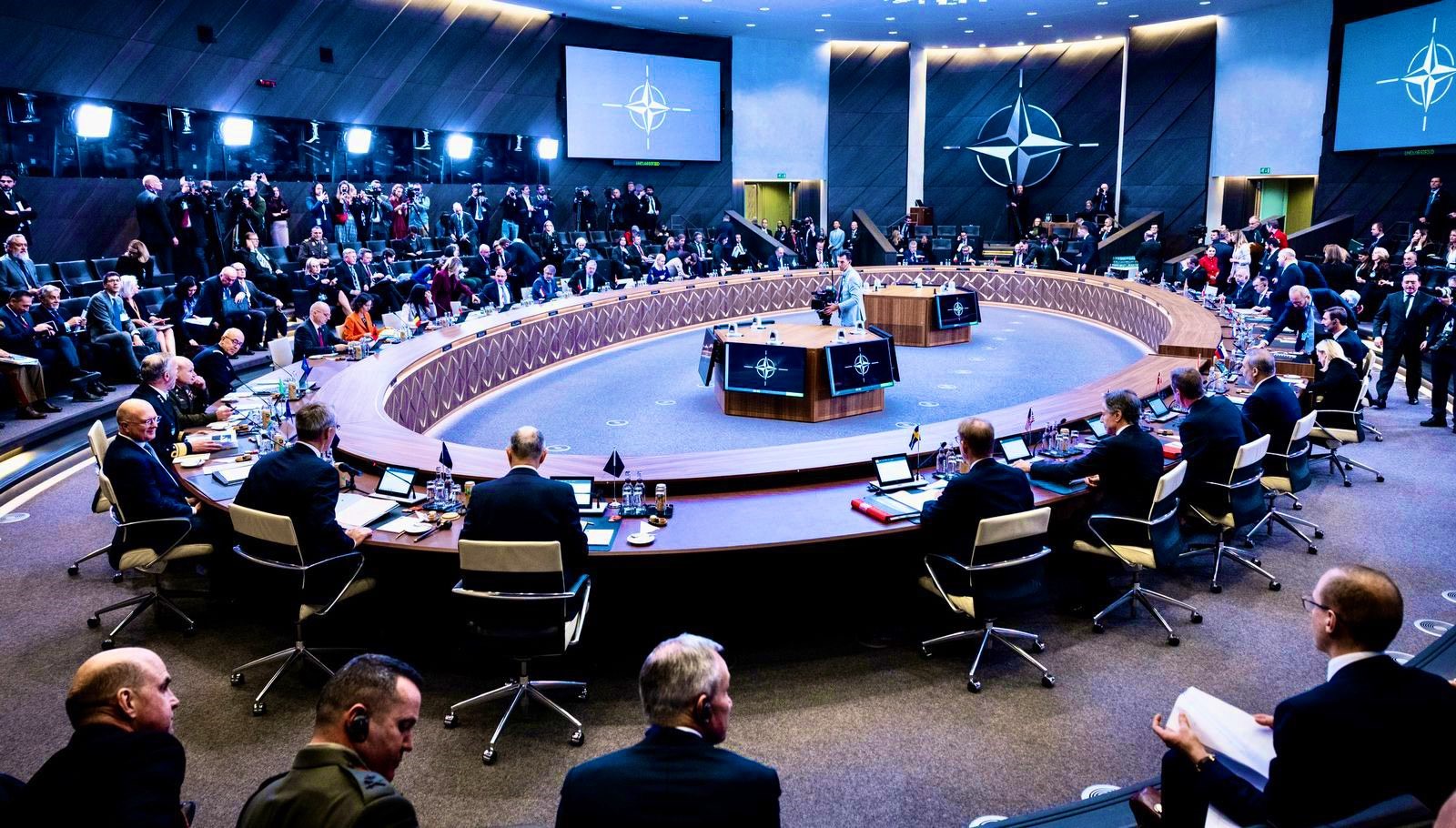
On one hand, the NATO Council reiterated that force could be used to achieve compliance with the Holbrooke Agreement, specifically, cessation of hostilities, reduction and relocation of Yugoslav military and police forces, and cessation of excessive and disproportionate use of force. On the other hand, NATO added another demand, namely a positive response to the request for a political solution within the framework established by the Contact Group.
In support of these objectives, "the Council today agreed that the NATO Secretary General may authorize air strikes on targets within the territory of the FR Yugoslavia".
With this sentence, the NATO Council usurped the right to use force, leading to the collapse of the entire international order. The use of force is regulated by international law, and its use falls within the authority of the UN Security Council. As was the case when NATO issued its initial threat of the use of force, resulting in the Holbrooke Agreement of October 1998, the threat raised serious questions in international law, even noted by the legal advisor to the Kosovo Albanian delegation, Marc Weller. In his analysis, he noted numerous deviations and violations of international legal norms. At first glance, this action appeared inconsistent with the key pillar of the international constitutional order contained in Article 2, paragraph 4, of the United Nations Charter. This provision, enjoying the highest legal authority and applicable to all states under all circumstances, prohibits not only the use of force but also the threat of the use of force.
In its advisory opinion on the legality of the threat or use of nuclear weapons, the International Court of Justice concluded just a few years earlier: Whether the signaled intent to use force if certain events occur constitutes a "threat" within the meaning of Article 2, paragraph 4, of the Charter depends on various factors. If the contemplated use of force is itself unlawful, the expression of readiness to use it would represent a threat prohibited by Article 2, paragraph 4. "Thus, it would be unlawful for a state to threaten force to secure territory from another state or to induce it to follow or not to follow certain political or economic paths. The concepts of 'threat' and 'use' of force under Article 2, paragraph 4, of the Charter go hand in hand in the sense that if the use of force itself in a given case is unlawful - for whatever reason - the threat to use such force will likewise be unlawful. Although NATO did not aim to secure territory, it was clearly determined to compel Yugoslavia to follow a certain political path," Weller pointed out Weller.
Of course, NATO was careful to tailor its threat to the demands set by the United Nations Security Council. Initially, in October, NATO's objectives reflected the Chapter VII requirements contained in Resolutions 1160 (1998) and 1199 (1998). These resolutions were adopted on the formal finding that the situation in Kosovo constituted a threat to international peace and security and called, among other things, for the cessation of armed action and repression by Yugoslav military and paramilitary forces, their withdrawal, and the commencement of substantive dialogue on a political solution. By concluding the Holbrooke Agreement, the Alliance could also rely on Chapter VII of Resolution 1203 (1998), which endorsed the agreement mediated by the US Envoy. That agreement itself included a Serbian commitment to accept a settlement by November 1998. The demands set by the Council in accordance with Chapter VII are legally binding and require immediate and unconditional compliance. But neither of these elements alone, nor both together, constitute legal authorization for third states to intervene forcibly or to enforce the Council's demands by threat or use of force. In fact, when adopting Resolution 1203 (1998), the Council cautiously emphasized this fact by including an unusual preambular paragraph stating that, according to the Charter of the United Nations, "the primary responsibility for the maintenance of international peace and security is entrusted to the Security Council".
However, NATO's decision was aimed at implementing the goals established by the Security Council, and the Alliance claimed not to threaten the use of force for its own purposes but on behalf of the international community as a whole. It acted, so to speak, as the executor of the Security Council, albeit self-appointed. However, this argument is also unconvincing. After all, just a few months earlier, members of the Security Council strongly opposed the armed action of the United States and the United Kingdom against Iraq. This action was purportedly taken to implement the demands of the Security Council regarding Baghdad's obligation to cooperate with UN weapons inspectors. Indeed, in that case, the binding nature of Chapter VII demands of the Council to be enforced was even more clearly established. Nonetheless, the notion that states or groups of states can authorize themselves to use force in pursuit of goals announced by the United Nations was rightly rejected.
To be continued tomorrow: Rubin pairs Thaci's ties and suit jackets


0 comments