
Temporary power of de-escalation
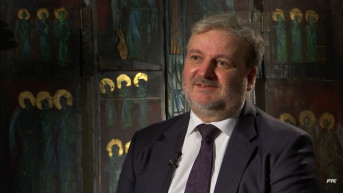
Writing for Kosovo Online: Dragan Bisenic, journalist
After almost two months, it seems that the goal of stopping the spiral of tension in Kosovo has been achieved, with the first steps towards a new interaction of all parties. However, this does not mean at all that the causes that lead to the creation of crises have been eliminated, so in that sense there are no guarantees that this "truce" will last a long time.
The Government of Kosovo announced that in accordance with the agreement with the EU, they had taken three steps in order to improve the situation in the north, which was populated mainly by the Serbs. Lajcak uses every opportunity to strengthen the achieved atmosphere of concession, so he met again in Bratislava with the Pristina negotiator Besnik Bislimi, and previously in Dubrovnik with his American partner Gabriel Escobar. Lajcak is now preparing a new meeting of representatives from Belgrade and Pristina in Brussels, where the time and conditions for holding local elections in the north of Kosovo should be precisely defined, as well as the conditions for their smooth preparation, including appropriate openness in the election campaign.
Last week, Lajcak was in Kosovo and Serbia in order to personally monitor the actions of all parties in finding a solution to the tense situation in the north of Kosovo. Lajcak said that had he discussed "options for further progress", holding new local elections with the participation of the Serbs and returning to dialogue. Lajcak himself assessed that there had been no "progress" despite considering "options for further progress". Probably the answer to the question "where to go" or as Lajcak says "options for progress", is the key to further continuation of the dialogue.
There are several ways of thinking about this. The first is to continue as if nothing had happened, with the program being condensed to the highest point in order to reach the lost two months in solving the crisis. The second is based on taking advantage of the moment when Kosovo is under pressure and certain measures from the EU and the US to strengthen Pristina's sense of obligation to fulfill the previous agreements. The third approach indicates the necessity of gradually overcoming obstacles, holding elections in the north, and connecting them with further steps in the dialogue that include the creation of the Community of Serb-majority Municipalities before the final mutual acceptance of the Comprehensive Agreement on the Normalization of Relations. The fourth is to establish the current "status quo", which would imply that Serbia abandons its request to hold the UN Security Council on Kosovo.
All these options, of course, do not take into account the internal dynamics and opposition protests that both negotiating teams are exposed to. And that internal dynamic determines the capacity of negotiators and their ability to ensure that what is agreed upon is accepted and implemented.
After this week's brawl in the Kosovo Assembly, Kosovo Prime Minister Kurti is strongly challenged in both Pristina and Tirana. At times, Kurti was subjected to “public flogging” in the Albanian press because he did not want to see Edi Rama while he was in Pristina recently. Such well-chosen volleys of heavy insults have probably not been recorded in the last two centuries of political rhetoric towards a politician in the Balkans, even in verbally more vivid periods of the history of the Balkan region, so we think they deserve to be stated in their entirety, "Kurti's government is an anti-Albanian government, it is anti-American, it is anti-Western. It's a ticking time bomb. Albin Kurti treats America like a terrorist, like a dictator, like a raging enemy. Kurti's government is the killer of Albanian freedom, the killer of the state of Kosovo, and the killer of the Albanians. Serbia massacred the Albanians, and Albin Kurti and his criminals are massacring the freedom of the Albanians and American liberators! Albin Kurti commits a crime against the Republic. Kurti's government empties Kosovo of Albanians; it impoverishes Albanians; it made society sick; incites civil war; pays paramilitary formations of the 'Civil Protection' with Kosovo salaries to commit crimes against NATO. Kurti's government divided the Albanians, it is an illiterate government that steals, tramples, and destroys everything in its path. Albin Kurti uses his power for personal revenge. Albin Kurti shoots in Kosovo. It's the devil himself.
What motivates Albin Kurti to be an enemy of the state of Kosovo, an enemy of Albanian freedom, and an enemy of America? The Kosovo intelligence service must respond to that. Or medicine. Albin Kurti is a psychopath and he needs help! Albin Kurti uses the functionally illiterate as a weapon against America. Imagine if this one had cannons, tanks, rockets, and an atomic bomb - it would attack America! Tie him up. He is crazy. Total caricature - disgusting".
At the time when the previous text was written, Kurti had not yet “ridden the harvester”, nor had he announced the purchase of new drones from Turkey, otherwise in those roles as a harvester he could be compared to Lukashenko, and as a buyer of drones - Baryaktar, certainly, to Zelenskyy. It is not surprising, therefore, that Kurti decided to avoid a trip to Tirana where the regional heads of government have gathered in preparation for the fall summit of the Berlin Process to be held in the capital of Albania. In his place, Kurti's deputy Besnik Bislimi confirmed his participation, and Albin Kurti decided on Greece, where he is participating in the 25th international symposium "Symi". All this looks as if the Prime Minister of Kosovo might decide to demonstrate his rating in the new elections. In addition, it is not clear whether and to what extent he still maintained Washington's status of "sometimes a difficult partner, but a partner".
The most important thing for the European Union and the international community at the moment is to stop the trend of renewed conflicts and confrontation of the civilian population with uniformed forces, either KFOR or the Kosovo Police deployed in the north of Kosovo. Everything is ready for that, four points agreed upon by the chief negotiators of the EU and Kosovo, Miroslav Lajcak and Besnik Bismlimi. After that meeting, it was announced that the government in Pristina is ready to withdraw Kosovo Forces by 25 percent from the municipal buildings and to hold extraordinary local elections after the summer.
Pristina, for its part, announced that this showed its readiness to take steps toward peace. The first step is to immediately reduce the presence of Kosovo Police in and around municipal buildings in the north by 25 percent. The second step, which should also start in the first week, is the coordination with EULEX and KFOR regarding the further reduction of the presence of Kosovo Special Forces. The third point to which, as stated, the Government of Kosovo had agreed with a public statement of support, was the holding of extraordinary elections in four municipalities in the north after the summer, it should be done in the first week and finalized "as soon as possible". As a fourth step, it was stated that it had been agreed that the EU should invite the heads of the negotiating teams of Belgrade and Pristina, Petar Petkovic and Besnik Bislimi, to a meeting in Brussels, with the aim of finalizing the order of the Agreement for the normalization of relations.
This agreement was prepared on the eve of the NATO Summit in Vilnius, where, among other topics, the issue of Kosovo was discussed. Warnings by NATO have existed practically since the beginning of the crisis, since May 28, when NATO spoke out and called for de-escalation and when it expressed its readiness to maintain order and peace in Kosovo, through its participation in KFOR forces. It would be unacceptable for NATO to hold its highest meeting while the conflicts in Kosovo continue, regardless of the intensity, because it certainly casts a shadow on NATO's actions in the zone where it is responsible for maintaining order and peace. That's why all parties gave up the behavior that leads to confrontation and agreed to "de-escalation". The agreement reached is still such a constructive and acceptable solution. But this is essentially only a temporary agreement that does not resolve the fundamental issues.
It is not about withdrawing this or that percentage of Kosovo Police officers, but about bringing things to the "status quo ante" state - the way they were before the beginning of the crisis. This is also clear to the European representatives. The special envoy of Germany for the Western Balkans, Manuel Sarrazin, says that the withdrawal of 25 percent of Kosovo policemen from the north is positive, but it is only a small step, which is not finished because the European Union's de-escalation plan implies that there is no presence of special police in the vicinity of municipal buildings. So this step does not meet the requirements of the European Union. German mediator Manuel Sarrazin emphasizes that Serbia should "change the rhetoric around Ohrid and implement it fully", while the Kosovo side is expected to "commit to the Community of Serb-majority Municipalities". “For us in the international community, the formation of the CSM is a key issue," Sarrazin told Radio Television of Serbia.
It took two months to end the current stage of the Kosovo crisis, so it is clear that more time will be needed to end the current crisis first. Its end, as predicted, would be the holding of elections in which representatives of the Serbs in the north and the Serb List would participate. This time, it is emphasized, Serbian representatives should participate in the elections without any preconditions. It refers to the elimination of the causes that caused this crisis to break out, and it is about the creation of the Community of Serb-majority Municipalities. It could be concluded that the meaning of all these crises is a slight movement of the boundaries, which should ultimately lead to the collapse or impossibility of applying the Brussels Agreement in the part that concerns the Community of Serb-majority Municipalities. Under the current escalation tactics, you can count on all parties wanting to put out the fire and end the crisis as a matter of urgency, with full restoration of the status quo will be a secondary issue. If you manage to move the border by half a meter in each of the 10 such crises, the result will not be insignificant or negligible. In these circumstances, aggressive and stubborn behavior can pay off.
What makes this agreement very flawed, as well as the negotiations conducted in connection with it, is that its connection with the creation of the Community of Serb-majority Municipalities is not visible. The creation of the CSM from Belgrade's perspective is absolutely necessary in order to discuss further in this round of normalization negotiations, of which the Ohrid Agreement is a part. It would be completely illogical for Belgrade to apply the Ohrid agreement agreed upon 10 years after the first agreement on the Community of Serb-majority Municipalities, as representatives of the European Union can see much more clearly their role and the sequence of fulfilling the contractual obligations they face after this crisis. Therefore, there is only one path that leads forward, and that is the path toward the creation of the Community of Serb-majority Municipalities.

0 comments