
Barac: Incidents in Serbian communities are a continuation of psychological violence against Serbs
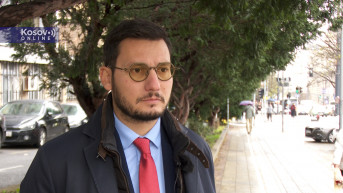
Srdjan Barac from the Center for Social Stability warns that the incidents in Serbian communities in Kosovo last night, where Albanians paraded with Albanian and KLA flags, provoking the local population, are just a continuation of the ongoing psychological violence against Serbs. However, he predicts that a concrete response from the international community will once again be absent, leaving the Serbian side to hope for changes with the arrival of a new U.S. administration.
“Provocations against the Serbian population that managed to remain in Kosovo and Metohija are daily occurrences. Every day there are attempts to provoke incidents because they [Albanians] need an incident, something they can present to their Western partners and use to mobilize international forces that will temporarily support them,” Barac told Kosovo Online.
On the other hand, he points out, it is concerning that Serbs are subjected to legal, physical, and economic violence.
“All of this culminates in the most dangerous form—psychological violence—which manifests through the display of Albanian flags, intrusion into Serbian communities, and provocations targeting the Serbian population,” Barac explains.
Unfortunately, as he observes, there is a lack of protection for the rights of Serbs and an absence of international response.
“All warnings remain at the verbal level, with no concrete measures taken against Pristina,” he adds.
Barac highlights that although there has been a slightly tougher verbal stance towards Albin Kurti, there has been no substantial action against the policies he implements.
“We even have written documents from the State Department and many other institutions that outline the lack of human rights and the disregard for basic principles and values of the Western world, such as open markets, free movement of people and capital,” Barac notes.
However, he points out that despite these warnings, Pristina continues to foster values opposite to what is expected of it.
“We are witnessing border closures, violations of human and economic rights, no fair competition in the market, and no free movement of people. All the norms are entirely misaligned, yet there is no reaction to this,” Barac emphasizes.
To stop violence against Serbs in Kosovo, especially in the north, Barac stresses the importance of the message sent from Washington.
He expressed hope that there might be a shift in the situation in Kosovo with the arrival of the new U.S. President Donald Trump’s administration.
“However, I am not overly optimistic when we see who has been appointed as the new CIA director—someone like Ratcliffe, who has close ties with Albin Kurti. That is not encouraging, but we hope that there will be people in the new U.S. administration who understand the real situation on the ground and are not already part of the Albanian lobby group,” Barac stated.
He added that the Albanian community in Kosovo is trying by all means to present itself as the majority and as indigenous people, attempting to alter and appropriate Serbia’s cultural identity.
“They are trying to change and present it as part of their national identity. It seems that their lobbying groups, financed through black money and illegal funds derived from drug trafficking, crime, and other illicit activities, have had success in the international arena,” Barac concluded.



0 comments