
Barac: Orban could introduce new political ideas through the Patriots
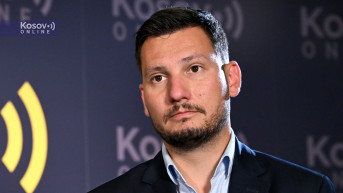
Srdjan Barac, an associate at the Center for Social Stability, believes that the composition of the future parliament shows that "Europe is slowly shifting to the right," and that Hungarian Prime Minister Viktor Orban could use the "Patriots for Europe" coalition as a tool to introduce new political ideas within the European Union.
"The idea with the new parliamentary group in the European Parliament is to show that Europe indeed wants to move to the right. We are talking about Europe as a whole. Marine Le Pen's party, or rather Jordan Bardella, who will be the president of this parliamentary group, shows that national elections receive somewhat less support. Regarding the European elections, their party gained strong support from the French, and that is one way. On the other hand, we have the Dutch politician Geert Wilders, who was a strong contender to become prime minister because he won significant support in the elections in the Netherlands and managed to form a coalition and a government with other conservatives or right-wing parties. All this indicates that Europe is slowly moving to the right, especially when we talk about the European course," Barac stated for Kosovo online.
Despite the fact that the European Parliament does not have as much power to influence EU policy as national parliaments do, Barac emphasizes that the significance and power of political leaders like Hungarian Prime Minister Viktor Orban should not be underestimated. Orban could use "Patriots for Europe" as a "tool to introduce new political ideas" in the EU.
"Orban goes on diplomatic visits to Kyiv, Moscow, and Beijing. He wants to assert himself as a European leader who, despite having differences with official Brussels, has the strength to introduce certain political ideas. I am convinced that he will also use this parliamentary group as a mechanism or tool to introduce new political ideas within the European Union, which are not as prevalent among Brussels officials, particularly when we talk about the main levers of power in the European Union, which are in Brussels," Barac highlights.
He adds that it is important for Serbia to have friends who understand its position and are in decision-making positions. Barac notes that it is significant that Hungary will chair the EU Council until the end of the year and is unequivocal in wanting to speed up Serbia's EU accession process.
"We heard from Péter Szijjártó that at least three clusters will be opened while Hungary chairs the EU Council. These are clear signals that certain warming will occur, or that they will try to bring our position closer. We also heard Viktor Orban many times stating that it is of immense importance for both Serbia and the Western Balkans to become part of the European Union. But, to be completely precise, he does this not only because he loves us or because the relations between the two countries are so good now, but because it is in Hungary's interest. Hungary wants to expand the EU border so that it is no longer the first country to bear the brunt," Barac concludes.

comments