
Curcic: EU policy towards Kosovo has made strides but without satisfactory results
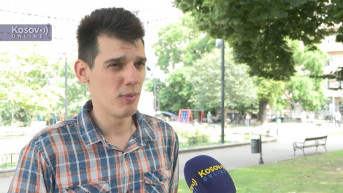
Researcher at the Institute for European Studies, Petar Curcic, assessed that the outgoing European administration had attempted to make strides in the process of normalizing relations between Belgrade and Pristina, but despite certain successes, there had been no satisfactory results.
"It seems that the European Union tried to make certain strides in the normalization process. However, the overall context and, of course, the difficult position that Serbia finds itself in, primarily due to the uncooperativeness of the Albanians, could not achieve satisfactory results," Curcic stated for Kosovo Online.
According to him, the issue of EU and Kosovo relations should not be viewed in isolation but in relation to the overall international context, and he reminds that the administration led by Ursula von der Leyen faced a series of parallel processes and effects, from the coronavirus crisis and the beginning of the Russian intervention in Ukraine to constant migratory pressure and increasingly tense relations between the US and China.
"The Kosovo issue must be integrated in relation to all these phenomena. It seems to me that the Kosovo issue depended on a strategic triangle, if we talk about the European Commission, between Ursula von der Leyen, Josep Borrell, and Miroslav Lajcak. Also, we should not forget the significant role that Germany and France played in the Ohrid Agreement process, seeking a new dynamic in relations between Belgrade and Pristina. This is not so much a question of the European Commission as it is a question of the national states, specifically the two leading ones in the EU, Germany and France," Curcic emphasized.
Among the issues still awaiting resolution, he highlights the prosecution of those responsible for crimes against Serbs in Kosovo.
"Effectively, some things have been done. We should not forget that there is an ongoing process for war crimes. These are all questions that remain open, but they are positive signals considering the Serbian victims in Kosovo and Metohija and that we still do not have the perpetrators of these crimes. These are all questions that remain open for the future," Curcic noted.
He believes that the future EU relationship with the Western Balkans, and especially regarding the dialogue between Belgrade and Pristina, will largely depend on the self-definition of relations after the European Parliament elections, but not only those elections.
"It should be noted that elections in Germany will also take place next year, and they will significantly impact the entire enlargement process," Curcic believes.
He assesses that the upcoming European Parliament elections open "two dimensions."
The first is the issue of enlargement, and the second is the satisfaction of Serbian national interests.
"The current rise of the right, primarily the European Conservatives and Reformists led by Italian Prime Minister Giorgia Meloni, and the breakup of the Identity and Democracy group, opens a new question of whether the European Conservatives and Reformists will be part of the next administration. If this happens, considering the traditionally good relations that Serbia has had with Italy, especially since Prime Minister Meloni's arrival, it could perhaps expedite this process," Curcic concluded.


0 comments