
Dimitrov: Brussels doesn’t have the "carrot and stick" to speed up the Belgrade-Pristina dialogue
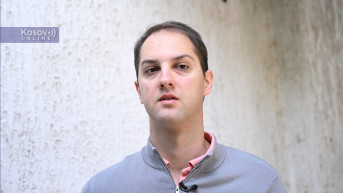
Researcher at the Belgrade Center for European Policies, Djordje Dimitrov, stated that EU High Representative for Foreign Affairs and Security Policy, Kaja Kallas, did not bring any new messages during her visit to the Western Balkans, and that the EU currently lacks a strong "carrot and stick" to pressure Belgrade and Pristina to return to the dialogue.
“The European Union doesn't have a strong 'carrot and stick' at the moment, except for some financial aid, for example. From the example of the Growth Plan, we saw that this dialogue and progress toward normalization won't be a strong factor when deciding whether Serbia and Kosovo have met the conditions for financing or not,” Dimitrov said for Kosovo Online.
Kallas stated that the EU has “other instruments” that could be used to restart the Belgrade-Pristina dialogue, but Dimitrov says that such mechanisms do not exist.
“The European Union doesn't really have 'other instruments' it can currently rely on. The dialogue is on pause because we don’t have a government in Kosovo at the moment that could negotiate. We don’t even know if that government will be formed. On the other hand, there are internal developments in Serbia. Vucic certainly does not want to disturb the domestic situation by continuing to make new concessions to Kosovo,” Dimitrov clarified.
This week, Kallas is visiting the Western Balkans for the first time. After Montenegro and Albania, the last stop is Bosnia and Herzegovina.
Dimitrov believes that there should not be overly high expectations about the messages Kallas will bring when her visit to Serbia takes place.
“We cannot expect anything we haven’t already seen in, for example, Borrell's visits. The EU will continue to insist that Serbia must impose sanctions on Russia and align its foreign policy. It will keep insisting on reforms and continue sending the message that the normalization process between Belgrade and Pristina is needed. And, of course, the message will continue that the EU is here to help, assist, and that the countries of the region are part of the European family and will join at some point,” Dimitrov explained.
He believes that the selection of countries in the region Kallas decided to visit first is "definitely interesting."
“Now, why she didn’t choose Serbia can be justified by the fact that it only has a technical government and she can’t meet with everyone she would normally meet: the president, prime minister, foreign minister, and possibly the president of the National Assembly. Also, it can be justified by the fact that Serbia is currently going through a major political crisis. Kaja Kallas probably wanted to avoid sensitive issues,” Dimitrov stated.
He pointed out that Kallas visited two of the currently most stable countries in the Western Balkans in terms of domestic politics and progress in European integration.
“Montenegro is leading and ahead in this process, and it can be expected that if it continues at this pace, it will finish negotiations in the next two years, while Albania’s negotiations gained momentum last year and are expected to continue at this pace with cluster openings. As for Bosnia and Herzegovina, it is in a period of a very large crisis caused by the events surrounding Milorad Dodik. The high representative’s personal presence is probably one of the ways the EU is trying to calm tensions and respond to this crisis,” Dimitrov assessed.



0 comments