
The Guardian: The risk of conflict is real unless the Brussels agreement is implemented
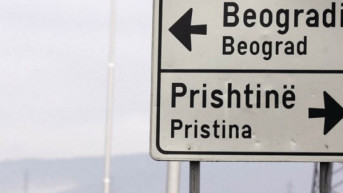
Unless the Brussels Agreement is implemented this year - linking the political autonomy for the Kosovo Serbs to the normalization of relations between Serbia and Kosovo - the risk of imminent conflict is real, and were that to happen, the wider ramifications would be serious, not least in terms of a new refugee crisis, the British Guardian warns.
In an article analyzing the situation in the Western Balkans, under the title "Europe should do more", the Guardian states that in December "local disputes" led to barricades being briefly erected in the northernmost of Kosovo, which is mainly ethnic Serb.
"Relations between Pristina and Belgrade - which enjoys the Kremlin’s enthusiastic backing and refuses to acknowledge Kosovo's independence - look worse than at any point in the last 20 years," the Guardian states.
It is also indicated that the capacity of the European Union to mediate is "complicated", due to Serbia's dependency on Russian gas, but also Belgrade's refusal to impose sanctions on Moscow.
"But unless the Brussels agreement of 2013 is finally implemented this year - linking political autonomy for Kosovo Serbs to a normalisation of relations between the two countries – the risk of imminent conflict is real. Were that to happen, the wider ramifications would be serious, not least in terms of a new refugee crisis," the analysis warns.
The text recalls that the EU Summit - Western Balkans was held in Tirana at the beginning of December, and states that European officials gathered to send a "symbolic message".
This, the Guardian adds, was the first summit held in a region whose population, for the most part, longs to belong to the "Brussels club", but have begun to doubt they ever will.
That gesture, the paper writes, with concrete measures such as inclusion in the EU's Erasmus programme, - went down well, with a reminder that Albanian Prime Minister Edi Rama observed that "things are changing", while other leaders welcomed "a new mindset".
A couple of weeks later, Bosnia and Herzegovina obtained the status of candidate country to join the EU.
Such a development is not hard to explain, the paper adds.
"As EU enlargement fatigue has set in over recent years, the western Balkans – and its seemingly intractable, unresolved tensions – fell far down the European’s list of geopolitical concerns. But the war in Ukraine has concentrated minds in Brussels, as Russia seeks to expand its influence in the region at the expense of the EU and NATO and leverages political instability to its own advantage," the analysis reads.
That is why it is very necessary for the West to refocus on this region, but "given a darkening context", more than warm words is required.
The Guardian states that the situation in Bosnia and Herzegovina is also bleak, because Moscow gives generous support to the "secessionist agenda of the Bosnian Serb nationalist leader, Milorad Dodik", while the Kremlin simultaneously "cultivates the Bosnian Croat nationalists, who are equally determined to entrench and deepen the ethnic divisions enshrined in the country's Dayton Constitution".
The paper also states that considering the geopolitical stakes and the growing influence of Chinese investments in the region, the EU should strengthen its role.
At the same time, the success of anti-immigration, Islamophobic parties in countries such as France and the Netherlands means that enlargement to the east is unrealistic for the foreseeable future.
It is also stated that in Serbia, support for EU membership has fell below 50 percent, due to pressure on Belgrade to impose sanctions on Russia.
"But the EU can still exert influence, and do the right thing by reversing the years of neglect. Short of accession, far more should be offered in terms of gamechanging economic assistance and greater EU market access. In exchange for progress on issues such as corruption, rule of law and free expression, a truly engaged approach could generate the goodwill necessary to defuse regional tensions and uphold democratic values," the Guardian writes.
The bad alternative is to allow a strategically vital region to look east as much as west, "mpowering ethno-nationalist illiberal forces and advancing the Kremlin’s agenda in Europe’s back yard," the analysis concluded.


0 comments