
Krstic: Chollet's messages will have weight; Serbia and the US are working on a deeper connection
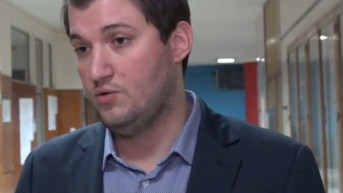
Milan Krstic, an assistant professor at the Faculty of Political Sciences, assessed that for a long time, there had been continuity in the effort to connect Serbia and the US somehow more deeply on the economic and political level, RTS reports.
"I think that the events in 2022 represent continuity, but that does not mean that all problems have been overcome, nor can it be stated that Serbia and the US are allies, but I think that they have reached a level of partnership in certain areas at a serious level," Krstic adds.
In this context, Krstic, commenting on tomorrow's visit of State Department adviser Derek Chollet to Belgrade, reminded that he was an experienced diplomat, one of the highest-ranking in the State Department, who had started his work with Secretary of State James Baker, and later had worked with various important people for American foreign and security policy - from Strobe Talbott to Richard Holbrooke.
"He is one of the highest-ranking people in the State Department. He is actually an adviser, but he is in the rank of undersecretary, so right after the secretary of state," Krstic explains.
It goes without saying, he adds, that the messages he brings will have a certain weight, which does not mean that those messages will be any different than they have been so far.
"Serbian diplomat will work in the State Department - a sign of confidence in the USA"
When it comes to the Memorandum of Understanding signed at the beginning of the year between the Ministry of Foreign Affairs of Serbia and the State Department, Krstic explains that the memorandum has two components.
The operational component, he explains, implies the possibility that one member of our Ministry of Foreign Affairs works in the State Department for a certain period in a sector that does not deal directly with us.
The second component is symbolic and concerns the trust that the US has in a certain country.
"It is a practice that the Americans have, to let foreign diplomats into their diplomatic system. They only do that with countries in which they have a high degree of trust, because it is a security challenge," Krstic emphasizes.
Memorandum with the US in response to the consultation plan with Russia
Krstic reminded that last September in New York, the head of diplomacy at the time, Nikola Selakovic, and his Russian colleague Sergey Lavrov had signed a consultation plan with the Russian Federation, which we had every year and which was renewed.
"This can be interpreted as some kind of response from the US, or ours, to continue balancing, and that we have not joined one side more than another," Krstic believes.

comments