
NZZ: Kurti's actions in Northern Kosovo have brought uncertainty and resentment among Kosovo Serbs, irritating western powers
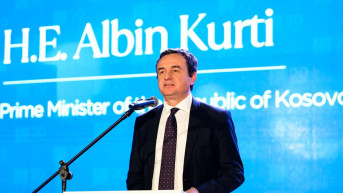
The actions of Albin Kurti have created insecurity and resentment among Kosovo Serbs, but they have also irritated Western powers, according to an article in the Swiss newspaper Neue Zürcher Zeitung.
The article notes that Kurti stands a strong chance of winning re-election in Kosovo's February 2025 elections, citing arguments such as 6% economic growth, increased foreign investments, and a drop in unemployment to 10%. However, journalist Andreas Ernst, as reported by Deutsche Welle, argues that Kurti’s popularity also stems from other factors, particularly his confrontational stance toward neighboring Serbia.
"Kurti's Offensive Strategy Impacts Kosovo Serbs More Than Belgrade"
The article states that Kurti's policies have mainly affected the 90,000 Serbs living in Kosovo rather than Belgrade itself.
"Kosovo Serbs effectively control only education and healthcare," the piece claims.
Previously, northern Kosovo operated under a semblance of Serbian state administration, with Serbia acting as a major employer. However, Kurti has dismantled this structure through strict administrative measures over the past year, implementing Kosovo's sovereignty in the region.
"He has established heavily armed special police bases, sent financial inspectors, and seized buildings constructed without Pristina’s approval. The use of the Serbian dinar has been banned, and Cyrillic signs have been replaced. Serbs now only manage education and healthcare," the article continues.
"These steps have sown uncertainty and resentment among Kosovo Serbs, the report states, but have also irritated Western powers. Western officials criticize these measures as 'unilateral' and not coordinated with Brussels, Berlin, or Washington. However, Kurti remains unfazed. His nonchalance toward his country’s key protectors has a backstory—it’s part of the narrative of his political ascent," the article explains.
"Resisting the Western Postwar Order"
The newspaper recalls Kurti’s activism against Serbian rule in the 1990s, which led to two years in prison, and his later opposition to the Western-led postwar order in Kosovo. In 2005, Kurti founded the Vetëvendosje (Self-Determination) movement with a small group of like-minded individuals, advocating for Kosovo’s self-determination and eventual unification with Albania.
Kurti’s opposition to the UN administrative apparatus in Kosovo earned him growing public support.
"This made Kurti a thorn in the side of Western ambassadors in Pristina, who saw themselves as quasi-proconsuls. Kurti also categorically rejected negotiations with Belgrade on Kosovo’s status," the article notes.
Kurti opposed the "supervised independence" declared in 2008 with U.S. support and against Belgrade’s will, famously stating: "States are not 'granted'; people fight for them."
"Albanian Nationalism as Emancipatory"
The article describes how Kurti, unlike many other politicians, has deeply engaged with political theory, particularly post-colonial thought.
"From this perspective, he views Serbian rule over Kosovo since the Balkan Wars of 1912 as colonial domination, while he sees Albanian nationalism as emancipatory. Kurti also criticized the international protectorate established in 1999 as a form of foreign rule with a neoliberal agenda," the article explains.
It is also recalled that Kurti accused Serbia of being an "open gateway for Russian and Chinese influence in Europe," but counterarguments are also presented—"Vucic's good relations with Western capitals."
Ammunition for Ukraine and Lithium – Vucic's Connection with the West
"Vucic gained the favor of the West by delivering ammunition worth over 800 million euros to Ukraine after the Russian attack," writes Neue Zürcher Zeitung, also noting Vucic's advocacy for lithium mining, which ties him to the European Union and Germany.
"Those who observe what Vucic does—not what he says—can conclude that Serbia is firmly in the Western camp," the article states.
However, it is also added that Kurti, at an international forum, challenged the notion that Vucic's policy of balancing multiple alliances and opposition to Kosovo's independence is merely a performance for domestic audiences. Kurti claimed that Vucic is deceiving the West and that the government in Belgrade has not abandoned the Greater Serbia project, masking it under the term "Serbian World."
"Strategic Patience"
Kurti's thesis, as assessed, is that Vucic practices "strategic patience" like Azerbaijani President Ilham Aliyev—arming Serbia to act toward Kosovo as Azerbaijan did toward Nagorno-Karabakh. "The goal is revenge; we must be prepared for that," Kurti argued.
"Indeed, some in Belgrade are counting on the possibility that a Trump victory could bring a chance to reclaim at least northern Kosovo. Hopes are placed on Richard Grenell, a former Trump special envoy for the Balkans, who has close ties with Belgrade and is a critic of Kurti," the article states.
Kurti, however, reminds that Kosovo has cooperated well with both American political parties.
"Under Democrat Bill Clinton, it was liberated in 1999, and George W. Bush, a Republican, was president in 2008 when it gained independence," writes the Swiss Neue Zürcher Zeitung.


0 comments