
Radojkovic: Elections the only solution to the institutional crisis, Self-Determination Movement the most prepared
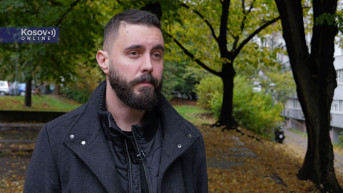
Historian Stefan Radojkovic stated that early parliamentary elections are the most likely solution to the institutional crisis in Kosovo, given that yesterday MPs failed to vote in a new government proposed by Prime Minister-designate Albin Kurti. However, he added that much will also depend on the results of the second round of local elections, scheduled for November 9.
“We have about two more weeks to see whether a new government led by the Democratic Party of Kosovo will be formed. If that doesn’t happen, we can probably expect early parliamentary elections as soon as December,” Radojkovic told Kosovo Online.
He added that the outcome of the second round of local elections will also be important:
“That will likely serve as a measure of the strength of all Albanian parties, both opposition and ruling. As for their chances, it seems to me that the cards are evenly dealt. The Self-Determination Movement will remain the strongest Albanian political party, but still without enough votes to form a government on its own, or even with the help of some minority parties. The same goes for the other Albanian opposition parties, which have strong bases in certain areas of Kosovo and Metohija, but which also cannot independently form a government through coalition agreements. What they could do, however, is prevent Self-Determination from governing, likely leading to the creation of another caretaker government, as has been the case before,” the historian explained.
According to him, the irony and sad reality of the situation is that in either scenario, the votes of the Serbian List could help either the opposition or Self-Determination form a government in Pristina. However, he notes that given the severely damaged interethnic relations, it is unlikely that any Albanian parties would currently even consider such an option.
When asked which party is currently best prepared for elections, Radojkovic said it is the Self-Determination Movement, despite everything.
“As a party, they reach into the voter bases of all other opposition parties. They are not limited to urban or rural areas, they penetrate all segments of Albanian-Kosovo society equally. So, I believe they are the most prepared. The fact that they are still in power, even in a caretaker capacity, gives them an advantage over the opposition parties, which may be strong locally but lack control of ministries and state resources. Holding certain ministries provides them, comparatively, with clear advantages in terms of resources and infrastructure. Self-Determination’s voters are unlikely to abandon their support, which remains stable, unless a major shift occurs, particularly in the relationship between the US administration and Albin Kurti’s government,” Radojkovic emphasized.
He concluded that after the second round of elections, the coalition potential of political parties in Kosovo will become clearer.
“The focus should be on Pristina, the southern part of Mitrovica, and Prizren. These areas will largely indicate the coalition potential of Self-Determination, which, in my view, is close to zero, while the other Albanian parties likely have a somewhat higher coalition potential, though still not enough to form even a simple majority, let alone a two-thirds majority,” Radojkovic assessed.



0 comments