
Surlic: The elections are important for Serbs, a long struggle for gaining control of local institutions lies ahead
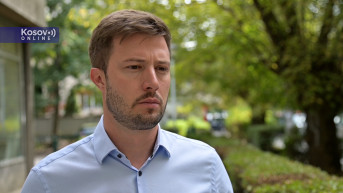
Assistant Professor at the Faculty of Political Sciences, Stefan Surlic, believes that following yesterday’s elections in Kosovo, a long struggle begins — one to gain control over local institutions and enable real solutions to everyday problems faced by Serbs, RTS reports.
In the local elections in Kosovo, the Serb List won in nine out of ten Serb-majority municipalities in the first round. Out of a total of 38 municipalities in Kosovo, the second round of voting will be held on November 9 in 17 municipalities.
The elections took place amid an ongoing parliamentary crisis in Pristina that has lasted since the February parliamentary elections — a situation observers say has not been seen since 1999.
Stefan Surlic, Assistant Professor at the Faculty of Political Sciences in Belgrade, said in the Oko program that after yesterday’s local elections in Kosovo, the key news is that Albin Kurti failed to make Self-Determination the overwhelmingly dominant political force, and that fierce competition will continue in several municipalities.
Another key observation, he said, was the attempt by Albanian parties to engage in ethnic engineering in some municipalities, primarily in Gracanica.
“This is something that deserves the special attention of the Serbian community — to preserve the ethnic composition of these municipalities — because Albanian parties have pursued a long-term strategy of changing the ethnic structure in Serb-majority areas,” Surlic stated.
For Assistant Professor at the Faculty of Political Sciences Marko Dasic, the main takeaway is that fears about possible disruptions in communication between the Serb List, central authorities in Belgrade, and voters have disappeared, given that the Serb List achieved its expected result.
“That political channel still functions, just as it did at the end of 2021,” Dasic said.
He added that another important question is whether any Albanian politicians or parties will be held accountable for the eight-month paralysis of the Assembly.
“My impression is that Self-Determination may have been slightly punished for this, as it is struggling in South Mitrovica — their candidate lost the mayoral race by just about 20 votes,” Dasic said, adding:
“Today, the Council of Europe gave a positive assessment of the election process, despite conditions that were discouraging both for political actors representing the Serbian community and for journalists who tried to report from the ground,” Dasic noted.
He believes the situation suggests a growing likelihood of early parliamentary elections in Kosovo.
Surlic emphasized that these elections are important for Serbs above all in a symbolic and psychological sense, because they can now say that they have legitimately elected representatives in four municipalities. However, he warned that Kosovo remains far from resolving systemic problems and the discriminatory policies coming from Pristina.
He believes that Pristina will continue with such policies and that local representatives will not be able to provide a significant barrier to them.
According to Surlic, the government in Pristina has worked to transfer all key institutional powers to the central level or to the Ministry of Internal Affairs, which means that all occupied buildings remain under the control of Pristina’s authorities.
“When it comes to the dinar, license plates, or postal services — all of that remains under Pristina’s system and will not be returned. Even on the local level, problems will arise: for example, if municipalities wish to change monuments or street names introduced by the previous administration, they will need approval from the central government or relevant ministry. We already have statements from Pristina officials saying they will block such moves, citing alleged violations of the constitutional order,” Surlic explained.
He concluded that a long struggle lies ahead for the consolidation of local institutions and for addressing the everyday problems of Serbs.
“For every new position in municipal administration, approval from the relevant ministry is required. This means that even with Serb mayors and councilors, there will have to be at least minimal dialogue with Pristina to ensure that people can actually work in the municipalities and that these institutions can function as genuine public services,” Surlic said.
According to Marko Dasic, the current situation is much more difficult than the one before November 2022.
“All those who left the police will not automatically return. They cannot, because new recruitment procedures have already been launched. The situation is somewhat different regarding the prosecution and the judiciary, as the Judicial and Prosecutorial Council has not yet made final decisions,” Dasic noted.
He added that there remains a small amount of maneuvering space — perhaps a short-term opportunity for progress.
“Given the very complicated political situation at the central level — especially if Kosovo once again enters a campaign for early elections — concessions to the Serbian community certainly won’t be the deciding factor that benefits any of the leading Kosovo Albanian parties,” Dasic concluded.

0 comments