
Sljuka: Decisions affecting the Serbian community cannot be hidden behind Kurti’s populist address
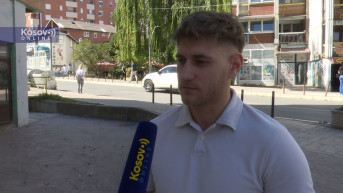
Aleksandar Sljuka, associate of the NGO New Social Initiative, believes that the message addressed to the Serbian community by Kosovo’s acting Prime Minister Albin Kurti, in which he said he wanted the best possible cooperation with Serbs, was populist, and that the decisions of the Kosovo authorities affecting the Serbian community cannot be hidden behind declarative statements.
According to Sljuka, with this address, Kurti tried to present himself as a decision-maker ready to cooperate with everyone, in order to justify himself before the international community.
However, he is convinced that the interested actors within the international community are fully aware of the negative decisions made by Kurti’s government, which they themselves have condemned countless times, and that such a message cannot deceive them.
“This address may, and I see that it has, mislead some who are not well acquainted with the situation, and Kurti is likely using it to send a message precisely to those layers and such actors who are unaware of all the problematic decisions that have been made and implemented in the past two, three, or four years, which have negatively affected the Serbian community,” Sljuka told Kosovo Online.
He added that in the video message, Kurti also tried to present himself as a decision-maker who respects Kosovo’s Constitution and laws. But, he stressed, while some decisions may technically have been in line with Kosovo’s Constitution and laws, they were contrary to the commitments made in the dialogue process and negatively affected the Serbian community, which is something that has been pointed out many times.
“At least when it comes to the Serbian community, he has not managed to deceive people with this address. They are fully aware of everything happening, such as the fact that, because of his decisions and those of the Kosovo authorities, there is now little Serbian-produced goods on store shelves compared to before, or that people have to go to Raska or other towns in Serbia to collect their salaries and pensions because they cannot do so here. Add to that the new decisions regarding residence, registration, and vehicle management, all of this impacts the Serbian community. In the eyes of the Serbian community, Kurti cannot hide behind these declarative populist speeches,” Sljuka emphasized.
He noted that Kurti’s address can also be interpreted as a marketing trick, an attempt to portray himself as a leader ready even for concessions, cooperation, and dialogue, though it is well known that in the four years he has been in power there has never been any genuine dialogue, consultation, or conversation with the Serbian community, despite his initial promises to make it one of his government’s plans.
Sljuka noted that Kurti’s words about education and healthcare must be taken very seriously, even if he does not expect violent closures of institutions in those sectors as has happened in some other cases in the past year and a half.
“We already have the new measure introduced regarding residence registration, which will indirectly affect the university, given that many students come from towns in Serbia and do not have a residence here in Kosovo. For them, this could be a problem, since Kosovo institutions will, in the context of residence registration, require proof that they study here at the university, but the proof must come from an institution accredited within the Kosovo system, which is of course impossible, since both the university and healthcare institutions operate within the Republic of Serbia’s system, not within Kosovo’s,” Sljuka warned.
The same, he explained, will apply to professors coming from various towns in Serbia, including Belgrade, who in addition to teaching at the university, particularly in the medical faculty, are also employed, temporarily or under contract, at the Clinical Hospital Center in North Mitrovica or in Gracanica.
“This already amounts to an indirect blow, as they may not be able to register here, and even if they can, their ability to register residence has been significantly restricted. This shows that steps are already being taken to complicate the functioning of Serbia’s healthcare and education systems operating in Kosovo. I think these subtle, indirect pressures on these two vital systems for Serbs in Kosovo, but also for other communities that rely on their services, will continue, and that efforts will be made to disable their work on Kosovo’s territory,” Sljuka concluded.

0 comments