
Zavisic: KFOR and EULEX to end their loud silence on the arrests and abuse of the Serbs
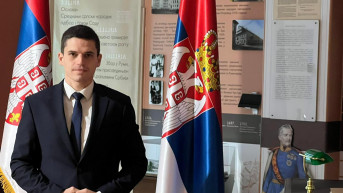
Analyst of the Center for Social Stability Nemanja Zavisic tells Kosovo Online that the baseless and arbitrary arrests of the Serbs carried out by the Albin Kurti regime are aimed at expelling everything Serbian from Kosovo and Metohija, as well as that there is an ongoing attempt to create a "new reality on the ground", with complete rejecting any possibility for dialogue and compromise that will lead to calming down the situation.
When it comes to the arrests of the Serbs, Zavisic says that the fact that they are carried out without any evidence, often without court orders and under some kind of secret indictment, speaks best of the lack of minimum standards in the area of the rule of law.
"At the same time, the accused Serbs are denied the right to a lawyer, the right to family visits, and unfortunately we see from the report that they are physically abused. Unfortunately, all this is happening in front of the eyes and with the tacit approval of part of the international community. KFOR and EULEX are loudly silent and they are doing nothing to carry out their basic task for which they are there. Officials from the political West are threatening Kurti with some imaginary sanctions, while essentially using none of the legal and political instruments at their disposal to put pressure on him and stop the rampage he is carrying out. Our people have no use of empty promises, and it is high time to move from words to actions if there is a minimum of political will for that," Zavisic says.
He indicates that Kurti's constant artificial provoking of crises and tensions is aimed at making even a normal life impossible for the Serbs and thus forcing them to leave their centuries-old hearths.
"Just as the Ustasha regimes did in the 40s and 90s of the last century, today he is trying to do the same with his terrorists. His dream is to expel half of the Serbs and arrest the other half," our interlocutor notes.
He believes that the greatest responsibility for the current situation in the north of Kosovo lies with the countries of the Quint and that at this moment it depends only on them whether there will be a large-scale conflict or not.
"It is completely clear that Kurti wants war at all costs, and whether he will get a free hand for that is up to the political West to decide. The Serbs must trust their country that they are united and unified, and President Vucic will certainly not allow another pogrom or some kind of 'Operation Storm'. The time of defeat and humiliation of our country has passed, and no matter how difficult it will be, one thing is certain - Serbia will win," he says.
Regarding EU, US, and NATO guarantees that Belgrade received at the end of December that the Serbs who had participated in protests and at barricades would not be arrested and that this was still happening, Zavisic says that we have witnessed many times so far that the promises and the signature of Brussels mean nothing in practice.
"And these guarantees turn out to be a 'dead letter' on paper. Just like the Brussels Agreement from 2013, but also many other agreements. The CSM was agreed more than a decade ago and nothing has happened to date. Indeed, the big question is whether the EU has further any legitimacy to mediate in the talks. Who can guarantee us that any agreement we may reach in the future will be implemented? This does not mean that our leadership will give up on the talks and walk out of the negotiations. We must not allow it to ourselves, because the moment we decide not to be a partner at the table, we will become a topic on the table, which will then be decided by others," Zavisic says.
He adds that Serbia has shown and proved through actions that it is for peace and stability that it is for dialogue and compromise. However, he points out, it takes two to "tango" and it is time for the Albanians to show it, and for the EU to reconsider its role and whether it has the capacity, strength, and will to engage in the mediation in the future.


comments