
Spirovski: Critical vulnerabilities threaten digital services, swift action is essential
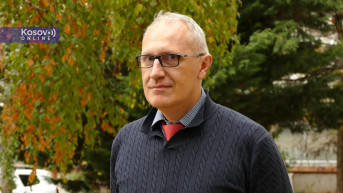
Cybersecurity expert Bozidar Spirovski from Skopje warned in a statement to Kosovo Online that serious vulnerabilities in digital systems are being discovered with increasing frequency around the world. As a result, some banks outside North Macedonia have temporarily shut down their services. He stressed that a swift response and improved protection of digital services are essential.
“October is the month when awareness of cybersecurity is raised globally. In just the past week, the cybersecurity world has been in complete turmoil. Major and very serious vulnerabilities have been discovered worldwide, to such an extent that online services have been shut down since last Friday because they were found to be extremely vulnerable. There are two critical vulnerabilities in PHP, a programming language that affects a large number of real-world services around the world. There are literally banks that have shut down their services, not here, but outside Macedonia, until the vulnerabilities are fixed. And this is not over,” Spirovski said.
He added that numerous problems occur and system vulnerabilities are discovered every day.
“As of this morning, we have new critical vulnerabilities that need to be fixed. The overall state of cybersecurity worldwide has become very tense lately. How does this affect us at the local level? It depends on the companies and organizations. We have good examples, but also some that are not so good. I want to urge people to read up on these issues and respond as quickly as possible, because things have started moving at an extremely fast pace. A swift response is essential,” Spirovski said.
Asked how advanced digitalization is in the region and in Macedonia, Spirovski said the process was being implemented successfully.
“This transformation is taking place in Macedonia, gradually and quite successfully, I would say, judging by the services I can monitor, such as uslugi.gov.mk, electronic banking services and online services offered by other operators, whether telecommunications companies, water utilities and similar providers. We are not doing badly. The process is progressing, which also raises the question of whether digitized services are adequately protected. I sincerely hope they are and that all the teams maintaining them are also monitoring the threats that lie ahead,” the expert said.
Spirovski noted that numerous digital platforms are useful, including government services such as uslugi.gov.mk and usluge.mk.
“It connects up to 50 different institutions, through which you can access services for which you previously had to wait at a counter. That is excellent. In addition, we have the Public Revenue Office, banks, and I believe the Health Insurance Fund also offers an online service. Whether there is also a backup paper-based version is a question for the relevant institution. It would be irresponsible of me to speculate, but I sincerely hope that a physical copy exists somewhere, because damage can occur due to an error, negligence or any other reason. We are all exposed to attacks all the time,” Spirovski said.
He said that younger generations were more likely to use online services.
“As for older generations, it all depends on whether they are reluctant to embrace digitalization. I would recommend that people sometimes consider taking care of certain matters in person rather than digitally, because there are so many scams. Older people with little experience are particularly vulnerable to fraud, as they are constantly exposed to attacks and scams involving messages such as: ‘Click here’, ‘Take this, it's urgent’, and similar prompts. My advice is to be careful. Digitalization is excellent, but every time you use it, you should proceed slowly and cautiously,” Spirovski concluded.



0 comments