
Djuric: Strategic Dialogue elevates relations with the United States to an entirely new level
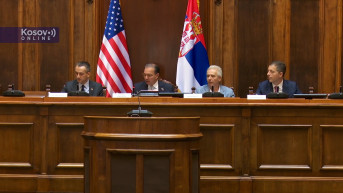
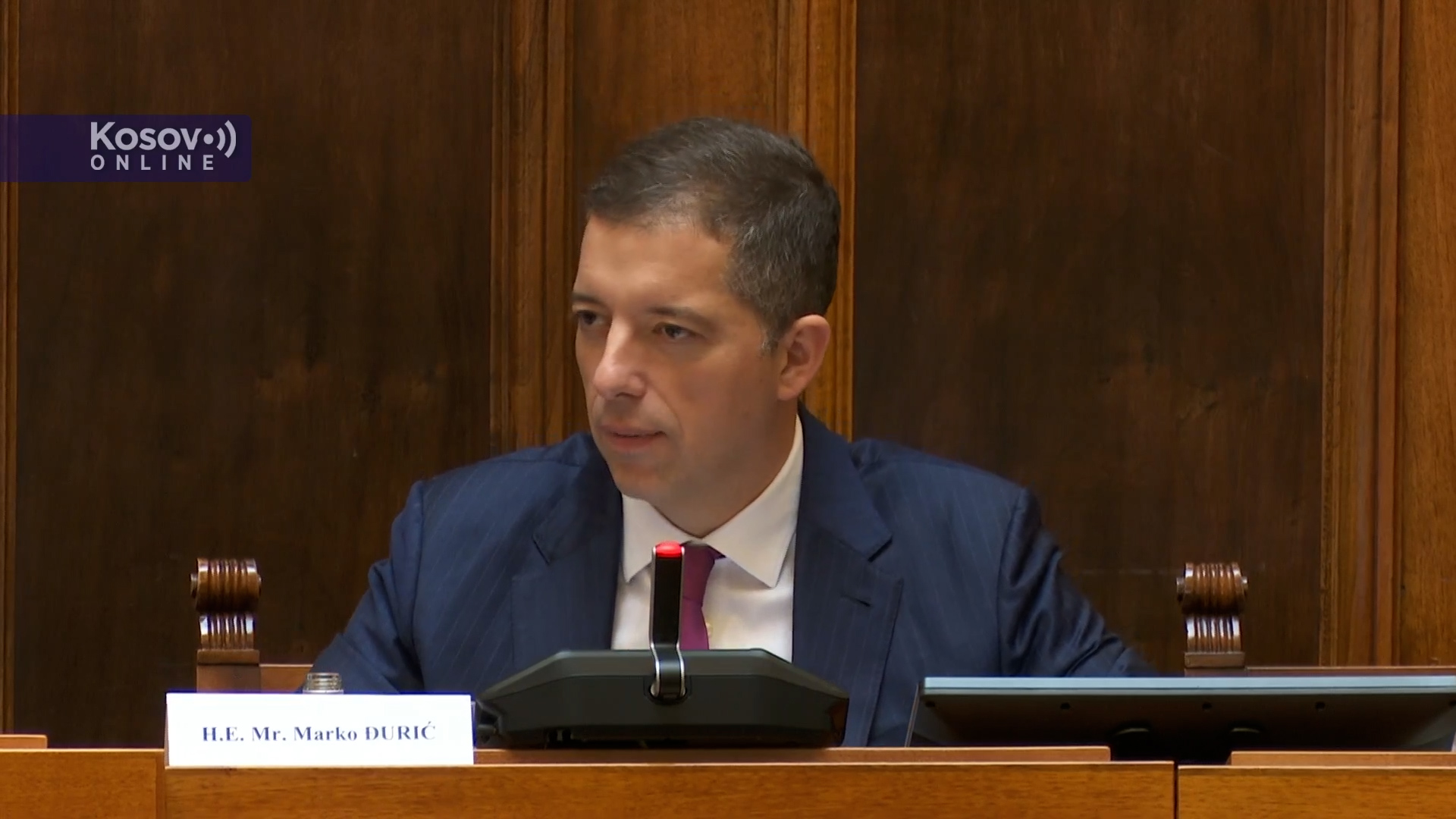
The Strategic Dialogue elevates relations with the United States to an entirely new level, stated Serbia’s Minister of Foreign Affairs Marko Djuric at the conference “America Day 2025 – Strategic Partnership for the Future.” Chargé d’Affaires of the U.S. Embassy in Belgrade Alexander Titolo emphasized that we are standing at the threshold of a new era in U.S.–Serbia relations, one defined not by the past but by what is built together.
Djuric noted that the Strategic Dialogue should be viewed both in its bilateral and broader global context.
“We are all aware that we live in a time of tremendous global turbulence. The constant in such a difficult period is the steady advancement of relations between our two countries,” he underlined.
According to him, cooperation with the United States opens up new opportunities and broadens horizons. The public announcement of both countries’ intention to formally establish a Strategic Dialogue was, he said, confirmation of this progress.
He recalled that during his recent visit to Washington he had the opportunity to be hosted by Senator Marco Rubio, which provided new impetus to the strategic partnership.
“I am a strong advocate of the Strategic Dialogue with the United States because, beyond the political messages, it provides a practical structure, organization, and order to our bilateral cooperation. It introduces regular meetings, exchanges, and programmatic activities between institutions in a way that does not exist with countries lacking this framework,” he explained.
Djuric stressed that with regular meetings, clearly defined agenda items, and objectives, it is possible to deliver tangible results to citizens.
He pointed out that strategic cooperation encompasses numerous areas, including energy—an issue of particular importance given Serbia’s industrial growth and the need for diversification of sources. He also referred to the partnership between the Serbian Armed Forces and the Ohio National Guard, which last year marked its eighteenth anniversary.
“This partnership has transformed the landscape of military cooperation—of the American soldier in Serbia and the Serbian soldier in the United States—and paved the way for broader defense cooperation,” he emphasized.
He further recalled that while serving as Ambassador to the U.S., an education agreement was concluded with the State of Ohio, illustrating how much can be achieved by connecting the Serbian and American education systems.
“The Strategic Dialogue is comprehensive. It places our relations in an entirely different category, elevating them to a new level. It helps us turn a new page in a substantive sense, with a country with which we have enjoyed friendship for 144 years,” Djuric stressed.
He added that during his time in the U.S., he witnessed bipartisan support for cooperation with Serbia, just as such cooperation enjoys wide support among political and social stakeholders in Serbia who recognize the mutual benefits.
“I fully share the view that the best days lie ahead,” Djuric said.
He underscored that President Donald Trump’s administration looks at relations with Serbia through new eyes, and that this perspective is reciprocated by Serbia with enthusiasm in shaping bilateral cooperation.
“We hope to have the opportunity to host President Donald Trump in Belgrade, where I am certain he would receive the warmest welcome, unparalleled in this part of Europe, as he enjoys tremendous sympathy among the Serbian people,” Minister Djuric added.
Titolo: A New Era in U.S.–Serbia Relations
Chargé d’Affaires of the U.S. Embassy in Belgrade Alexander Titolo stressed that we are at the threshold of a new era in U.S.–Serbia relations, defined not by what lies behind but by what will be built together.
He underlined that President Donald Trump and his administration are committed to developing economic relations, strengthening business ties, and establishing political dialogue grounded in shared interests and values.
“A new era is possible only if we are jointly committed to regional stability. We must not allow differences from the recent past to prevent us from building a brighter future, nor selective interpretations of history to obstruct cooperation toward that goal,” Titolo emphasized, noting that the focus of bilateral history should be on mutually beneficial ties that have lasted for more than a century.
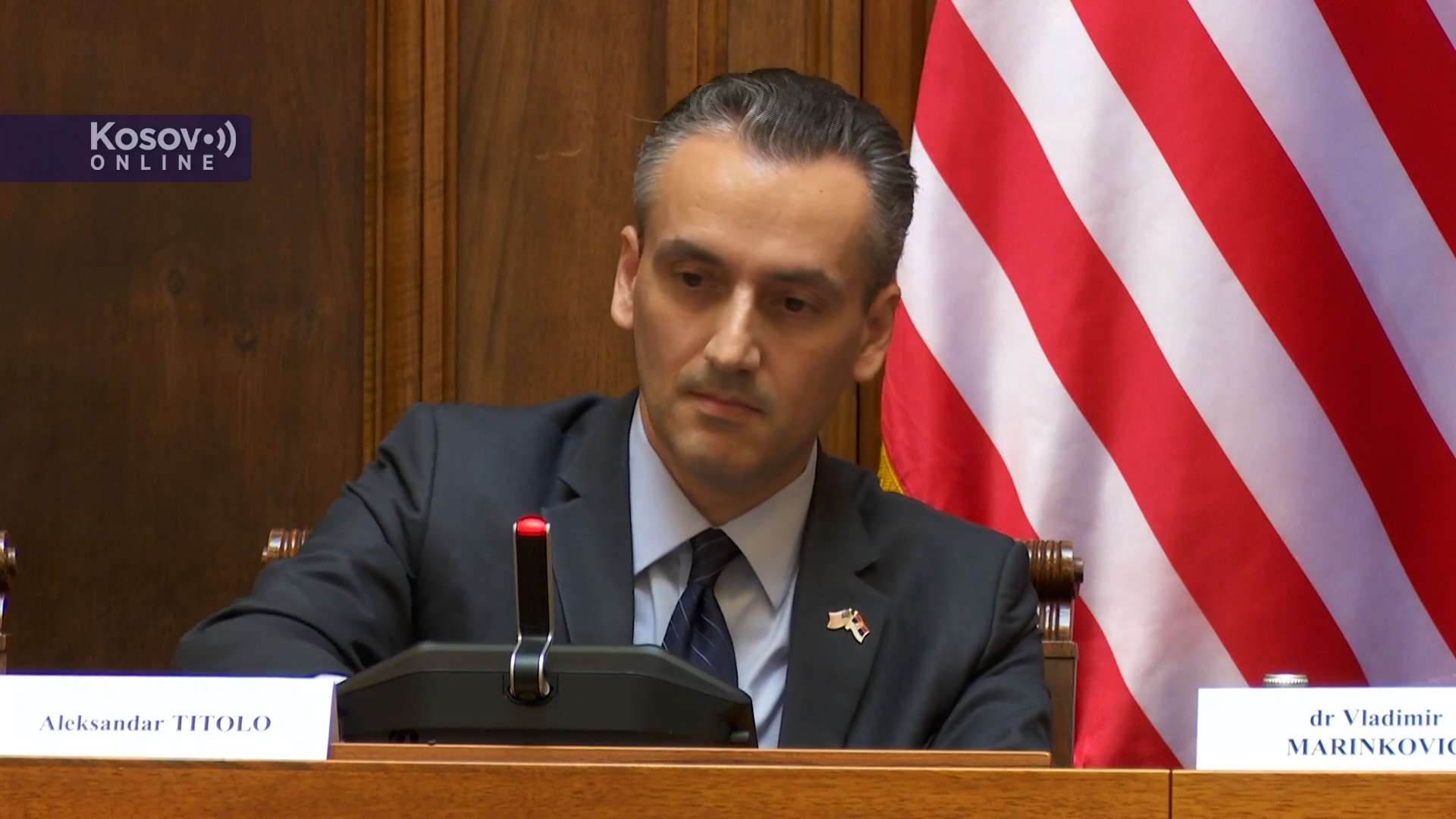
He recalled that the Strategic Dialogue—soon to commence—will be based on honesty, respect, and common interests.
“The fact that we are elevating our relations to this level testifies to the progress we have achieved in cooperation and to the optimism we share for the future,” he said.
He added that expanded defense cooperation is needed in an increasingly complex global environment, as is the creation of reciprocal ties that will be of key importance for the future.
Titolo pointed out that the U.S. is no longer focused on reshaping societies, but rather on working with countries committed to their own future.
“I believe Serbia desires a better future with more stability and prosperity,” he underlined.
Looking ahead, Titolo emphasized that the coming months and years will bring numerous opportunities for joint work. He recalled that next year the United States will celebrate the 250th anniversary of its independence, while in 2027 the world will gather in Serbia for Expo, both of which will be opportunities to showcase that U.S.–Serbia relations are becoming a genuine partnership, oriented toward the future.
“We honor the past, but it is more important to celebrate the opportunities the future offers. Americans are optimists, always looking forward, saying our best days lie ahead. At the U.S. Embassy, we believe the best days of our relations with Serbia are before us,” Titolo said.
He further explained that the term “Strategic Dialogue,” while a standard diplomatic expression, in practice means placing relations on a broader footing, involving multiple parts of government, the business community, and society at large, and expanding cooperation across diverse areas.
Tenney: A Long History of U.S.–Serbia Friendship
Representative Claudia Tenney of New York, Co-Chair of the Serbian Caucus in the U.S. House of Representatives, welcomed the participants, stressing that Serbia and the U.S. share a long history of friendship. She emphasized that this is the moment to strengthen ties, build a better common future, deepen dialogue, expand economic and energy partnerships, and enhance political and defense cooperation, which will make both countries stronger and more secure.
She added that as Co-Chair of the Serbian Caucus, she is well aware of the importance of congressional voices supporting cooperation with Serbia, recalling that she has spoken out in Congress against human rights violations affecting Serbs in Kosovo.
“When we stood together, we not only strengthened our ties but also made progress in advancing peace and prosperity around the world,” Tenney noted.
Drecun: Strategic Dialogue to Bring New Energy and Momentum
Milovan Drecun, Chair of the Parliamentary Friendship Group with the United States in the National Assembly of Serbia, stressed the need to develop a partnership grounded not only in shared interests, but also in innovation, ideas, and courage in seeking common ground—a path that defines the prospective future of friendship between the two countries and their peoples, “small Serbia and the leading global power, the United States.”
“At first glance, it may seem paradoxical that our vision of the future was initially forged through military and defense cooperation, even though in 1999, due to NATO aggression, we faced the greatest challenge in our relations and shifted from friends to adversaries. Once partnership is lost, it is hard to rebuild. The renewal of this deeply shaken trust was begun by leaders unwilling to remain trapped in war and the past—leaders with vision, determination, and perseverance, who step by step began to overcome the tragic legacy of 1999,” Drecun said.
He added that building a common future requires maintaining a high level of military and defense cooperation.
According to him, the Strategic Dialogue, as the highest form of bilateral cooperation, will inject new energy and momentum, steering relations and partnership toward a prosperous future.



0 comments