
Kamberi: Neither Brussels nor Washington knows how to continue the dialogue between Pristina and Belgrade
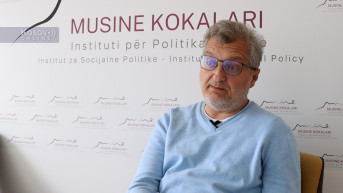
Belgzim Kamberi, an associate at the "Musine Kokalari" Institute, assesses that the EU High Representative for Foreign Affairs and Security, Kaja Kallas, during her "Balkan tour," did not visit Belgrade and Pristina because neither Brussels nor Washington know how the dialogue on normalization should proceed.
"There are two reasons why Kallas first visited Albania, Montenegro, and Bosnia and Herzegovina. The first is that Montenegro and Albania have progressed a bit more in European integrations, and the second is the crisis existing in Bosnia and Herzegovina. But, most importantly and interestingly, she did not visit either Serbia or Kosovo, considering that under the EU umbrella, there exists a dialogue on normalization of relations between Pristina and Belgrade," Kamberi stated to Kosovo Online.
According to him, this is a consequence of the crisis in which the dialogue currently finds itself.
"We are now in a situation where neither the EU nor the USA know how the Kosovo and Serbia dialogue will continue in the future. They themselves have said that they are looking for some 'other instrument' regarding the relationship between Pristina and Belgrade. And one of the reasons why she may not have visited Pristina and Belgrade is because in the EU they still do not know how to continue with the current dialogue between Kosovo and Serbia," Kamberi detailed.
Kamberi says that the EU has different instruments that could initiate the dialogue between Belgrade and Pristina and emphasizes that this could involve changing the format of the dialogue, as well as a potential international conference where a final agreement could be reached.
"The dialogue is currently moving in such a way that Brussels talks first with Belgrade, then with Pristina, and it is not a direct dialogue. Maybe one of the instruments, though it would be harder, could be some sort of international conference that could be organized where a major agreement could be reached, not just the process that has been so far," Kamberi said.
He notes that the final decision will primarily depend on the future relations between Washington and Brussels, which at this moment are not the best.
"The biggest question is therefore who will lead that dialogue between Pristina and Belgrade. Whether we will continue with the previous process where the EU was the one leading the dialogue, and Washington was on the side as a supporter of the process, or we will come to a situation where the current U.S. administration takes the main role in the relationship between Kosovo and Serbia. At this moment, it is difficult to say not only because we do not know what the future relationship of the Trump administration towards the EU will be, but also because of the situation in Pristina and Belgrade. In Pristina, because we still do not have a new government, and in Belgrade, because of the political situation and the executive power vacuum," Kamberi evaluated.




0 comments