
Milivojevic: By amending Chapter 35, EU calls into question Serbia's further negotiation process
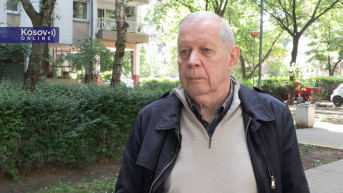
Diplomat Zoran Milivojevic emphasizes that by including the Ohrid Agreement in Chapter 35, the EU is attempting to forcibly impose on Serbia that this agreement, which implies de facto recognition of Kosovo, becomes binding for Serbia. This, as he explains, crosses into the "red lines" zone for Serbia and raises questions about the further negotiation process.
"Therefore, the EU's position becomes clear – that it is no longer status-neutral and has decided to pressure Serbia to recognize the so-called new reality, or rather, to accept de facto recognition of Kosovo, because the Franco-German plan, or the Ohrid Agreement, contains precisely that," Milivojevic said for Kosovo Online.
He points out that this is clearly seen in Articles 2 and 4, reminding that Article 2 requires Serbia to accept sovereignty and territorial integrity in accordance with the UN Charter and to prioritize the principle of self-determination of international law over other principles of sovereignty and territorial integrity.
This, he states, is a clear indication towards de facto recognition.
On the other hand, he notes that Article 4 requires Serbia to allow Kosovo access to international organizations without exception, including the UN and UN system organizations.
Therefore, he concludes, Serbia has reservations about the Ohrid Agreement and does not consider it binding.
"The inclusion in Chapter 35 is an attempt to forcibly impose on Serbia that the Ohrid Agreement is binding for Serbia and to make it a condition for accession negotiations or accession to the EU in the future, whenever that may be. This is now completely clear, and it calls into question the further negotiation process because it already crosses the 'red lines' that Serbia is not prepared for and cannot negotiate about, as we have at least three limitations – the Constitution of Serbia, the general sentiment and the stance of the majority in the country, and finally, international law and Resolution 1244, which speaks of something entirely different," Milivojevic stated.
He points out that by including the Ohrid Agreement in Chapter 35, the EU discredits itself as a mediator in normalization negotiations because, as he emphasizes, it declares its stance on status.
The EU, he explains, has a mandate from the UN General Assembly to support and assist in normalization negotiations and to act as status-neutral in dialogue between Serbia and Pristina.
"In this way, the EU aligns itself with one side and in this way confirms the policy of double standards, division, and support for Pristina and the Kurti government and all its measures and actions of repression and denial of rights in every sense, as shown by the failed referendum and the stance of the Serbian people. It is now evident that European major powers, somewhere from the start, have supported this thesis and have not been impartial, they have supported the Pristina side and approved measures and actions of the Pristina side to establish a new reality in northern Kosovo and Metohija and thus affect the negotiation process of Serbia and the resolution of the Kosovo issue," the diplomat points out.
Geopolitics currently prioritizes pressure on Serbia, Milivojevic notes, adding that it is in the interest of many for the Kosovo issue to be resolved quickly and effectively, i.e., through de facto recognition.
This is, he says, in the interest of Western powers regarding the war in Ukraine, global developments, as well as potential conflicts for dominance in the new international context.
On the other hand, the "Copenhagen criteria," rule of law, reforms, and everything mandated by Chapters 23 and 24 are now secondary and overshadowed by politics, the diplomat notes.
"The European Union at this moment prioritizes geopolitics both in EU policy and towards us, but also towards some issues in Europe. Geopolitics dominates at this moment, not the 'Copenhagen criteria' and what should be our primary concern," Milivojevic said.
However, the diplomat emphasizes that regardless of the EU's stance and demands, "neither today, nor tomorrow, nor at any time" will Serbia discuss entering the EU while relinquishing Kosovo.
"That is not our topic, for us, the Constitution, sovereignty, and territorial integrity, as well as the majority's stance, are more important than the state renouncing itself. I think it is less important when Serbia will have to fulfill its obligations, but that they are conditioning us with it and thus raising the fundamental question of whether they want Serbia in the EU," he emphasized.
Asked whether by including the Ohrid Agreement in Chapter 35, countries that do not recognize Kosovo are supporting Kosovo's membership in the UN, Milivojevic emphasizes that there is a kind of legal equivocation and politics on that issue.
He points out that the Ohrid Agreement does not contain a recognition provision, but the provisions in that document create conditions for it.
"There has been some kind of consensus reached even with countries that have not recognized Kosovo, with the emphasis on Serbia. If we were to recognize it, then that would not bind them, they would rely on that, treating it the same way as we do. So, without de jure recognition, they would treat it as de facto recognition, and that's how they would act with the excuse that Serbia did it. If we did that, we would create conditions, following the German arrangement model from '74, to legitimize Kosovo and acquire international legal subjectivity, and then those countries would operate based on a pragmatic model," Milivojevic said.
If Serbia were to de facto recognize Kosovo, he adds, it would open the door to the UN and would call into question Resolution 1244, not the non-recognizing countries.
"If the mother state recognizes the independence of its territory, then that changes the situation, and everything now depends on us," the diplomat concludes.


0 comments