
What follows after the conclusions of the European Council that pave the way for changing Chapter 35 for Serbia?
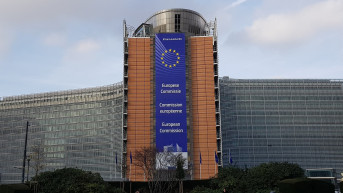
The European Council Summit, which concluded yesterday, will be remembered by many for the decision to open accession negotiations with Ukraine and Moldova, while Belgrade will be remembered for formally requesting the European Commission to supplement the criteria in Chapter 35 in the accession negotiations with Serbia.
This supplement should be proposed by the European Commission by the end of January 2024, so that the obligations arising from the Agreement on the normalization of relations between Kosovo and Serbia, reached with Pristina in February this year and its annex from Ohrid, are included in Chapter 35. The mentioned "correction" wouldn't attract much attention if Article 4 of the Agreement on the normalization process didn't state that "Serbia will not oppose Kosovo's membership in any international organization", and therefore in the United Nations, which is why Belgrade did not sign that document.
In the case of Serbia, a question of paramount importance for Serbia will now appear in the chapter reserved for "other issues".
The ball is now in the court of the European Commission, and experts in European practice say that the procedure will involve consultations in EU member countries and that the change of the chapter cannot be completed quickly, but will probably take about six months.
Despite Serbian officials pointing out that such a sequence of events would mean that the EU is closing its doors to Serbia because Kosovo's UN membership is unacceptable to it, Kosovo Online interlocutors say that changes in Chapter 35 are still expected.
The decision of the European Council, according to the assessment of a research fellow at the Henry Jackson Research Center, Helena Ivanov, is consistent with the general stance that the EU has had throughout the year regarding the agreements reached, namely that the agreements that are orally accepted are legally binding according to the Vienna Convention.
"In addition, the EU has been quite clear during every meeting between Belgrade and Pristina this year that the implementation of agreements, specifically those from Brussels and Ohrid, will be a condition for both Serbia and Kosovo in the EU accession process. Therefore, we should expect the European Commission to insist on this implementation, and this will be a further step in insisting that the implementation of the agreed-upon and normalization of relations between Belgrade and Pristina be included as a key condition for the EU accession process", Ivanov said for Kosovo Online.
When asked if the letter in which the Government of Serbia had lodged a reservation against the EU declaration, demanding from Belgrade and Pristina to implement the agreements reached, including the Agreement on the path to normalizing relations and its annex, could influence the European Commission to exclude the dialogue agreements in full from Chapter 35, or that it did not include parts that are controversial for Serbia, primarily related to Kosovo's membership in the United Nations, Ivanov doubts that it can be an option.
"The EU's position is quite clear; their claim is: this is something that has been put on the table, you had the opportunity to discuss it, and this is an obligation that both Belgrade and Pristina verbally accepted, which is legally binding under the Vienna Convention. So, I don't see that there will be any major changes, regardless of the letter sent by the Government of Serbia, because the EU will insist that this is something that has already been accepted. If a concession were to be made regarding the contentious point about Kosovo's accession to international organizations, which also means the United Nations, then, I believe, Kosovo would also seek a concession for them. We can assume that it would be a question of forming the CSM, and therefore, I don't believe the EU would be willing to make any concessions in that regard. So, if the EU, conditionally speaking, fulfilled what Serbia wants, which is to remove the point about Kosovo's accession to international organizations, and if that were a 'new version', I believe Kosovo would then seek leniency for what is contentious for them", Ivanov says.
Speaking about the perspective of the dialogue with Pristina if the European Commission amends Chapter 35 for Serbia, our interlocutor says that she is not optimistic about the dialogue, regardless of this specific situation. As she points out, neither Belgrade nor Pristina were entirely constructive in the negotiation process, and the EU was not a successful mediator.
"The EU often brings Belgrade and Pristina to the table, and agreements are reached in those rooms, but very little is implemented. Recently, we even have a pattern where after some negotiations that are supposedly presented as successful, there is an escalation, so I don't see that this will have any positive effect. Even if the agreements are included in Chapter 35, as long as Kosovo is not willing to fulfill its parts of the agreement, I believe Serbia will use it as an argument like 'Why should we fulfill it if Kosovo isn't'. There is no real willingness to resolve this; instead, there is a constant effort to achieve a small diplomatic gain after some round of negotiations, and there hasn't been enough emphasis on what is practically implemented afterward. I don't see that changing in the future", Ivanov says.
According to the analysis of Artan Muhaxhiri from Pristina, the request from the European Council came as a result of the positions of Belgrade, specifically from President Aleksandar Vucic and Prime Minister Ana Brnabic, stating that they would not accept the agreements in full but only in part, which, he says, is not a matter to be negotiated.
He states for Kosovo Online that the international community has an interest in both parties accepting the entire process in the dialogue, and the decision of the European Council regarding Chapter 35 was a necessity for agreements to be implemented.
"I am not sure if this was a mistake by President Vucic or strategic thinking because he will now have an excuse to tell the citizens that it is absolutely necessary to fully respect the Ohrid Agreement, as there is no other option. On the other hand, there is a possibility that it was a mistake, and by attempting not to accept the entire Ohrid Agreement, he triggered EU responses by placing the agreement in Chapter 35, thereby putting institutions in Belgrade under much greater pressure", Muhaxhiri says.
Director of the Center for Contemporary Politics and editor of the European Western Balkans portal, Nemanja Todorovic Stiplija, says that all significant agreements reached in the dialogue with Pristina have been included in negotiating Chapter 35 within the framework of Serbia's accession negotiations with the European Union, and there was no possibility for the latest agreements, which he considers crucial for the EU, to be outside that chapter.
“I see no room for anyone from the outside, as expected from Hungary, to prevent any agreements from the Belgrade-Pristina dialogue from entering Chapter 35. Every time we had important negotiations from 2013 to 2015, all those agreements we reached were included in this chapter, and there was no possibility for these latest agreements, which seem to be the most important for the EU, to be outside Chapter 35", Todorovic Stiplija says for Kosovo Online.
He adds that Chapter 35, concerning Belgrade and Pristina, is one of those that condition Serbia's further progress in EU integrations.
"In the negotiating framework that Serbia accepted in 2014, all matters related to the rule of law from Chapters 23 and 24, along with Chapter 35 concerning Belgrade and Pristina, are conditions for Serbia's further progress in EU integrations. These three chapters are blocking chapters and can block Serbia's path to the EU if it does not meet the criteria set out in them. Chapter 35 is one of the most important for Serbia, along with chapters in the field of the rule of law, which are also worked on very little. This would mean that if Serbia does not fulfill the provisions entered from the agreements of Ohrid and Brussels into Chapter 35, it will not be able to expect the opening of new negotiating chapters or clusters in the coming period", Todorovic Stiplija explains.
Program Manager and Senior Researcher at the Belgrade Center for European Policy, Strahinja Subotic believes that regardless of expectations for a change in the EU negotiating framework for Serbia, involving the inclusion of the Agreement on the Path to the Normalization of Relations between Serbia and Kosovo from February of this year and its Ohrid annex in Chapter 35, major countries such as Germany and France, as well as other EU countries, will certainly expect the oral agreements made in the dialogue to be implemented.
"Whether they do it in January, in six months, or a year, the fact is that Belgrade and Pristina have orally committed to implementing the Ohrid Agreement. Everything we see happening in Brussels regarding the negotiating framework and its changes is an internal, political, and technical matter of the European Union. However, in practice, the most important states such as France and Germany will hold us accountable to implement what we have orally committed to", Subotic said.
According to our interlocutor, modifying Chapter 35 in this way would confirm its status as a "blocking chapter".
"If we imagine that the negotiating framework is changed, and the Ohrid Agreement is included in Chapter 35, it would reaffirm the status of a blocking chapter. Even if Serbia aligns its foreign policy with the EU, fulfills all agreements, and resolves the rule of law issue, it still couldn't become an EU member until a legally binding and comprehensive agreement is reached with Pristina. As long as that is the case, our European future remains uncertain", Subotic says.
At the same time, he adds that the Ohrid Agreement actually places the most obligations on the Pristina side.
"They are the ones who need to roll up their sleeves; they are left with forming the CSM, and without that precondition, Belgrade cannot be expected to take other actions. Meanwhile, what Belgrade can do is encourage the Serbs in northern Kosovo to participate in elections. That was one requirement, and the other was to conduct an investigation related to Banjska and prosecute those involved", Subotic says.

0 comments