
Mitic: Resolution 1244 is the basis for preserving Serbia’s territorial integrity
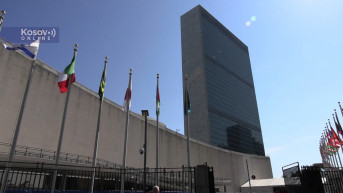
Historian Predrag Markovic emphasized that the credibility of the United Nations was undermined by the bombing of the Federal Republic of Yugoslavia, while Aleksandar Mitic from the Institute of International Politics and Economics stated that many conflicts since 1999 have been the result of violations of the UN Charter, but that Resolution 1244, however challenged, remains the foundation for preserving Serbia’s territorial integrity, RTS reports.
After eight decades of existence, the Charter of the United Nations, adopted in 1945 to preserve peace and uphold international law, is increasingly being called into question.
Historian Predrag Markovic recalled that events such as the aggression against the FRY in 1999 severely damaged the credibility of the United Nations.
“That was a military operation carried out without the approval of the United Nations and, of course, unprincipled actions backfired,” said Markovic.
He stressed that it is now very difficult to argue that the great powers are defending Ukraine’s territorial integrity when they failed to defend Serbia’s integrity and, 26 years ago, set out to destroy Yugoslavia—a founding member of the UN.
Markovic added that a consistent UN approach would be to condemn present-day crimes such as those in the Gaza Strip. He pointed out that 70 percent of the 54,000 victims are women and children.
“If that doesn’t qualify as genocide by the loose criteria currently used for that term, then I don’t know what does,” the historian stressed.
Aleksandar Mitic from the Institute for International Politics and Economics emphasized that the problem lies not in the UN Charter itself, but in its lack of enforcement.
“This is, after all, what led to the collapse of the League of Nations—disregard for the rules, and the inability to punish those who commit and lead violent wars,” Mitic explained.
Likewise, the political West—namely the United States, NATO, and the European Union—dealt a massive blow to the Charter by launching the aggression on the FRY in 1999 without UN Security Council approval.
“All of that continued in 2008 with the coordination of the unilateral declaration of Kosovo’s independence, which further undermined the Charter. Many of today’s conflicts are a consequence of that,” said Mitic.
Nevertheless, speaking about the development of the UN through the decades and the shift in the global order from bipolar to unipolar, and now to multipolar, Mitic emphasized that the UN still represents the only system of its kind.
Resolution 1244, he noted, still constitutes the basis for preserving Serbia’s territorial integrity.
“No matter how compromised it is, no matter how much it is disregarded—especially by the political West—it still remains the foundation for protecting our territorial integrity,” Mitic emphasized.
Historian Predrag Markovic also commented on the recent UN vote on Srebrenica.
“The United Nations showed that the voices of small countries are still heard. This was, in a way, a moral victory for Serbia, as the non-aligned countries largely expressed strong criticism toward the document,” Markovic noted.
Aleksandar Mitic highlighted some of the major achievements of the United Nations.
“Thanks to the United Nations, the fight and victory against apartheid were encouraged. The struggle for decolonization was supported. Even today, through UNHCR, some 50 million refugees around the world receive assistance, and over 100 million people receive food,” Mitic emphasized.
He concluded that the fact that some states violate human rights does not mean the United Nations itself has failed.


0 comments