
Pavkovic: The goal of the meeting in Brussels is to proceed more seriously with the implementation of the Ohrid Agreement
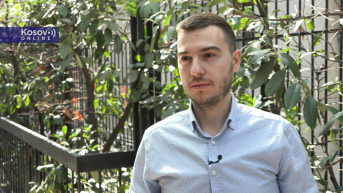
The Ohrid Agreement was reached exactly a year ago, and Milos Pavkovic from the Center for European Policy says that, unfortunately, not much has changed due to a series of tensions that have occurred in the past period. Speaking about the expectations for tomorrow's round of dialogue in Brussels, Pavkovic believes that the goal of that meeting is to create momentum for the implementation of the agreement.
"Unfortunately, the Ohrid Agreement has not changed much, and its aim was to open a new phase in dialogue and the normalization process, potentially even to address the status issue of Kosovo, which it failed to do due to a series of tensions that occurred last year starting from the elections in the north, the special police, the arrest of Kosovo police officers, and Banjska," Pavkovic said for Kosovo Online.
As he says, the whole of 2023 was filled with crises, and the EU functioned more like a firefighter rather than someone working on implementing the agreement.
"The implementation has largely been lacking, so the initial goal, which was implementation and furthering the new phase of dialogue, has not been achieved from that perspective after a year," he says.
Considering that the Ohrid Agreement was not signed but both sides accepted certain obligations from it, Pavkovic says that the EU is trying to find a solution to overcome the lack of signatures.
"The Annex of the Agreement itself envisaged it to be a part of the negotiating framework, a common EU position. At this moment, that negotiating position is on the agenda of the EU Council, and specifically the aim is to, through a change in the EU negotiating position, somehow provide a legal basis for the Ohrid Agreement. This is the way the EU wants to overcome the lack of signatures on the agreement," he explained.
In Brussels, a new round of dialogue at the level of chief negotiators, Petar Petkovic from the Serbian side, and Besnik Bislimi from the Kosovar side will take place tomorrow, and Pavkovic points out that tomorrow's meeting will be one of the last during this European administration.
As he explains, soon they will enter the campaign for European elections, and the European Parliament will dissolve, so this is one of the last meetings where Miroslav Lajcak and the European administration will have full legitimacy to discuss this issue.
He believes that the goal is to create momentum around the implementation of the agreement, or rather, to proceed more seriously with the implementation process.
"After a year of limited progress in implementation, now the entire agreement is in question, and the EU now wants to avoid waiting six or seven months until there is a new round of talks and implementation. They want to ensure progress before the European Parliament dissolves and the campaign begins. The goal is to make concrete progress towards the formation of the Community of Serb-majority Municipalities and further implementation of at least some obligations from the agreement," he adds.
Pavkovic believes that the Serbian delegation will insist that the issue of the Central Bank of Kosovo's regulation on the abolition of payments in dinars be a topic of dialogue, while on the other hand, the Kosovo delegation will insist that this not be a part of the dialogue.
Now, as Pavkovic points out, Miroslav Lajcak's role as the EU Special Representative for the dialogue will be crucial, specifically how he will facilitate the dialogue on this issue.
"Lajcak's solution will be crucial in determining whether this issue will be on the agenda. It seems to me that it is necessary for it to be a part of the dialogue because it has been shown that all issues not resolved within the framework of the Brussels dialogue constantly provoke crises and tensions on the ground. For any issue to be resolved, it must be discussed, and it seems to me that this normalization process, or the dialogue taking place in Brussels, is the only arena in which this can be discussed," Pavkovic states.


0 comments