
Radomirovic: The situation for journalists in Kosovo is not better today; the West turns a blind eye to the truth
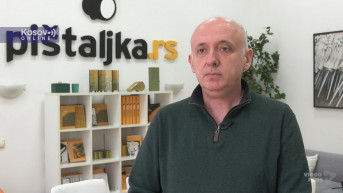
I believe there's a reason why there isn't more insistence on investigating the murders of journalists in Kosovo, and that is because the West simply turns a blind eye to the truth that so many journalists have been killed in that territory – where they claim human rights and democracy thrive – and that even today, the situation for journalists there isn't better, especially if you are a Serbian journalist in Kosovo, a journalist and former president of the Journalists' Association of Serbia (JAS) Vladimir Radomirovic says for Kosovo Online.
The Journalists' Association of Serbia has submitted proposals for two resolutions to the European Federation of Journalists (EFJ) – about investigations into the murders of journalists in Kosovo and about an independent Public Service in Serbian language in Kosovo. However, it was previously announced that JAS would not participate in the EFJ assembly in late May in Pristina.
Radomirovic emphasizes that when a resolution is submitted, "it is customary to be there to defend your resolution and proposal," adding that he doesn't know how it will look now and who will represent the interests of journalists' associations there.
"However, it is very likely that such a resolution – if JAS is not present – probably won't pass," Radomirovic assesses.
He reminds that there are already resolutions on investigating the murders of journalists in Kosovo, noting that in 2018, when he was the president of JAS, the first resolution was adopted. According to him, they received support and worked together with colleagues from the Albanian association in Pristina, and the resolution was supported by the Journalists' Union and the Independent Journalists' Association of Serbia. Together, he adds, they went to Lisbon, where the assembly was held, and received support from all other member states.
"However, neither in 2018 nor later – when another resolution was adopted – were there any consequences in terms of the European Federation of Journalists initiating any action, insisting in Brussels and New York through the International Federation of Journalists to launch international investigations, to finally determine who is responsible for the killings of journalists in Kosovo that occurred from 1998 to 2005 and which are largely linked to the activities of the KLA, or its successors after the war. These were the murders of journalists who were targeted by criminals and terrorists, and that is why it's important to uncover all the circumstances because Kosovo is the territory in Europe where the most journalists have been killed," Radomirovic states.
Looking at it from this distance, Radomirovic assesses that there is a reason why there isn't more insistence on investigating the murders of journalists in Kosovo.
"That is because the West simply avoids facing the truth and turns a blind eye to the fact that in that territory of Kosovo and Metohija – where they claim human rights and democracy thrive – so many journalists have been killed, and even today, the situation for journalists there isn't better, especially if you are a Serbian journalist in Kosovo, the situation is tough, and that is not seen in the West. And certainly, during this EFJ assembly, Ukrainian journalists who have practically been granted asylum in Kosovo and have been living there for several years will receive a lot of attention and will be the stars of the assembly. So, the conversation will shift again in another direction, and the journalists who were killed in Kosovo will be forgotten," our interlocutor says.
According to him, the Journalists' Association of Kosovo, the Albanian association, has support from the West, and he adds that there are capable people and freedom of speech activists in Pristina.
"There are people there who understand the needs of journalists and even better understand how to sell that story to the West. We should praise some of the things they do, but I think our associations have been generally too passive in recent times, and something could have been done there, to use this EFJ assembly to point out the position of Serbian journalists in Kosovo," Radomirovic believes.
He reminds that it's been six years since the first resolution initiated by JAS was adopted at the EFJ assembly in Lisbon.
"It had roughly the same demands as this proposal from JAS: to determine responsibility, to finally launch investigations, for the prosecutors from Belgrade and Pristina to find a way to exchange evidence and information, for the Hague court to deal with the killings of journalists. So, the demands are the same, but after six years, nothing has happened, and I am very skeptical that EFJ wants and intends to do more," he concludes.
Commenting on the chances of the proposed resolutions being adopted, Radomirovic assesses that the resolution on the killings of journalists has more chances than the one about the Serbian-language Public Service.
"We've had resolutions on the murders of journalists before that were adopted, and the issue of a channel in the Serbian language is something that the people representing JAS today have been asking for a long time, but I don't see the need for JAS to deal with the fact that the Ahtisaari Plan should be implemented and that the Constitution of Kosovo should be recognized. That should be dealt with by those who recognize the Constitution of Kosovo, and JAS doesn't need to recognize the Constitution of Kosovo," he concludes.



0 comments