
Aljovic Mihajlovic: As many as 54 percent of women in Kosovo have experienced some form of harassment
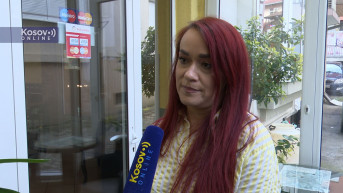
As many as 54 percent of women in Kosovo have faced sexual violence or harassment, but the number of reported cases is far lower due to deep distrust in institutions, said Ines Aljovic Mihajlovic, program manager at the NGO Center for Advocacy of Democratic Culture (ACDC) from North Mitrovica, noting that the number of incidents in northern Kosovo has decreased since the implementation of new police protection programs and the return of Serbian officials to institutions.
“Compared to the period two to two and a half years ago, the situation has improved to a significant extent, especially after the deputy commander of the regional police station in North Mitrovica, Veton Elshani, presented a specific operational plan a few months ago, which involved deploying additional officers to monitor possible harassment by groups coming from South Mitrovica. Given that this was discussed publicly, I believe it served as a signal to those groups to reduce, as much as possible, movement at the north–south level. The number of cases has declined,” Aljovic Mihajlovic told Kosovo Online.
She nevertheless emphasizes that cases still occur and that ACDC has documented more than 150 of them, including experiences of women who suffered direct violence.
“Of course, it still happens, but to a much lesser extent than before. Earlier, women from the north thought these were isolated incidents, and then they all came together and, through mutual discussion, realized that there was a certain upward trend in such cases. At one point, there were truly too many of them. Informally, we have documented more than 150 different stories of women who experienced some form of sexual harassment. Some women also experienced direct physical contact with perpetrators,” Aljovic Mihajlovic pointed out.
She warns that there is still concern that harassment coming from certain groups from the south could recur, and that cases are being documented precisely for the purpose of additional preventive measures.
“Certainly, this still does not mean that there is no space that would allow such groups to do the same thing again, that is, we have no confirmation that this will not happen again. Precisely for that reason, within a project funded by the Canadian Local Initiatives Fund and the Canadian Embassy, we felt the need to document all of this and to have physical, tangible material that could in the future serve for certain initiatives and further discussions and projects that could be implemented,” Aljovic Mihajlovic stated.
Speaking about the experiences of women from predominantly Serbian municipalities, she says that those living south of the Ibar have long faced sexual harassment, and that incidents in the north increased after Serbian representatives left institutions in 2022.
“For two to two and a half years now, since women began to speak out publicly and share their stories, we have had space to exchange experiences among ourselves, in this case unfortunately negative ones, but to have interaction. Accordingly, I must say that women in predominantly Serbian municipalities south of the Ibar have had this problem for much longer, it started appearing in those municipalities much earlier. It sounds harsh, but they have become accustomed to dealing with this problem as best they can. For us in the north, this was shocking, given that we had no experience with it. I believe this is related to the fact that officials from non-majority communities were mostly present in institutions. Accordingly, we did not have much interaction with members of the majority community until 2022, when our officials left the institutions. This has had a certain impact on this issue,” she said.
In northern Kosovo, Aljovic Mihajlovic says, there is pronounced distrust among women toward the police, from whom victims often experience secondary victimization. She also notes that secondary victimization is not a problem only in Kosovo, but across the entire Balkans.
“Another major problem for women in the north is distrust in institutions, especially the police. If the person who at that moment should be someone you can rely on, when you decide to report some form of harassment or gender-based violence, does not provide sufficient security, you certainly will not dare to do so in order to avoid secondary victimization. This is a problem, I believe, that is very large across the entire Balkans, not only in Kosovo,” Aljovic Mihajlovic noted.
According to her, women in the Balkans live in a patriarchal system with numerous obstacles it brings, and they do not report violence, especially when it comes to sexual violence.
“I believe the situation is the same across the region. Our research showed that as many as 54 percent of women in Kosovo experienced some form of harassment, while a much smaller percentage, around 14 percent, reported the problem. This clearly tells us that we all, in the Balkans in general, I mean women, live in a patriarchal society, we have too many barriers, too many constraints, and whatever problem we have, especially if it is of this nature, we choose to keep it within the circle of family, friends, acquaintances, and very rarely dare to speak about it publicly,” Aljovic Mihajlovic explained.


0 comments