
Denmark at the helm of the EU Council: Is the Belgrade–Pristina dialogue mediated by a Dane on its radar?
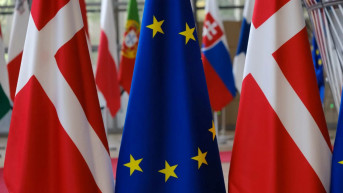
Denmark officially took over the presidency of the Council of the European Union today. According to its published presidency program, the Western Balkans will be “monitored” as part of EU enlargement support, yet the Belgrade–Pristina dialogue is not mentioned, even though it is mediated on behalf of the EU by a fellow Dane, Peter Sorensen. According to sources for Kosovo Online, this dialogue will be a “micro-topic” for Denmark during its presidency, though it is possible that Sorensen may receive somewhat greater EU support for his work in the coming period.
Written by: Dusica Radeka Djordjevic
The slogan of Denmark’s six-month presidency is “A strong Europe in a changing world.” It emphasizes commitment to a decisive EU that takes responsibility for its own security, strengthens the European defense industry, and ensures economic security.
According to its program, EU enlargement remains a geopolitical necessity, with focus on advancing negotiations with Ukraine, Moldova, and the Western Balkans.
“Ambitious merit-based enlargement should ensure a geopolitically stronger EU. This especially refers to Ukraine, which will be a top priority during Denmark’s presidency, but also to Moldova and the Western Balkans. This will also require the EU to be united and ready for enlargement through appropriate internal reforms,” the program states.
Milan Igrutinovic of the Institute of European Studies in Belgrade stated that while Denmark supports continued EU integration, it prioritizes Ukraine and Moldova over the Western Balkans due to the current foreign policy situation, the war in Ukraine, and security concerns.
“Denmark is very emotionally and mentally invested in that conflict, and the level of its military support, relative to its capacity, is significantly above the EU average. In that context, it seeks to strengthen the positions of both Ukraine and Moldova. Denmark also insists that the enlargement process must be merit-based. That is, each candidate country must earn progress—it doesn’t turn a blind eye,” Igrutinovic told Kosovo Online.
He added that Denmark firmly opposed the opening of Cluster 3 for Serbia and remains one of the few countries with that position, due to concerns that rule of law and democratic freedoms in Serbia are deteriorating.
“Denmark cannot abandon that stance, even while chairing the EU Council. It’s questionable whether it will bring any momentum for Serbia specifically. Ukraine and Moldova likely will receive support, while the two ‘mini-champions’ of EU integration in the Balkans—Montenegro and to some extent Albania—might expect a positive impulse,” he said.
Kosovo, which awaits a decision on its EU candidate status request, should also not have high expectations.
“Denmark is neither a particularly vocal critic nor a strong supporter of Kosovo—it generally follows the majority position. But if they insist on merit-based criteria, Kosovo will struggle to demonstrate compliance. They also see a political crisis in Pristina, with uncertainty over whether new elections will be held. Their practical question will be: ‘Who are we supposed to talk to?’ Additionally, the perception of the Serbian community in Kosovo, which is under pressure, and Serbia’s assertive policy to keep the issue on the agenda, seems to have some effect in Brussels. So, I don’t expect Denmark’s presidency to provide any real boost to Kosovo’s ambitions,” Igrutinovic said.
As for the potential synergy between Danish diplomat Peter Sorensen, who is mediating the Belgrade–Pristina dialogue, and Denmark’s presidency until the end of the year, Igrutinovic said there may be some effect at a lower, tactical level, but only if Denmark decides to engage with a topic that is not among its priorities and is seen as a micro-issue.
He added that support could be given for technical dialogue topics, rather than high-level political ones.
“Some practical steps related to missing persons could earn Sorensen personal credit, and the EU could say: ‘Look, we made tangible progress.’ If their ambitions remain modest and practical, they could present some results, for example, in integrated border management or procedural issues related to vehicle crossings or trade. If they aim for major political momentum, nothing will come of it,” he said.
Branka Latinovic of the Forum for International Relations assessed that Denmark, during its six-month Council presidency, will likely be more engaged on Kosovo than Poland, which held the role in the previous six months, particularly since the EU envoy for the Belgrade–Pristina dialogue, Peter Sorensen, is Danish.
“They will surely want to support and highlight him, to ensure he’s not overshadowed by Kaja Kallas, and to provide him with visible and recognizable activities. However, I think that, throughout this year, the issue of Kosovo and Metohija, especially regarding the full restoration of negotiations between Belgrade and Pristina, has been more left to the European Commission and the High Representative for Foreign Affairs than addressed by the EU Council. The Council hasn’t done much to make the process more effective,” Latinovic told Kosovo Online.
She added that how much Denmark gets involved in the dialogue also depends on other global developments.
“I wouldn’t rule out that the EU’s focus may shift more toward the Middle East, especially Iran, given the obligations of member states like France and Germany, and even the UK as a former member, since they are all parties to the Iran nuclear agreement. It wouldn’t surprise me if the EU now focuses more in that direction, alongside the US. Of course, Trump will want to take the lead on any agreement, but the implementation of such agreements depends on the EU and the International Atomic Energy Agency,” Latinovic noted.
Although Denmark currently holds the EU Council presidency, political analyst Nexhmedin Spahiu told Kosovo Online that it is not among the leading EU states, since Germany and France are the ones shaping policy toward Kosovo and other issues.
“All EU member states play a role proportional to their size and influence, and Denmark is not a major player. The fact that Peter Sorensen is Danish may mean more support while Denmark presides, but it doesn’t have to mean much, because EU positions are set collectively. How Sorensen conducts the dialogue will depend not only on the support from his superiors, but also on how capable he is in leading the talks, which now should focus on implementing what was already agreed, because that is the key. Any agreement that isn’t implemented is not an agreement,” Spahiu emphasized.

0 komentet